
Choosing between custom lantern installation types comes down to three decisions, and buyers usually reach the third one later than they should.Of the custom lantern installation types we build, this one carries the most weight per square metre, because every visitor walks through it.
This is where custom lantern installation types differ most. The same theme, the same palette and the same light can stand at an entrance, run along a path, hang above a crowd, or spread low across a lawn. Each version reads completely differently on site, and each one asks something different of the space it occupies.
We build to seven custom lantern installation types. Between them they cover the ground, the walls, the overhead space, the entrances and the paths — which is why most projects end up ordering more than one kind. Skip a type and a venue shows the gap: no overhead layer, or nothing to look at between one entrance and the next.
1. Entrance and Gate Arches
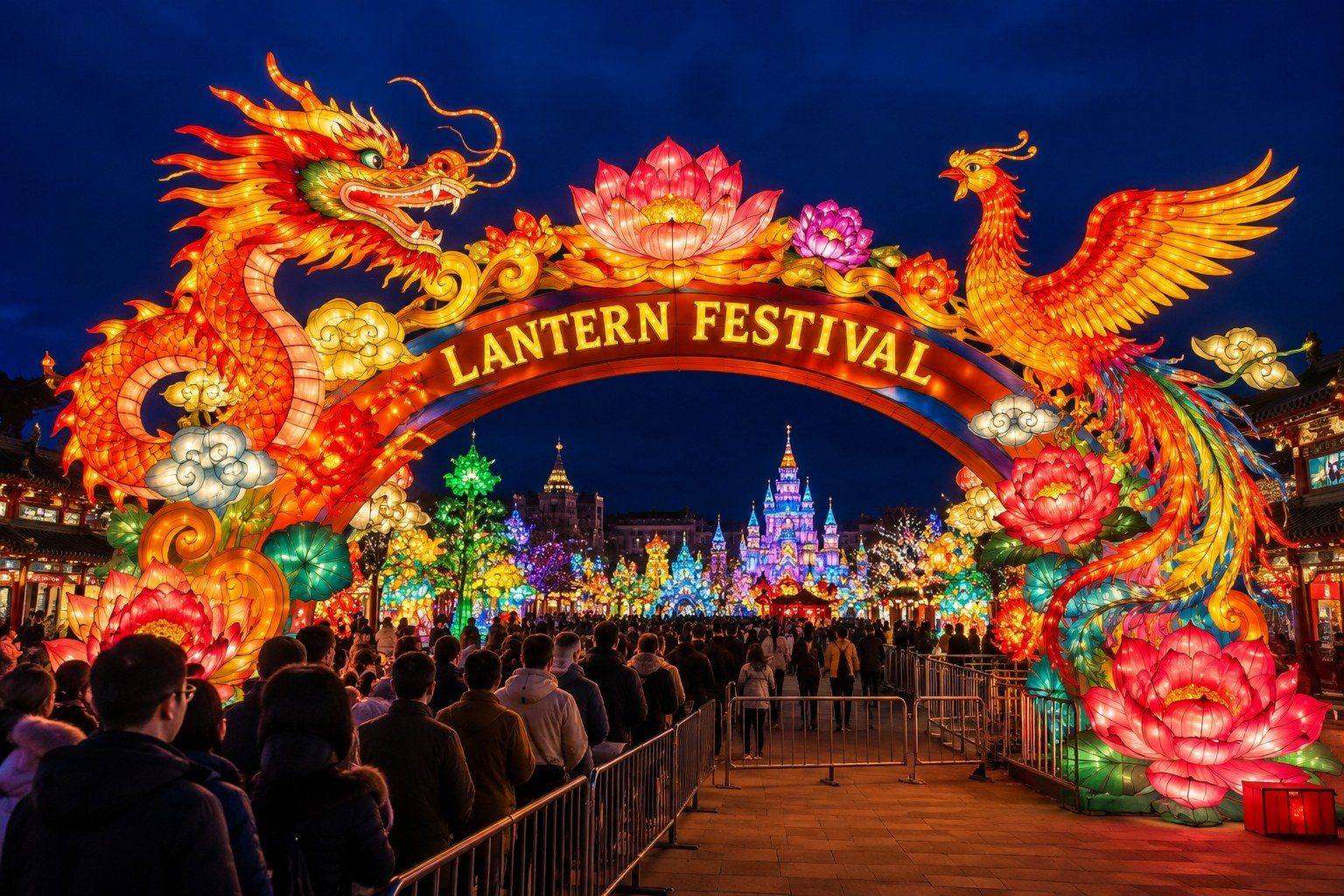
This large-scale custom lantern display features an ornate entrance archway flanked by a traditional Chinese dragon and phoenix, decorated with vibrant lotus flowers and the text “LANTERN FESTIVAL.” The arch leads visitors toward an illuminated castle lantern structure, creating a grand entrance experience for theme parks, cultural festivals, and seasonal celebrations. Designed for high-traffic public installations, this entrance archway can be customized in size, color scheme, and decorative elements to match specific event themes and venue branding.
If visitors arrive through a gate, that gate is the first thing they photograph and the first thing they judge. It sets the tone for everything behind it.
Span and clearance follow your traffic rather than a standard range. A gateway that has to carry a crowd needs a wider opening and more headroom than one on a quieter path, and both are read off your site plan. Where the arch stands on paving rather than soil, the base detail changes with it.
Lighting usually runs in two layers. Outline lighting reads the shape from a distance and pulls people in from the road. Warmer fill light on the underside means faces are lit as visitors pass beneath, which matters at the exact spot most photographs are taken.
If the arch is meant to carry a name, a sponsor line or a year, that is designed into the structure from the start. Adding lettering afterwards means rebuilding the frame, so it is worth deciding early even if the final wording is not settled.
On sites where vehicles also pass through — service entrances, delivery routes, emergency access — the clearance is set by the largest vehicle rather than by pedestrians. That is checked before the design is finalised, because it decides the whole structure rather than a detail of it.
2. Corridors and Walk-through Tunnels
classic pattern street lantern canopy featuring golden scrollwork
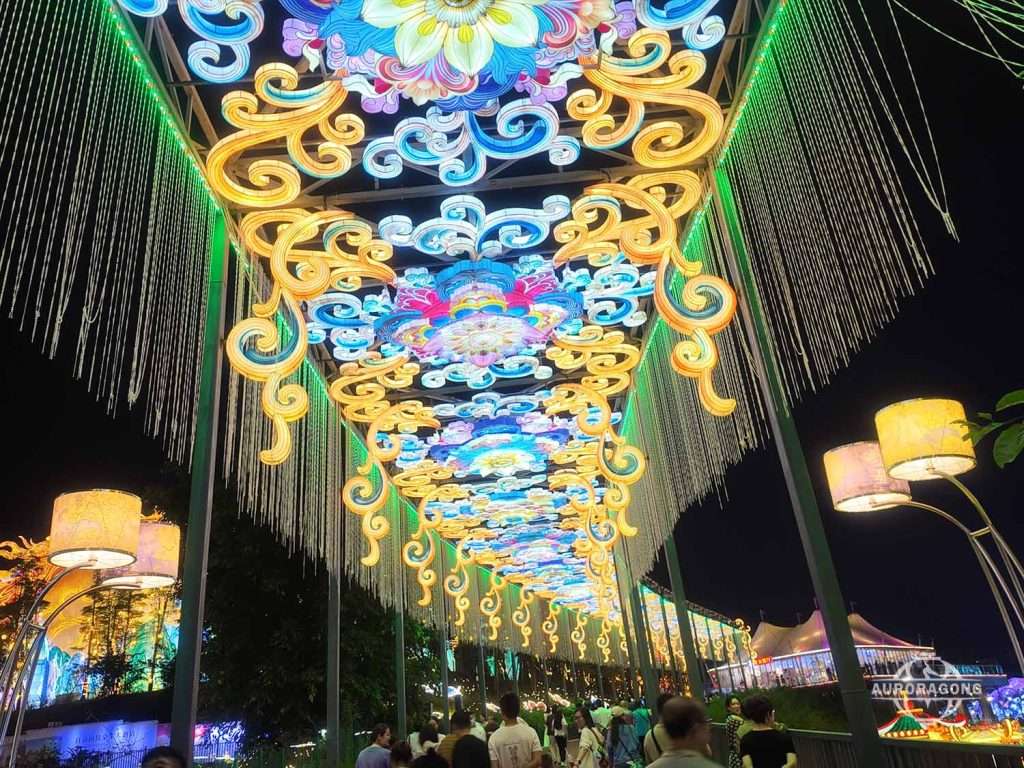
If visitors have to walk from the car park to the main area, or from one zone to the next, that walk is currently dead time. A tunnel turns it into part of the event, and it works on sites that have no open space at all.
Width and height come from your traffic. Length is normally broken into sections rather than built as one piece, which matters for two reasons: it lets us leave an opening where a side path joins, and it keeps a long route from turning into a corridor of identical frames.
Most tunnels carry three layers — the overhead structure, the side panels, and a low line of light along the floor that keeps the path readable after dark. The ceiling carries the main visual and the walls carry the rhythm, so no stretch reads as a bare gap.
Colour is usually held to two or three tones. A tunnel is seen from inside at close range, and at that distance too many colours flatten into grey. The theme still follows yours: characters, flowers, cloud patterns and lantern strings all hold up when seen from a metre away.
Where a route is used by service vehicles during the day, the tunnel is planned so the passage can be opened or moved aside without dismantling the structure. That decision belongs at the drawing stage; it cannot be added later.
3. Large-Scale Centrepieces
If your venue has one open space that crowds naturally drift into, it needs a centre. A large piece gives that space a focal point and gives visitors something to walk towards without being directed.
Large-Scale Centrepieces
Scale is set by viewing distance, not by a catalogue. A piece that has to read from the far side of a plaza is a very different build from one people approach on foot. Tell us where visitors will stand and what else will be in the frame, and the size follows from that.
One large piece makes a landmark. Two or three at different scales make a route, which is often how a wide lawn is handled: a dominant central piece with smaller companions around it, so the eye has somewhere to travel instead of stopping at one object.
These are usually the pieces a project is remembered by, which is why they carry the heaviest lighting design of all the custom lantern installation types.
Ground conditions decide how a large piece is grounded. Paving, compacted soil and open lawn each take a different base, so the surface under the piece is one of the first things we ask about.
4. Small Accent Lanterns
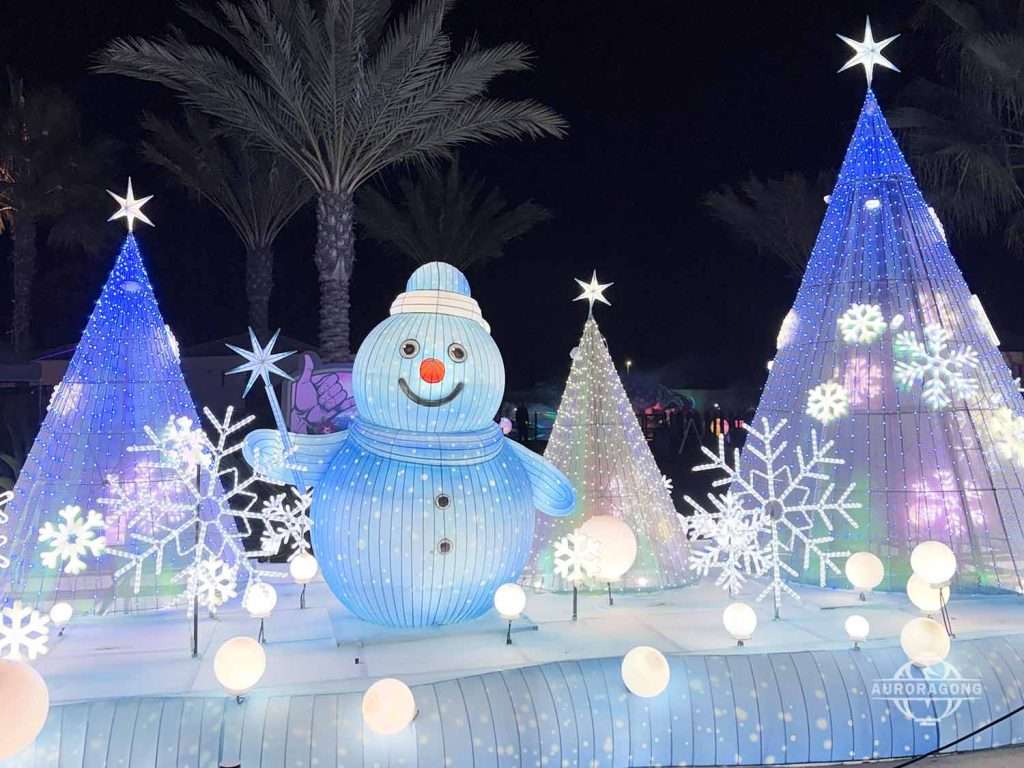


Of all the custom lantern installation types, accents work in groups rather than alone. Between two large installations there is always a stretch that would otherwise be dark, and that stretch is where visitors lose the thread.
Accents work in groups rather than alone. A single small lantern reads as an object; five of them spaced along the same run read as a rhythm, and the spacing is what carries the eye from one big piece to the next.
They are also the easiest place to start. Venues working to a staged budget often begin with accents along the main path and add the large pieces in a later season, because the small pieces are lighter to place and can be repositioned as the layout develops.
Because they are seen close up and in sequence, the detail level matters more here than on a landmark. Shape, silhouette and finish are what visitors notice at this distance, not overall scale.
Accents are also where a specific brand or theme detail usually lands, precisely because it can be read at close range — a mascot figure, a repeated motif, or a colour that has to appear somewhere in the scheme.
5. Suspended and Hanging Displays
This is the layer most sites never use. Everything is built at eye level and the space above people’s heads stays empty, even though it is the one area that costs nothing in floor space.
Overhead pieces change how a route feels because visitors pass underneath them rather than stopping in front of them. A run of hanging lanterns turns a plain walkway into a sequence, and it does it without narrowing the path or blocking any sightline.
They suit covered and semi-covered spaces especially well: shopping centre atriums, colonnades, entrance halls, and tree-lined walkways where branches give a natural fixing point. Span between fixing points is worked out from your structure, not assumed.
Because they are seen from below and often in movement, overhead pieces are designed for silhouette first. Clean outlines and a strong colour break read best at that angle, and the detail that matters at ground level is largely lost up there.
Fixings are the first question. A run of overhead lanterns needs anchoring points at regular intervals, and where your structure does not already provide them, the support is designed with the piece instead of improvised on site.
6. Wall-Mounted and Facade Pieces
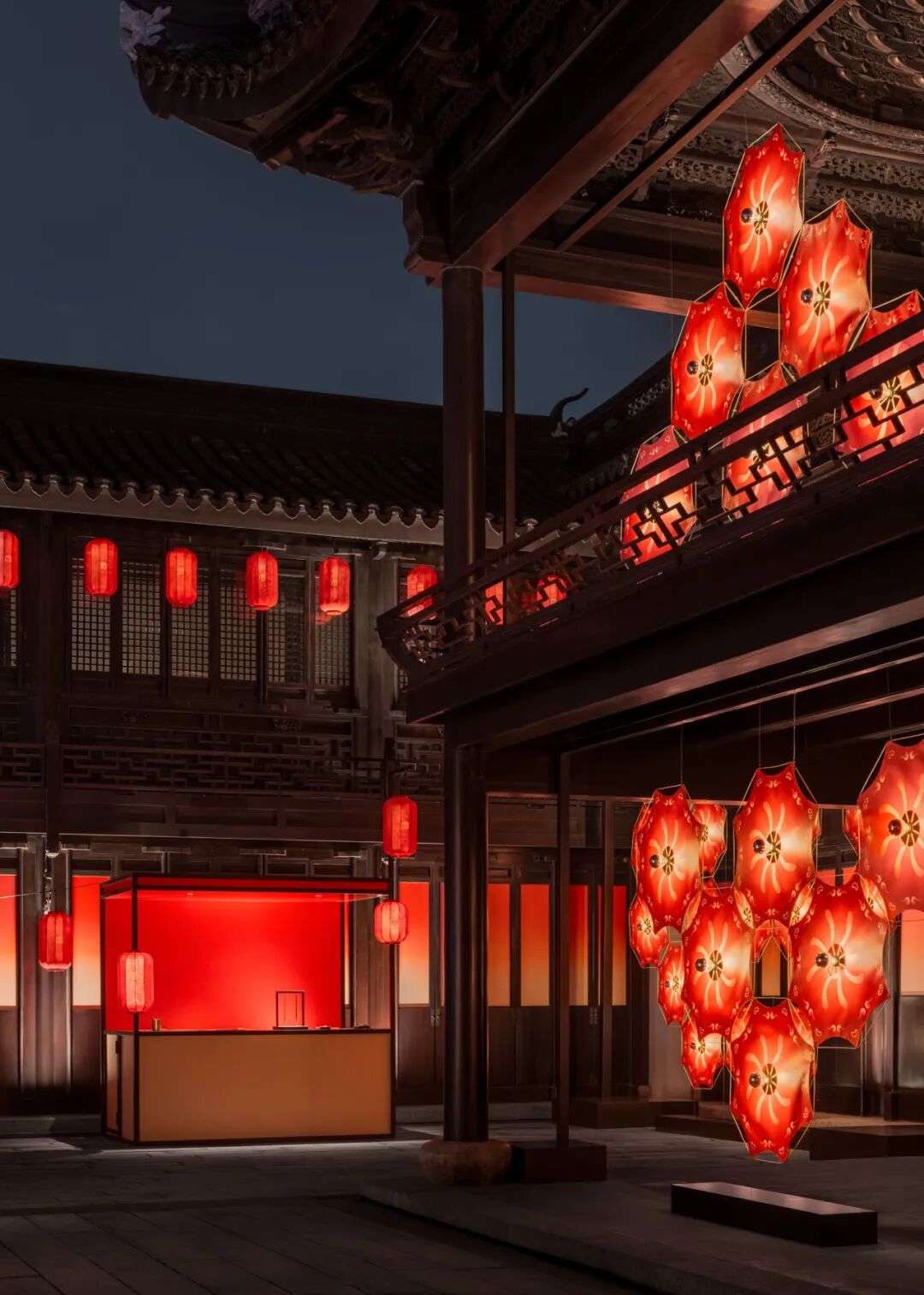
Wall-Mounted and Facade Pieces
Walls are the largest flat surface most venues own, and after dark nearly all of them disappear. A facade piece puts that surface back into the lighting scheme without taking up a single square metre of floor.
Walls are the largest flat surface most venues own, and after dark nearly all of them disappear. A facade piece puts that surface back into the lighting scheme without taking up a single square metre of floor.This is the least used of the custom lantern installation types, and often the one a venue needs most.
These are flat-backed builds rather than freestanding lanterns, which is what allows them to sit tight against a wall, fence or building face. On a site where every metre of path width is already spoken for, that difference decides whether the piece is possible at all.
They work in two ways. A large single piece turns a blank wall into a backdrop, which is useful behind a photo area or a stage. A series of smaller pieces along a fence line extends a route outwards and makes the boundary of a venue feel intentional rather than incidental.
Where the wall is part of a building visitors already look at, the piece can be planned to follow its proportions — following window lines or a roofline rather than sitting on the facade as a separate object.
Wall pieces are often how a theme reaches secondary areas — service corridors, stairwells, lift lobbies — where a freestanding lantern would obstruct movement but a wall piece sits out of the way.
7. Scattered Floor and Lawn Coverage
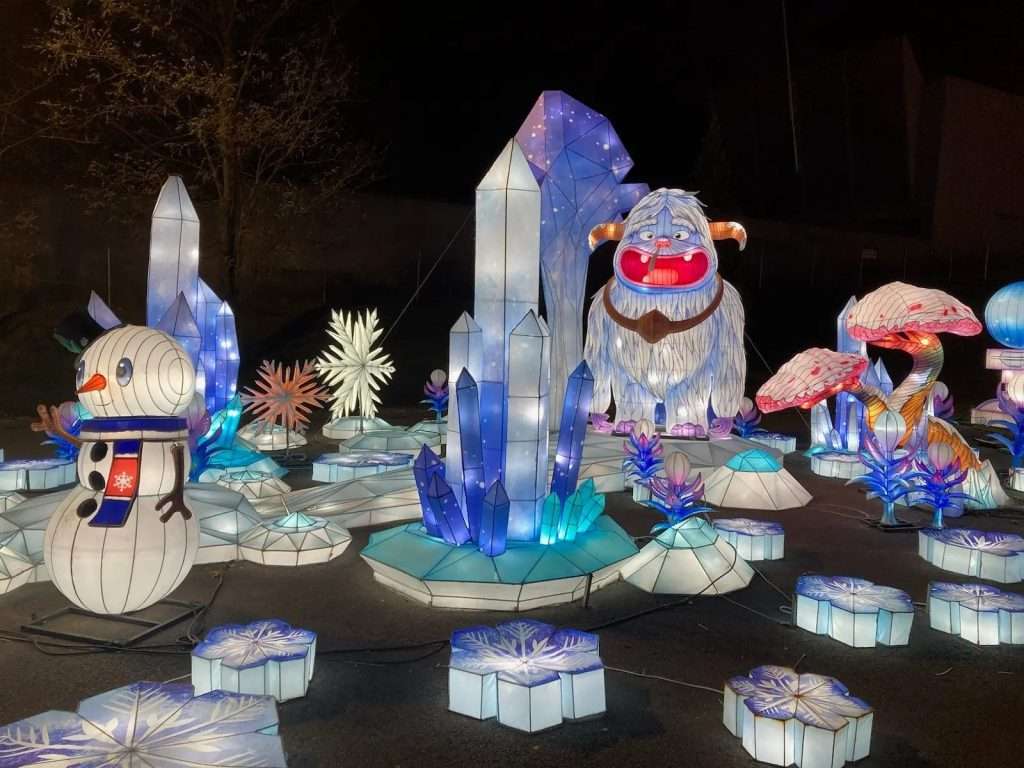

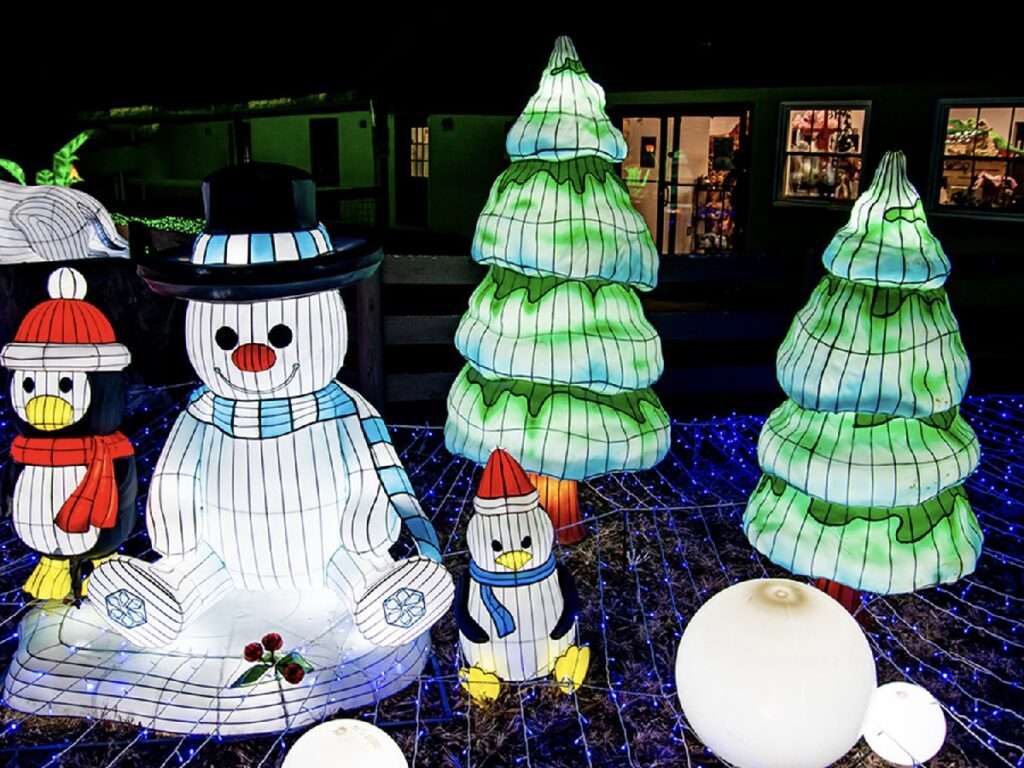
Wide areas are usually left dark, and for a practical reason: one large piece looks lost on a big lawn, and a single line of lanterns does not fill it. The answer is not a bigger object, it is coverage.
Low pieces spread across a wide area build a floor layer. Individually none of them is a feature; together they change the reading of the space, because the ground itself becomes part of the display rather than the surface everything stands on.
This is the most flexible type to phase. Pieces can be added season by season on the same layout, spread further each time, and repositioned once you see how visitors actually move across the area — which is hard to predict from a plan.
Because there is no structure to work around, the spacing is the design. Density near a main route and looser coverage towards the edges is what keeps a wide area from reading as evenly scattered dots.
Because the pieces are low, they also read from a distance as a field of light rather than as individual objects, which is what makes them suit lawns visitors cross rather than gather on.
Taken together the seven cover every position on a site: the ground, the walls, the overhead space, the entrances and the paths between them. That is the reason one supplier can equip a whole venue instead of several, and why most projects order more than one type.
If you send a site plan or a rough layout, we will mark up which type we would recommend for each area. You do not need to work out how any of it is built — we handle the design, the fabrication and the installation, and the structure is planned around your site from the first drawing rather than adapted to it afterwards.
These installation types are one part of our custom lantern solutions; themes, sizes and the industries we build for are covered on the main custom lantern page.