
Visual uniformity poses an important problem in industrial large-scale lantern manufacturing. Diversities in the structure, color, surface finish, and handcrafting may result in the manufactured lanterns having some discrepancies with the original design.
In case of commercial lantern designs, manufacturers have to take into consideration not only individual product uniformity but also other factors. This article looks into the importance of design standardization, production coordination, structure control, and quality checking.
Translate Design Concepts into Measurable Production Standards
A 3D rendering gives a visual representation; however, not all information required for manufacturing is contained within the 3D rendering. Prior to manufacturing, it is necessary for designers and manufacturers to convert the design into drawings and specifications.
A few factors need special consideration:
- Size and shape: Verify the size and proportions of each lantern construction.
- Reference points: Specify the location of critical parts such as the animal’s head, limbs, body shapes, or ornamentation.
- Color references: Determine the color standards for the major construction, minor elements, and gradation sections.
- Construction specifications: Pinpoint the materials, frame design, and attachment points.
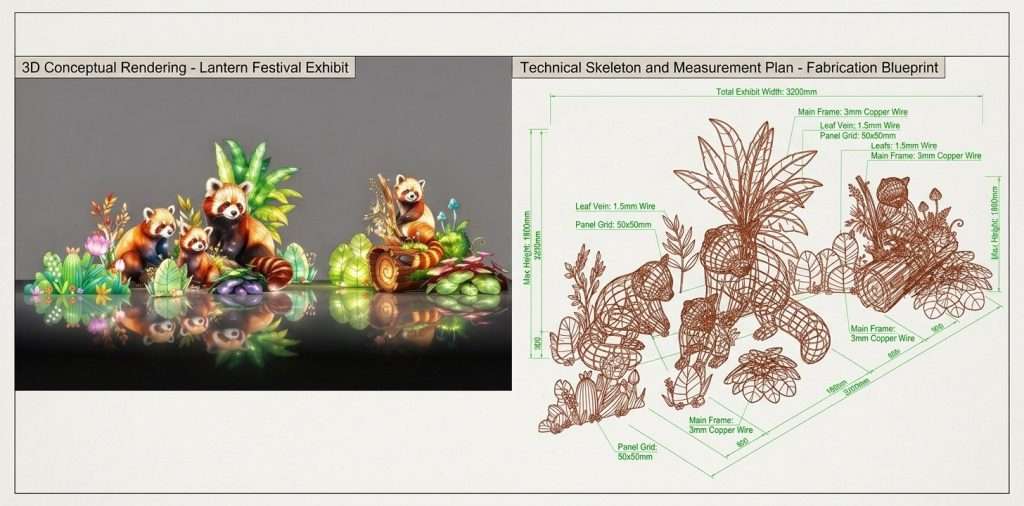
In case of large sculptures, the scaling up of the smaller sculpture may alter its balance visually. The curves, proportions of the body, and ornamental details should be modified as per the final size.
The use of standardized production drawings ensures that all teams are working as per the same specifications rather than going with their own interpretations of the original design.
Approve Prototypes Before Starting Full Production
Approving the prototype enables one to detect any visual irregularities before they are replicated on several lantern constructions.
Based on the need of the project, the manufacturers will develop a scaled model, an example portion, or the initial lantern.
Approval should go beyond evaluating visual appearance; other aspects to consider include structural ratio, surface material, fabric proportion, color, decoration placement, and lighting.
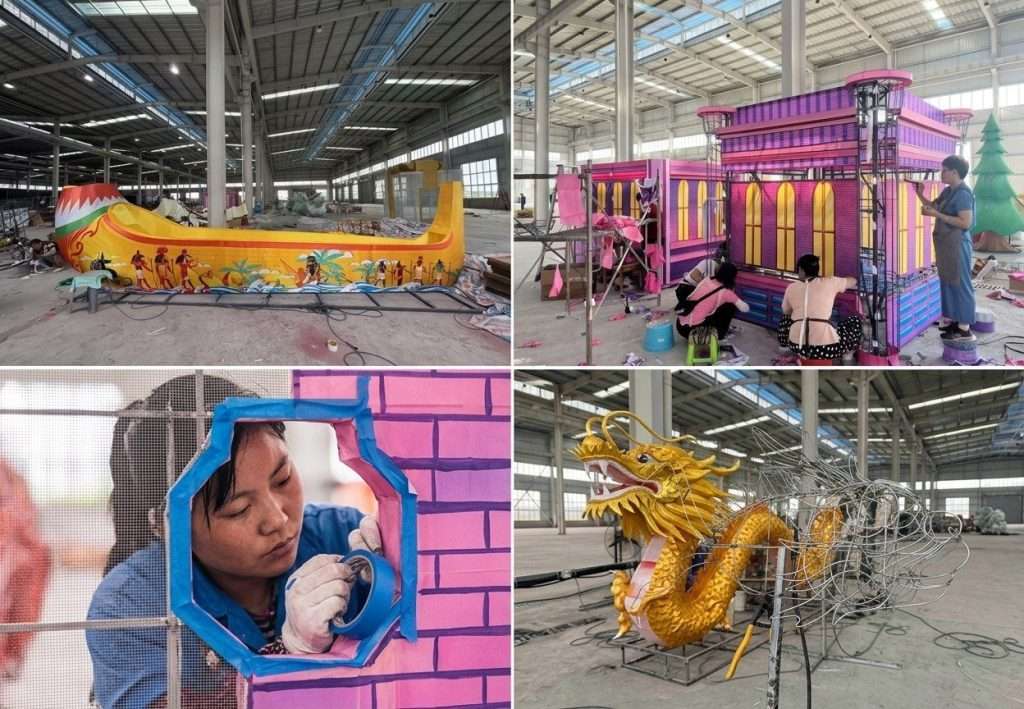
After approving the first one, it will be used as an image guide for future productions. Approved measurements, materials, colors, and pictures should be kept and passed to the respective production teams.
This will be especially necessary in projects that use more than one lantern, which could turn out differently from each other due to differences in interpretations.
Control Structural Accuracy During Fabrication and Assembly
It is the internal framework that sets the general form of the lantern. Any inaccuracies in the internal structure can be highlighted by the fabric and the materials for decoration.
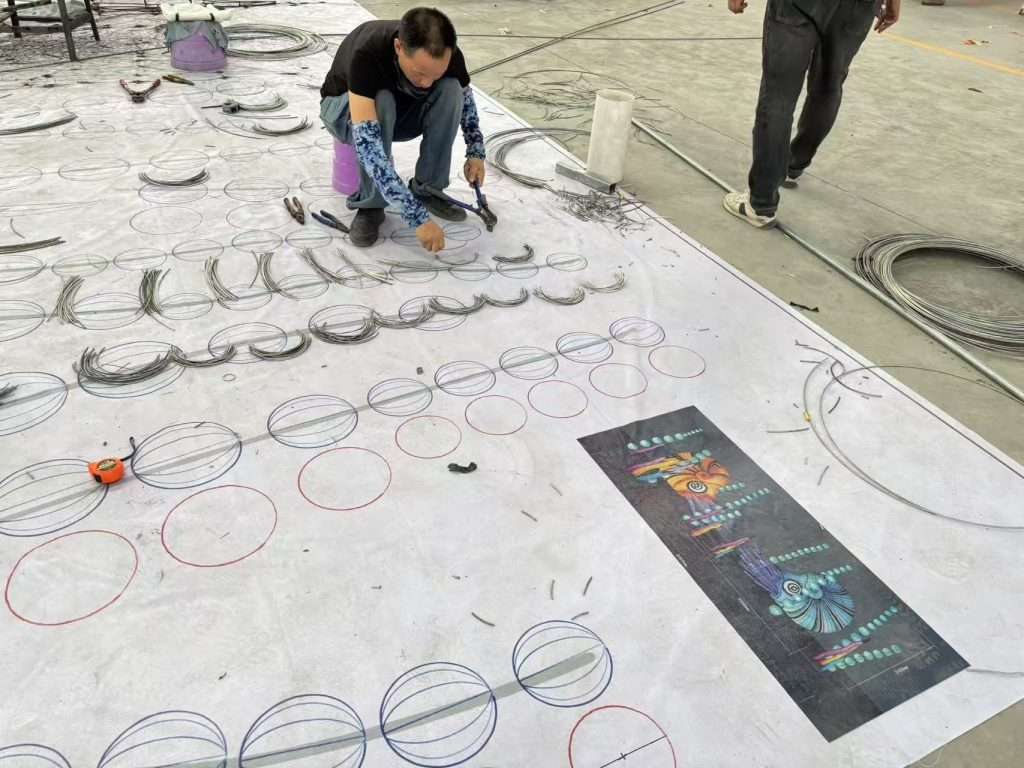
In the production of lanterns, there are two essential aspects – frame fabrication of the steel and wire shaping – that ensure the accuracy of the structure.
Steel frame provides basic dimensions and carrying capacity, and wire shaping creates curves, contours and other elements. In case of creating the lantern of the animal form, it is necessary to ensure proportional relation of the head, body, legs and tail.
One more difficulty of segmented production is connected with assembly of sections of large lanterns.
If manufacturers do not ensure consistent connection points and measurements of each part of the lantern, the whole structure can be imprecise. Trial fitting of some parts can help to avoid it.
Maintain Consistency in Colors, Materials, and Decorative Details
In addition to structural accuracy, visual uniformity is influenced by various other factors including the manner of fabric attachment, painting, and handwork.
When it comes to lantern structures made from the material of high density, it is important to have equal tension of fabric. Otherwise, the surface will be uneven due to wrinkles, loose spots, and other problems.
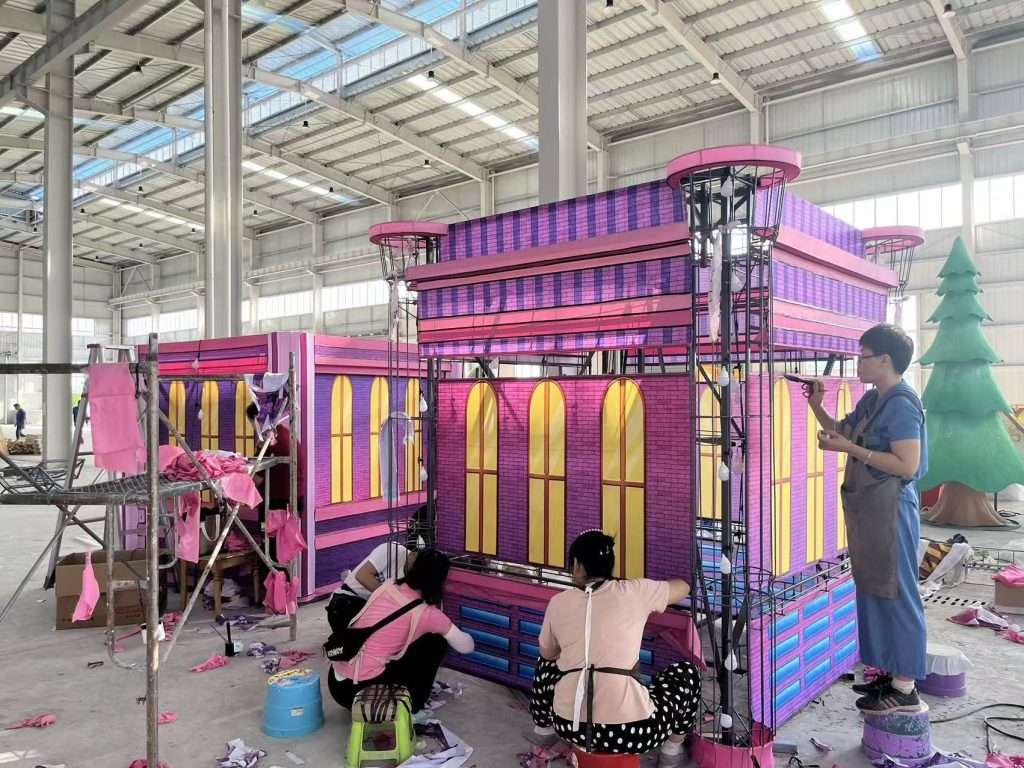
Color control is another issue which needs to be addressed. This is particularly important for projects where several lanterns are supposed to have the same visual theme. The use of approved samples of colors will help to keep the visual difference between different batches to a minimum.
Approved handwork standards are also needed when creating lantern structures. This includes such handwork details as animal eyes, feathers, scales, flower petals, and ornamentation.
It is also necessary to test lanterns regarding illumination. LED arrangement, lighting distribution, and color temperature may influence the overall appearance of lanterns in the evening.
Coordinate Multiple Production Batches for Overall Visual Consistency
A very significant problem in large-scale lantern manufacturing is the unification of design among various production units and batches.
Imagine a commercial lantern show that involves the creation of a centerpiece, some animal lanterns, lantern gateways, and other supportive structures. Although each of them is of different designs and sizes, they all should be part of the same picture.
Some production controls that will assist in this regard are as follows:
- Production reference sharing: Supply all the teams with identical drawings, dimensions, and pictures for reference purposes.
- Material specifications: Ensure the use of identical fabrics, color references, and lighting fixtures within the relevant production batches.
- Comparing reference sample: Compare the new structures with those already approved as opposed to subjective judgment alone.
- Inspection process: Inspect crucial structural and decorative aspects during production as opposed to waiting for the completion of all lanterns.
Differences between consistency at product level and visual consistency at project level should also be noted.
Matching lanterns need to have the same proportions and finishes, while non-matching lanterns should relate to the composition, scale, and color scheme of the project.
This will help to avoid a scenario where each individual lantern is aesthetically pleasing, but the total composition appears uncoordinated.
Conduct Visual Inspections Before Shipment
Final inspection should check whether the completed lanterns fulfill the agreed-upon design and production criteria.
In large-scale projects, inspection should check both the individual structures and the correlation between the various display components.
Key checkpoints include:
- Overall dimensions and structural proportions.
- Surface coverage, fabric tension, and visible connections.
- Color consistency between matching lanterns.
- Positioning and finishing of decorative details.
- LED operation and nighttime illumination.
- Alignment of segmented structures and connection points.
If the project situation allows for this, pre-shipment trial assembly of key components will help detect any dimensional differences and inconsistencies in appearance before shipping.
Also, suppliers could offer inspection pictures, measurement readings, and photos of the illuminated products to assist buyers in inspecting the final products prior to shipment.
It helps avoid surprises during overseas construction, where the manufacturer’s production facilities and materials may not be easily available.
Conclusion
Accuracy of visual depiction in the production of large lanterns requires uniform control of the entire process. From the translation of the design ideas into measurements to organizing production of several batches, every step in the process affects the final display.
In the case of commercial lantern installations, the manufacture of these products must ensure accuracy at the product level as well as the visual level. Standardization, prototype approval, structure inspection, and pre-shipping inspection contribute towards ensuring this aspect of the project.