
The shopping mall is always trying out different means to develop attractive visual attractions, especially during some important campaigns in the season like the Chinese New Year, Christmas, and Halloween. The two means that are usually considered are commercial lanterns and projection mapping.
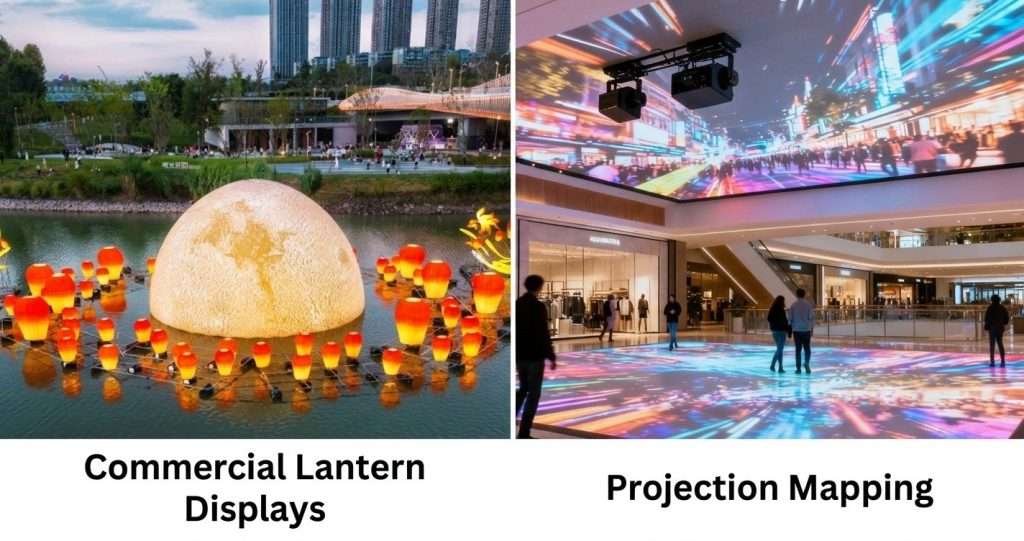
While the two could make any ordinary shopping mall into a visually interesting place, their roles vary; projection mapping is all about creating visuals while commercial lanterns are about creating 3D environments for visual attraction that visitors would experience from different angles.
When it comes to creating distinct seasonal decorations for the shopping mall, one has to think of the space, purpose of the campaign, and visitors’ experience.
Visual Impact: Physical Attractions vs. Projected Images
The most distinctive aspect of the two techniques lies in their approach to the occupation and transformation of a shopping mall decorations.
Projection mapping employs the surfaces of the walls or ceiling of the space as a means of projecting moving pictures. This technique is most effective when there are big and unobstructed surfaces in the room, with good lighting conditions. Yet, its visual outcome is very much dependent on the projection space, and the visitors observe the display from a designated spot.
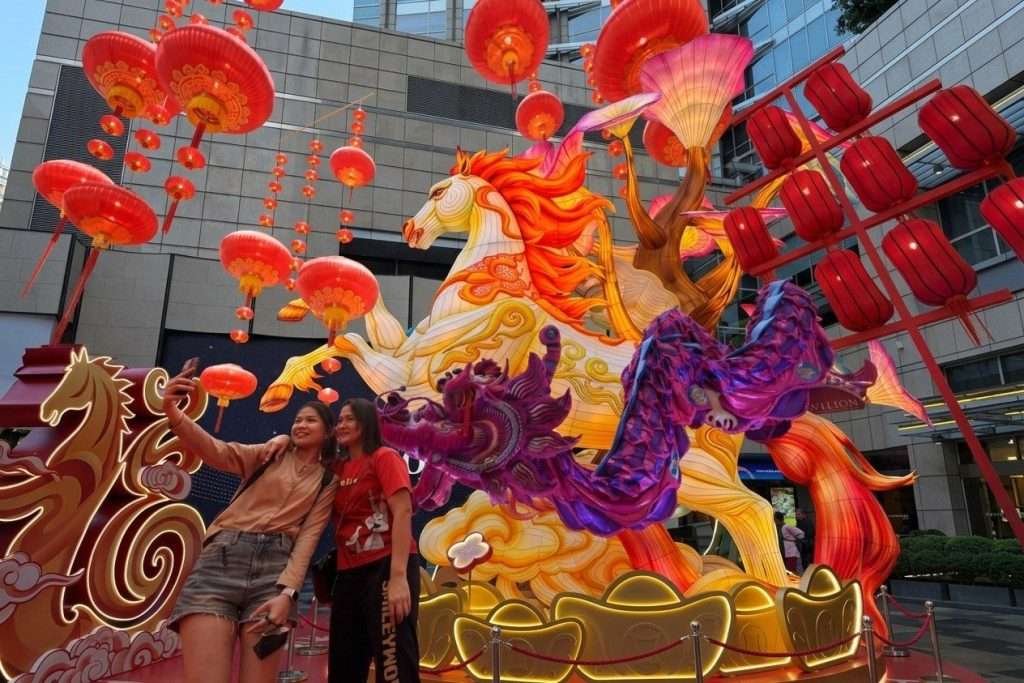
Physical displays of commercial lanterns bring tangible objects into the shopping mall space, which could consist of giant lit-up animals, zodiac figures, flowers, and other themed installations that form visible 3D landmarks for people to observe from multiple angles and even take photos next to.
With respect to the atriums, entrances, and other open areas in the shopping malls, the technique of physical lantern displays would be more effective.
Space Adaptability: Which Works Better in Existing Shopping Malls?
Current shopping centers seldom provide vacant spaces for decorative installations. Columns, escalators, glass balustrades, commercial signage, ceiling structures, and pedestrian paths all play roles in determining where to install displays.
Projections require adequate projection surfaces, enough distance to project from, and proper lighting conditions. Ambient light, reflective glass, uneven walls, and constant pedestrian traffic may affect projections.
Displays using lanterns are much more flexible in terms of physical arrangements. Depending on the available space, shopping malls can select:
- Suspended lantern displays for large atriums in cases when hanging of lights is possible.
- Lantern sculptures for ground level locations in open plazas, entrance halls, and center of gathering places.
- Lantern installations for several levels or small zones for decoration.
- Themed gateway lanterns to form an entrance to the seasonal campaigns.
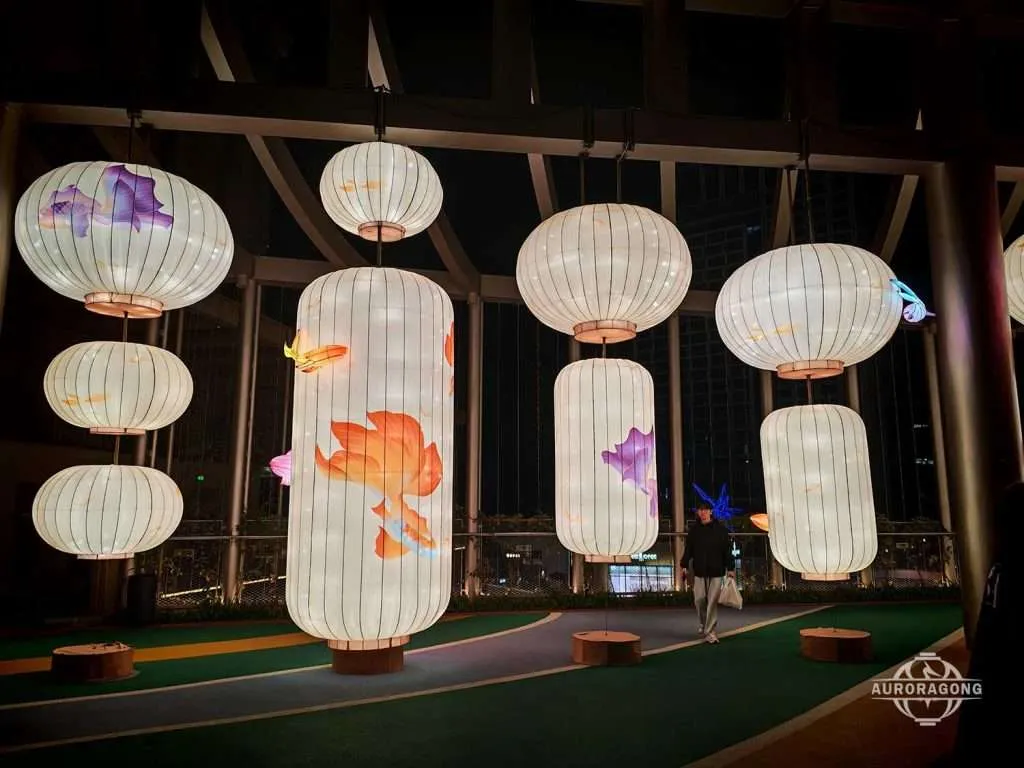
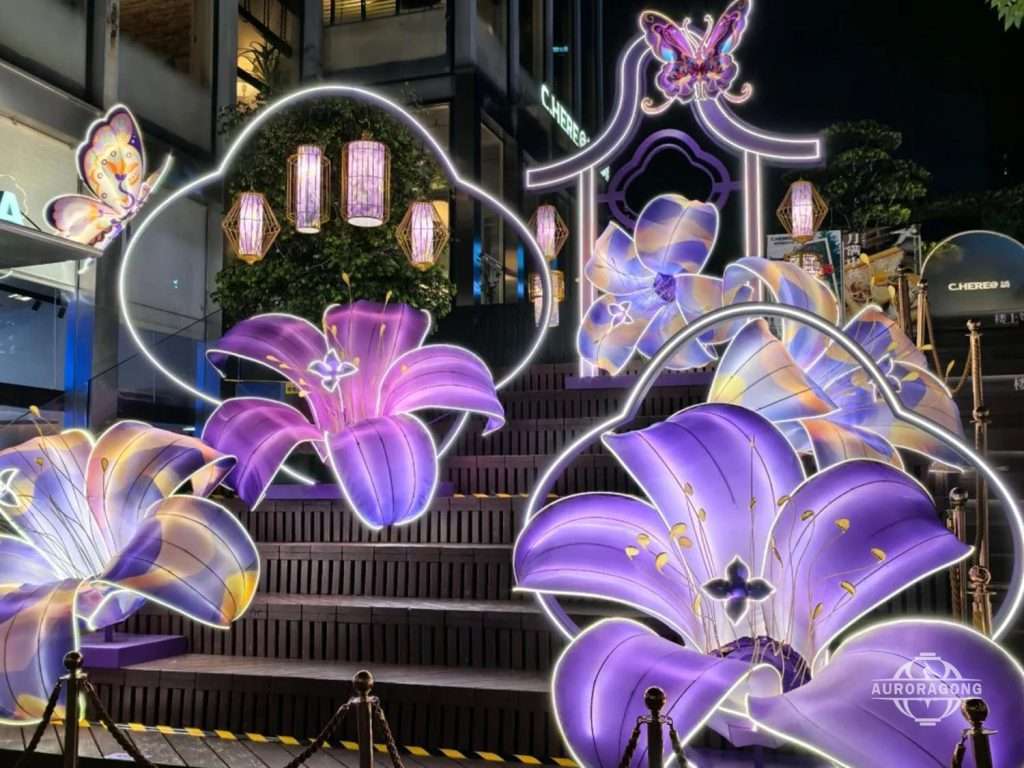
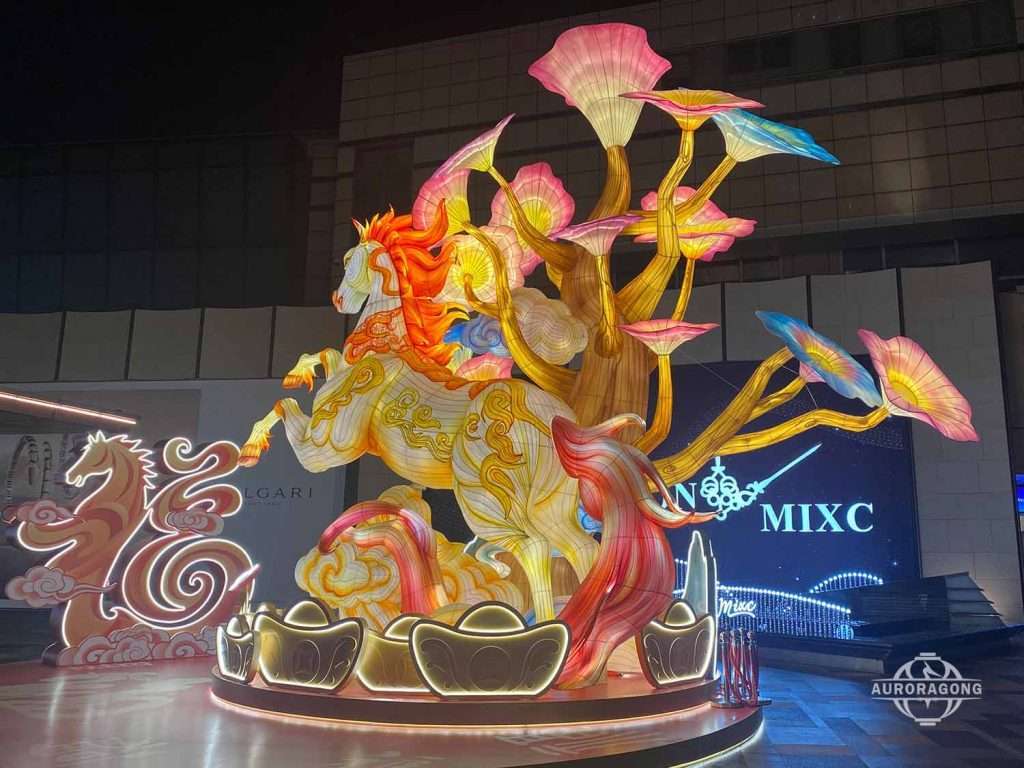
Nevertheless, large installations should have approval of structure, and ground level installations should provide enough free space for people’s movements.
The principal advantage of commercial lantern display is that they can be done based on the exact dimensions and layout of an existing mall.
Visitor Experience: Watching a Display or Becoming Part of It?
The projection mapping technique proves efficient in terms of drawing attention due to movement, animation and changing visuals.
Digital stories can be created by means of projection mapping, especially during performances and interactive events.
In comparison to projection mapping, physical installations of lanterns provide another way of engagement.
Visitors can walk around a lit sculpture, admire its decorations, make family pictures, and examine various elements of themed display. A set of big animal lanterns and a Chinese zodiac display for Chinese New Year, for example, can become a place specifically devoted to taking photos rather than only watching the display itself.
This aspect becomes especially relevant for shopping malls, as they need visitors to make a stop, take pictures, publish posts about their visit in social networks, and spend more time in common areas.
Additionally, physical display of lanterns can involve not only a central attraction but some additional elements of decoration along walkways, escalators, and other levels.
Long-Term Value: Which Is More Suitable for Shopping Mall Decorations?
Shopping malls often redecorate themselves in order to accommodate various marketing campaigns held over the year.
Projection mapping allows one to update the digital content easily. It does not require any manufacture of new physical decorations, which makes it suitable for the campaigns requiring regular updates.
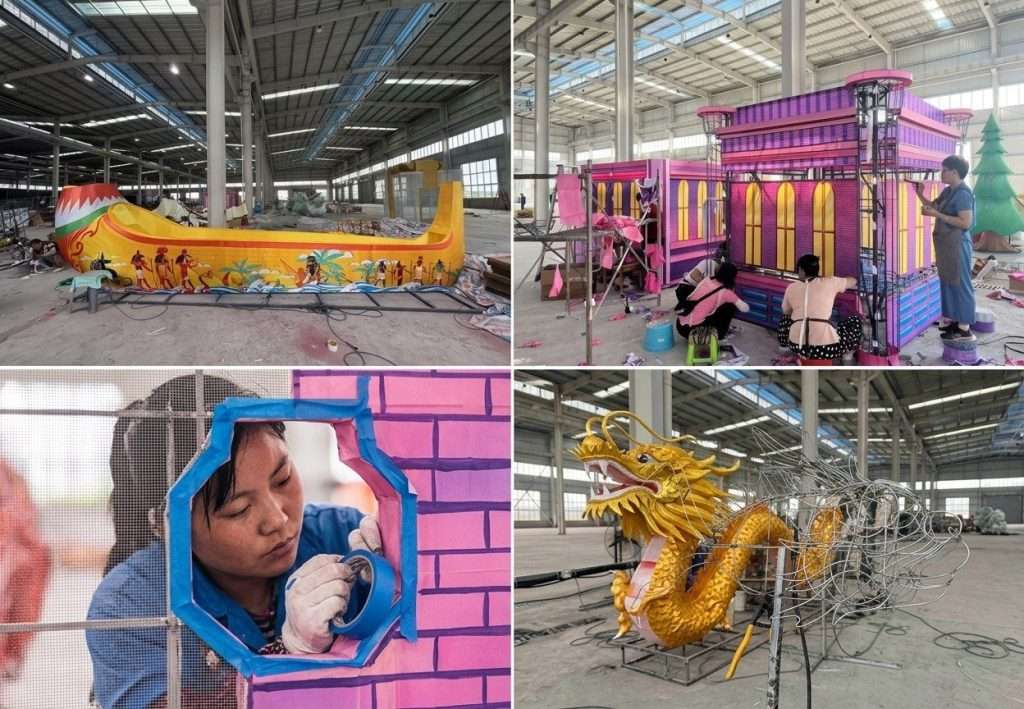
Another long-term value in terms of the commercial lantern display is custom design that can be taken apart, stored, transported, and potentially reused in future campaigns.
For instance, when a mall orders a lantern display for Chinese New Year, some of the zodiac sculptures can be kept for future use, while modular components can be rearranged and supplemented with flower and animal lanterns in a spring campaign.
Thus, it becomes possible to build a collection of physical decorative items instead of ordering an absolutely new decoration each time.
All these depend upon the initial structural design, the used materials, storing and maintenance options.
Which Should Shopping Mall Decorations Choose?
Neither option is suitable for every commercial space. The right choice depends on the main purpose of the attraction.
Projection mapping may be more appropriate when:
- The mall has large, unobstructed walls or architectural surfaces.
- The campaign focuses on dynamic visual storytelling.
- Digital animations need to change frequently.
- The attraction is designed around scheduled visual shows.
Commercial lantern displays may be a better choice when:
- The mall wants a large three-dimensional centerpiece for its atrium.
- Seasonal decorations need to create physical photo opportunities.
- The campaign involves Chinese New Year, Christmas, Halloween, or other themed celebrations.
- Different decorative elements need to be arranged across multiple floors.
- The mall wants physical installations that can potentially be stored and reused.
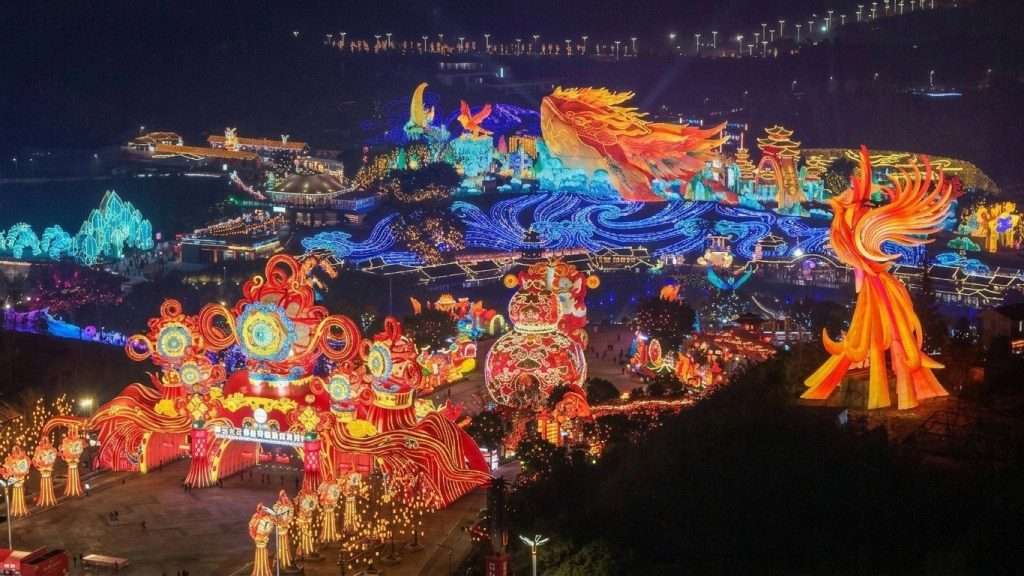
For many seasonal shopping mall campaigns, commercial lantern displays offer a more tangible way to transform public spaces into themed attractions. Their customizable shapes, sizes, and arrangements make them particularly suitable for projects that require a distinctive visual identity.
Conclusion
There are some definite benefits to choosing projection mapping as an immersive digital experience; however, if a shopping mall requires the installation of a physical feature in addition to photo-worthy spots and decorative elements to place throughout its public spaces, the use of commercial lantern displays makes perfect sense.
Lantern displays can include giant zodiac sculptures, illuminated animal displays, flower displays, and even festival lantern displays based on the theme of the shopping mall.
If you are interested in a unique commercial lantern display for your shopping mall, please contact AuroraGong.