
In evaluating nighttime activities Zoo operators often look at holiday light shows as well as the zoo lantern festivals as income-generating events. While light shows during the holidays generally require less cost of investment, lantern festivals typically provide greater value over the long term due to higher ticket prices and longer dwell time for visitors as well as increased secondary spending and a stronger brand identity.

This guide compares the two different formats of events based on the cost structure, attendance possibilities and revenue generation, as well as engagement of visitors, as well as longer-term ROI to assist Zoo decision makers decide which strategy is most compatible with their objectives.
Why Nighttime Events Have Become a Strategic Growth Opportunity for Zoos
Zoos around the world are experiencing ever-growing pressure to diversify sources of revenue that go beyond admissions during the daytime. The popularity of nighttime activities during the summer months has become an extremely efficient ways to boost attendance, without requiring an expansion of the physical infrastructure.
In contrast to major capital projects that need years of planning and development, special evening events are able to make zoo assets more active and extend hours of operation and draw in audiences that might not normally visit during normal operating hours during the day.
Two formats have become particularly popular:
- Holiday Light Shows
- Zoo Lantern Festivals
Though both improve the experience of visitors after darkness, they operate with distinct business model.
Understanding the differences is crucial in evaluating ROI.
What Does ROI Really Mean for Zoo Events?
A major errors Zoos make is to measure the event’s success solely based on ticket sales.
An accurate ROI assessment should take into account multiple income streams as well as the long-term advantages.
| ROI Category | Revenue/Value Driver | ROI Impact |
| Direct Revenue | Ticket Sales | Primary source of event income. |
| VIP Experiences | Increases revenue per guest. | |
| Group Bookings | Boosts high-volume ticket sales. | |
| Secondary Revenue | Food & Beverage | Increases on-site spending. |
| Gift Shop Sales | Generates additional retail revenue. | |
| Seasonal Merchandise | Encourages impulse purchases. | |
| Parking Revenue | Adds incremental event income. | |
| Strategic Value | Membership Growth | Supports long-term recurring revenue. |
| Repeat Visitation | Improves visitor lifetime value. | |
| Sponsorship Opportunities | Creates additional partnership revenue. | |
| Brand Awareness | Strengthens market positioning. | |
| Media Exposure | Expands visibility and organic reach. |
An event that is less expensive isn’t necessarily the best event, when it attracts fewer guests or a lower amount of spending per guest.
Which Activity Has A Lower Initial Investment Cost?
Holiday Light Shows
Holiday Light Shows typically have an entry barrier that is lower.
Typical expenses include:
- LED string lights
- Decorative lighting displays
- Projection systems
- Seasonal signage
- Installation labor
Since these components are standard and widely accessible, the process of the process of planning and deploying them is usually fairly simple.
Zoo Lantern Festivals
Lantern festivals typically require a greater initial expenditure due to their unique nature.
Typical costs include:
- Theme planning and design
- Steel structure fabrication
- Handcrafted lantern production
- Scenic installations
- Interactive exhibits
- Custom lighting effects
From the first look, cost might appear to be significant.
But focusing solely on the upfront costs can lead to an unfulfilling picture.
The Reusability Factor
Many of the custom lantern displays can be restored then stored for reuse during the different seasons.
Animal lanterns, themed spaces and signature installations typically remain relevant throughout the years, even with only minor changes.
This means that the gap in cost between these two types of types is typically less than what is expected when compared over a three to five-year timeframe.
Which Event Attracts More Visitors?
Attendance remains the single most important driver of event profitability.
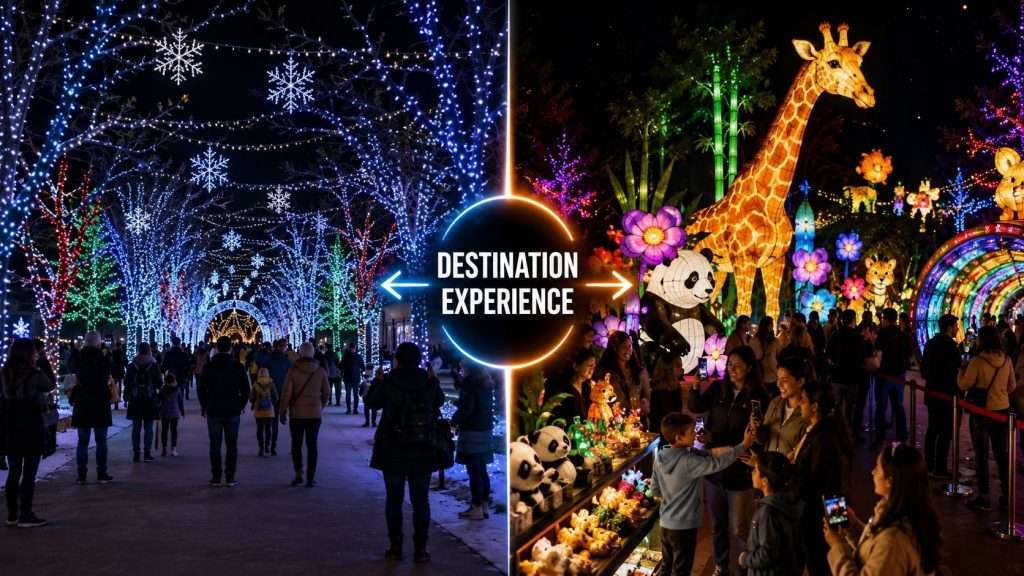
The Challenge Facing Holiday Light Shows
Light shows for the holidays have become common seasonal sights.
In a lot of metropolitan areas consumers can have a variety of Christmas lighting events to pick from within the same holiday season.
As competition increases, visitors often compare:
- Ticket prices
- Travel distance
- Convenience
- Event size
This can make differentiation difficult.
Why Lantern Festivals Create Stronger Destination Appeal
These festivals generally presented as unique events rather than traditional festive entertainment.
Examples include:
- Giant illuminated animal sculptures
- Interactive rainforest environments
- Ocean-themed lantern worlds
- Conservation storytelling exhibits
- Immersive nighttime trails
These attractions offer unique visually appealing experiences which are hard to duplicate by other venues.
For many the event can become more of a destination than another annual excursion.
This distinction can attract both first-time guests as well as returning guests.
A Comparison of The Impact of Social Media
Modern event marketing is heavily based on content created by users.
Visitors are increasingly choosing their destination according to what they discover on social media sites.
Holiday Light Shows
Christmas lighting displays can produce beautiful photos, however many display designs look the same from one venue to location.
Zoo Lantern Festivals
Lantern festivals often feature:
- Massive illuminated animals
- Colorful themed environments
- Interactive displays
- Unique photo opportunities
These visually appealing elements make it easier for users to share photos and videos on social media.
In turn, lantern festivals typically result in more organic marketing via social media, which can help to reduce the cost of acquiring customers in time.
Increase in Secondary Income
Zoo operators tend to focus primarily on admission revenues, while not recognizing the importance of other spending.
In actuality food, drinks products, and other high-end experiences can have a significant impact on the profitability of a business.
Typical Holiday Light Show Visitor Journey
The flow of visitors often follows the same pattern:
Enter – Walk Through Displays – Exit
The experience is usually rather linear and passive.
Typical Lantern Festival Visitor Journey
A lantern festival typically creates many engagement points.
Enter – Explore Theme Zones – Take Photos – Attend Activities – Shop – Dine – Continue Exploring
The extended experience naturally boosts the time that visitors stay.
Why Dwell Time Matters
Longer visits often lead to:
- Additional food purchases
- Beverage sales
- Souvenir purchases
- Premium photo opportunities
- Family spending upgrades
For families, the main demographic for the majority of zoos, an additional hour spent on the premises could result in significant increases in the per-capita income.
Educational Value and Mission Alignment
One area in which lantern shows typically surpass traditional light shows is mission integration.
The holiday displays are primarily focused on the entertainment of the season.
Lantern festivals be a great way to combine entertainment and education.
Examples include:
Wildlife Conservation Themes
Lantern installations can highlight endangered species and conservation initiatives.
Ecosystem Education
Visitors can experience the rainforest, ocean, desert and polar habitats in an immersive experience at night.
Animal Awareness Campaigns
Interactive exhibits can help with educational messages while maintaining engagement.
This connection strengthens the bond between the festival and the Zoo’s mission.
Temporary Attraction or Signature Event?
Some revenue is not immediately visible in a financial statement.
Certain returns are realized by more brand recognition and loyalty.
Holiday Light Shows
The holidays bring excitement, but they are usually tied to the holiday season rather than the venue that hosts them.
Visitors may recall the lights, but not necessarily the zoo.
Zoo Lantern Festivals
Lantern festivals can become signature experiences uniquely associated with a specific institution.
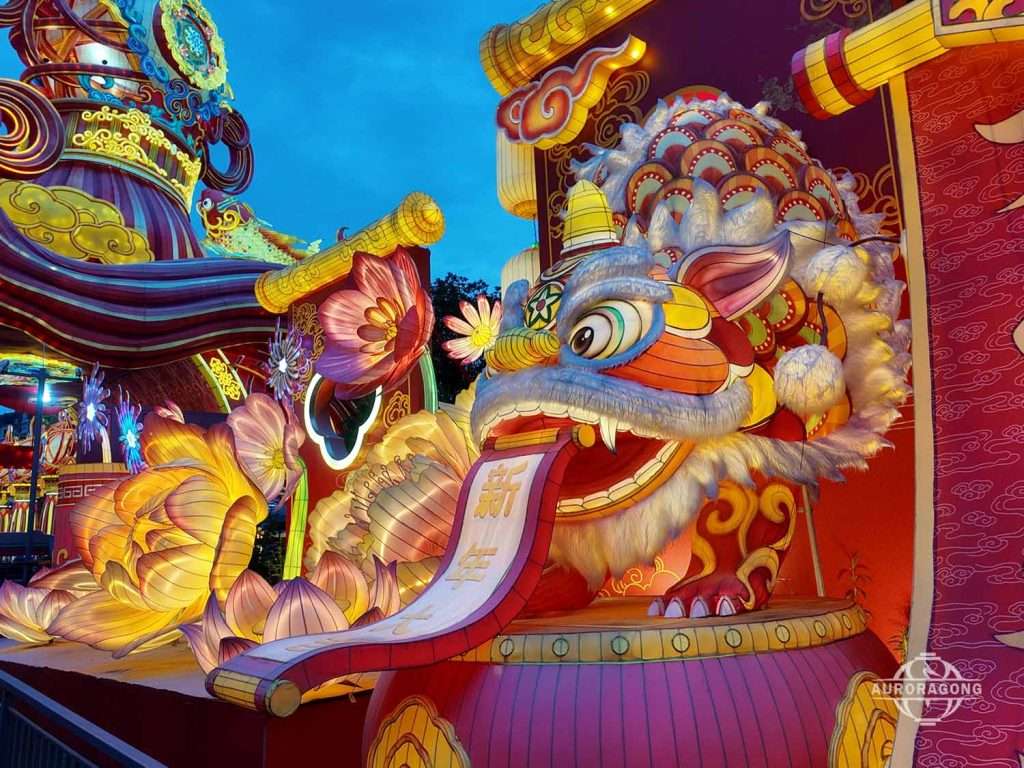
Over time, successful festivals can:
- Increase annual visitation
- Strengthen membership programs
- Generate media coverage
- Build regional tourism interest
- Encourage repeat attendance
Many zoos see these events not only as festive decorations, but rather as long-term visitors’ experience assets.
ROI Comparison Table
| Evaluation Factor | Holiday Light Show | Zoo Lantern Festival |
| Initial Investment | Lower | Higher |
| Setup Complexity | Lower | Higher |
| Ticket Pricing Potential | Moderate | High |
| Visitor Attraction Power | Moderate | High |
| Social Media Appeal | Moderate | Very High |
| Visitor Dwell Time | Moderate | High |
| Food & Beverage Revenue | Moderate | High |
| Merchandise Opportunities | Moderate | High |
| Educational Integration | Limited | Strong |
| Brand Differentiation | Moderate | High |
| Multi-Year Asset Value | Moderate | High |
| Long-Term ROI Potential | Moderate | High |
Which Option Is Right for Your Zoo?
A Holiday Light Show May Be the Better Choice If:
Budget is limited
Fast deployment is required
The goal is seasonal activation
Existing attendance levels are already strong
A Zoo Lantern Festival May Be the Better Choice If:
The zoo wants to create a destination event
Nighttime attendance needs improvement
Management seeks new revenue streams
Brand differentiation is a strategic priority
Long-term ROI is more important than short-term cost savings
The most effective choice is based on your zoo’s goals as well as the demographics of your audience and the strategy for growth.
FAQ
Q1: How much does a Zoo Lantern Festival cost?
Costs differ based on the dimensions of the event, level of customization and requirements for installation. Large-scale celebrations generally require a larger cost of initial investment than typical holiday lighting displays.
Q2: Can lantern displays be reused?
Yes. A lot of lanterns can be stored, restored and used again for many seasons, thereby increasing the the long-term ROI.
Q3: How long does installation take?
The majority of lantern celebrations require a few weeks to be set up, based on the size and complexity.
Q4: Do lantern festivals attract non-zoo visitors?
Yes. A large number of people visit the zoo exclusively for the nighttime events and might not be regular zoo visitors.
Q5: Which event generates more social media engagement?
Lantern festivals usually produce more original visual content, which makes them extremely shareable across social media platforms.
Q6: Can lantern festivals support conservation education?
Absolutely. Zoos often incorporate the conservation of wildlife, awareness about habitat and storytelling for education into exhibits with lanterns.
Q7: Are lantern festivals suitable for all zoo sizes?
Yes. Events can be tailored for small regional zoos as larger metropolitan institutions.
Q8: How do zoos measure event ROI?
Most operators analyze ticket revenue, secondary expenditure the growth in attendance, the satisfaction of visitors in addition to sponsorship revenue and long-term branding impact.