
Outdoor animal lanterns: how steel structure, waterproof fabric, and LED choice decide whether a display survives a full season. A manufacturer checklist.
At AuroraGong, we’ve found that most maintenance issues are caused by weak frames, unsuitable fabrics, or poor waterproofing—not by the artistic design itself. Here’s what goes into building a lantern that stays safe, stable, and visually impressive throughout an outdoor event.
Why Structure Matters More Than Appearance for Outdoor Animal Lanterns
An outdoor animal lantern must handle much more than its own weight. It also needs to withstand transportation, installation, wind, rain, and continuous operation.
Different parts of a lantern experience different levels of stress. For example:
- Animal heads need reinforced supports to prevent sagging.
- Long tails or necks require additional bracing to keep their shape.
- Raised legs or wings need balanced weight distribution for stability.
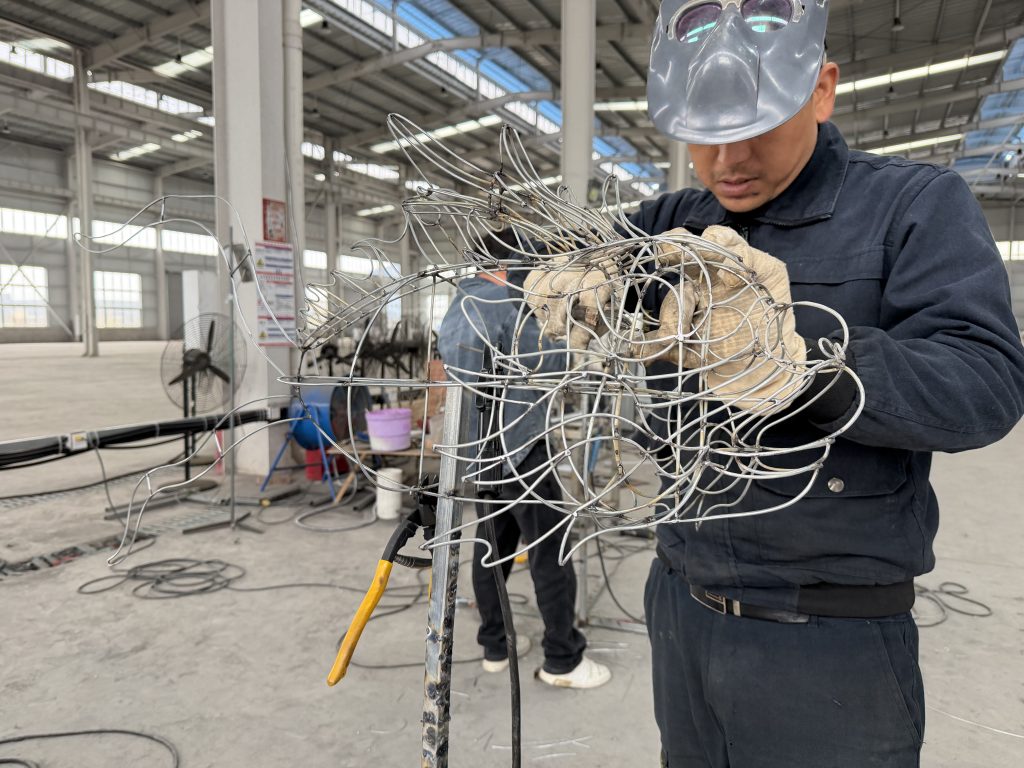
Instead of using a standard frame for every project, we design the internal steel structure according to the animal’s size, posture, and installation environment. This helps reduce deformation during shipping and keeps the lantern stable throughout the exhibition.
How to Identify a High-Quality Outdoor Animal Lantern
Appearance does not survive a winter. These are the seven questions that separate a supplier who has built for outdoor sites from one who has only built for photographs.
1. Is the internal frame galvanized steel, and what section? A yes or no tells you nothing. Ask for tube diameter and wall thickness — a 1.2 mm wall and a 2 mm wall look identical in a photograph and behave very differently after a season of wind load.
2. How is the frame reinforced where the load sits? Heads, raised legs and spread wings carry more than the body. A custom animal lantern supplier who cannot name the reinforced points has modelled the piece, not engineered it.
3. Are the LED modules and connectors rated for permanent outdoor exposure? Ask for the listing and the ingress rating. Indoor-rated modules usually fail at the connector, not at the LED.
4. Can it travel in modular sections, and what is the largest single piece? This decides whether the unit reaches your site at all. A section that does not clear the goods lift becomes a problem you own.
5. What is inspected before delivery, and do you receive the record? A lighting test, a structural check and a photograph of each. Verbal assurance is not a record.
6. Can they send production photographs week by week? A supplier with a real production line can photograph it. A trading company cannot.
7. What happens at the fabric seam? Most second-season failures begin where water collects at the seam and works into the frame. Ask how the seam is closed. This one question eliminates more suppliers than the other six combined.
A custom animal lantern supplier who answers all seven with specifics is telling you something. One who answers three and deflects the rest is telling you something too.
Material Selection Is What Makes Outdoor Animal Lanterns Last
Choosing the right materials is just as important as the design.
At AuroraGong, we carefully select materials based on outdoor performance rather than cost alone.
| Material | Why It Matters |
| Galvanized steel | Resists rust and provides long-term structural strength. |
| Outdoor-grade fabric | Maintains color, reduces wrinkles, and withstands UV exposure. |
| LED lighting | Produces bright, energy-efficient illumination with low heat. |
| Waterproof connectors | Protect electrical components during rain and humid weather. |
Using lower-quality materials may reduce the initial price, but it often leads to higher maintenance costs during the event.

Every Animal Requires a Different Structural Solution
No two animal lanterns are built the same way.
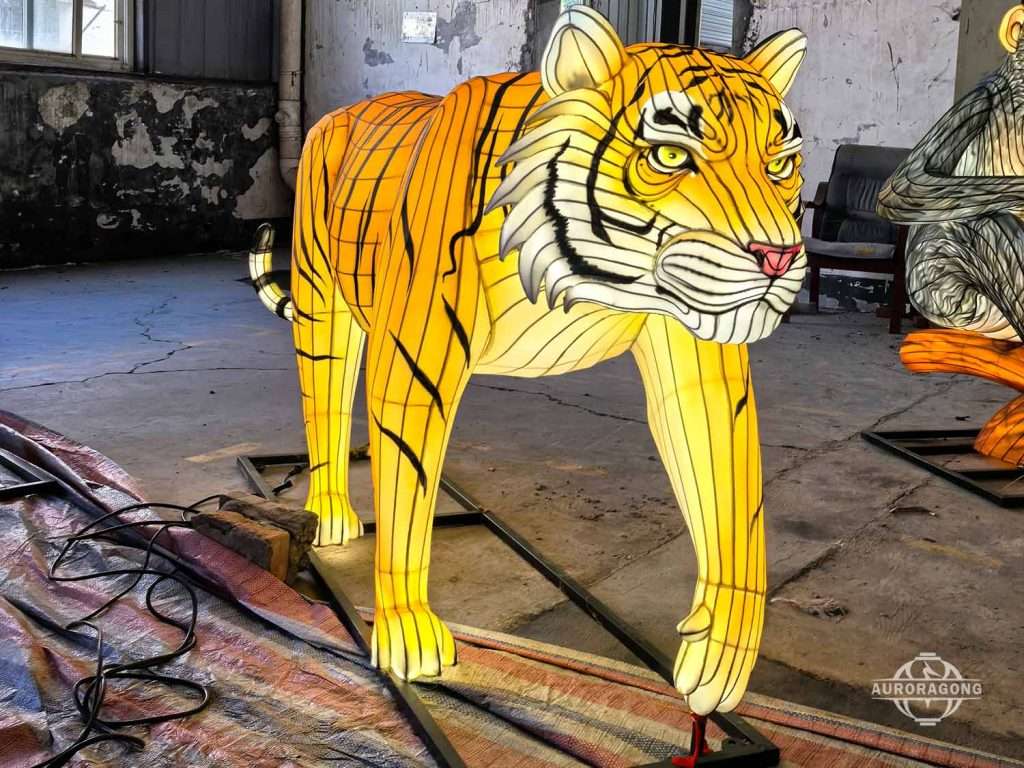
Tiger Lanterns
The front body carries more weight than the rear. Extra reinforcement around the shoulders and front legs improves stability during transportation.
Elephant Lanterns
Large bodies require stronger support inside the legs and body to distribute weight evenly.
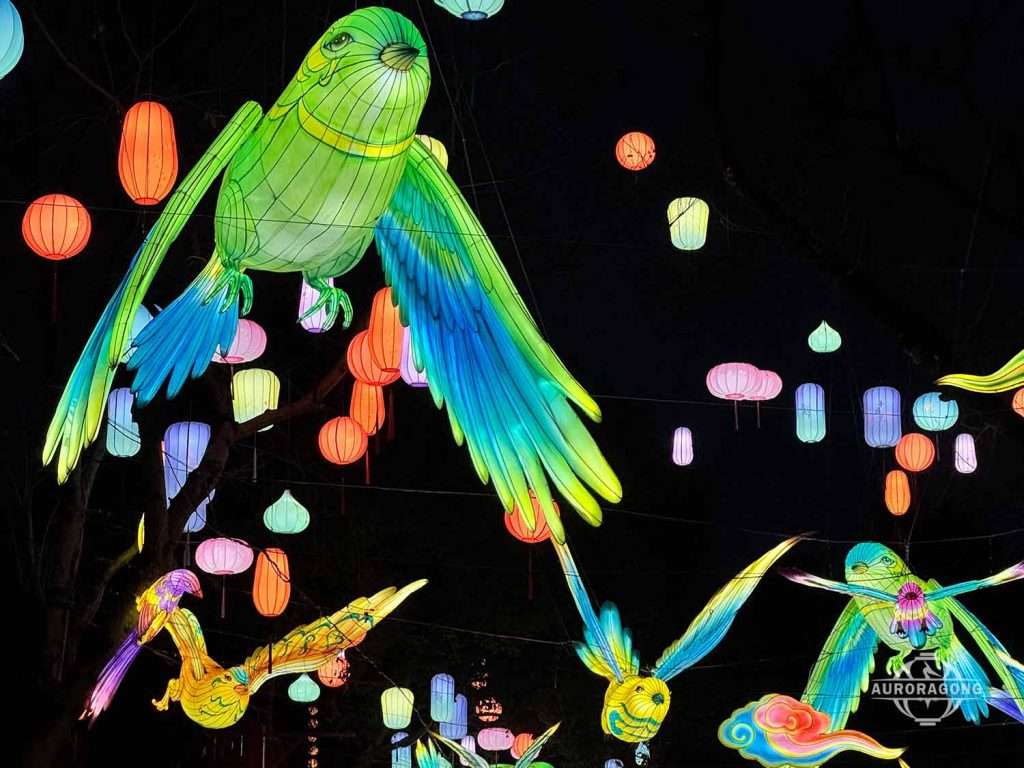
Bird Lanterns
Wide wings increase wind resistance, so lightweight frames with reinforced wing joints are often used.
Marine Animal Lanterns
Jellyfish, whales, and fish feature smooth curves that require flexible steel layouts to achieve natural shapes without damaging the fabric.
Designing the structure around the animal—not forcing every design into the same frame—is one of the biggest differences between experienced manufacturers and low-cost suppliers.
Inside AuroraGong Manufacturing Process
Every outdoor animal lantern follows a structured production process to ensure quality and durability.
Step 1 – Design Review
Confirm dimensions, proportions, and installation requirements.
Step 2 – 3D Modeling
Create a digital model to verify the structure before production.
Step 3 – Steel Frame Fabrication
Weld the internal frame and reinforce key load-bearing areas.
Step 4 – Shape Inspection
Check the frame against the design to ensure accurate proportions.
Step 5 – Fabric Installation
Stretch and secure the fabric for a smooth, wrinkle-free finish.
Step 6 – LED Installation
Install lighting and organize wiring with waterproof protection.
Step 7 – Quality Testing
Inspect lighting performance, electrical safety, and structural stability before shipment.
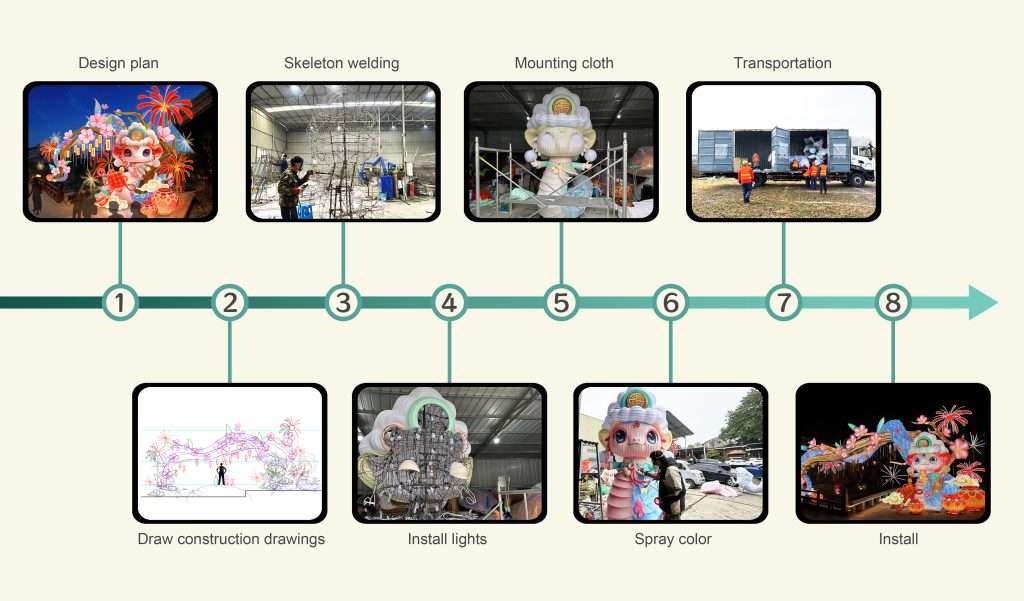
This process helps minimize installation issues and improves the lantern’s service life in outdoor environments.
How to Compare Outdoor Animal Lanterns Across Suppliers
When you compare outdoor animal lanterns from different suppliers, the photos all look similar at thumbnail size. The differences only show up in the specification sheet: steel tube diameter and wall thickness, fabric weight per square meter, the IP rating of the LED modules, and whether the seams are double-stitched or heat-sealed. For outdoor animal lanterns that will stand outside for a full season, ask for those four numbers in writing before you compare quotes.
Most outdoor animal lanterns that fail in their second season were never under-engineered in the frame. They failed at the fabric edge, where water collects at the seam and works its way into the steel underneath. A supplier who cannot tell you the fabric weight in grams per square meter, or who single-stitches a seam on a piece that will stand outside for three months, is handing that risk to you.
Every unit we ship is built on a galvanized steel frame, a fabric skin rated for full outdoor exposure, and UL- or CE-listed LED modules with waterproof connectors. Each crate also includes a spare parts kit: spare LED strips, spare fabric patches, and a wiring diagram. Ask any outdoor animal lanterns supplier what they put in the crate, and weigh that answer as carefully as you weigh the price.
Choosing the Right Animal Lantern Family for Your Site
Structure and materials decide how an outdoor animal lantern performs, but the animal form you choose decides how visitors respond. A zoo that wants one strong night-time icon usually starts with a large mammal or a marine centrepiece, while gardens and plazas often do better with smaller bird and insect forms arranged along a walking route. Because every form has its own load path and skin complexity, the practical starting point is a supplier who builds the whole range in-house instead of assembling a single model. You can review the complete range of custom animal lanterns side by side and match each form to the space, climate and foot traffic of your site.
Why AuroraGong Focuses on Engineering and Craftsmanship
At AuroraGong, we consider that a successful outdoor animal lantern requires not only creativity but also engineering.
We design our projects according to their specific size, theme, and the environment where they will be installed, and not vice versa. Each process involved, from the assembly of the frame to its lighting and quality control, is being handled accordingly so that the lantern becomes more durable, easier to install, and less requiring in maintenance.
Whatever is the purpose of the project – whether it is a zoo, botanic garden, theme park, or seasonal festival – we make sure that our lanterns remain safe and beautiful all the time.
FAQ
Q1: How long can outdoor animal lanterns be used outdoors?
When made of good materials and maintained well, outdoor animal lanterns can serve well during multi-month events and can even be reused in the future.
Q2: Why is galvanized steel commonly used?
The galvanized steel is durable as well as effective in protecting against rust due to exposure to the outdoors.
Q3: Can outdoor animal lanterns withstand rain?
Yes. It is because the professional manufacturers use the waterproof LED and seal the wiring.
Q4: Are large lanterns difficult to transport?
No. Generally, large lanterns are created in modular pieces which can be shipped easily and assembled at the place of destination.
Q5: What is the most important factor when choosing a lantern manufacturer?
Appearance should not be the only consideration. A company which possesses engineering skill, good materials, quality control and experience in manufacturing is bound to make durable lanterns.
Conclusion
An outdoor animal lantern is judged twice: once by a visitor in the dark, and once by a maintenance team in February. The first judgement is about the design. The second is about the frame, the seam and the connector — none of which appear in the photograph that won the order.
That is why the seven questions above matter more than a price comparison. A quote that comes in 20 per cent lower is usually 20 per cent less steel, and the difference shows up in the second season rather than the first.
If you have a site and an opening date, the next useful step is a specification conversation rather than a catalogue request.