
Most venue managers ask the same question first when they plan a lantern show: how do we move a few thousand visitors through the display without a bottleneck at every popular piece? The answer is not to add more lanterns. It is to plan the visitor route before the lantern themes. A workable lantern festival layout starts with the ground — the gates, the paths, the open lawns — and strings the lantern pieces along a route people can actually walk. This guide covers how we plan that route for botanical gardens, parks, and other large sites.


Start with the site, then choose the lanterns
Before picking a single lantern shape, walk the site with a tape measure and estimate footfall. Mark the entry and exit gates, the paths that already exist, the lawns and plazas, and any edge you cannot build near — a pond, a protected bed, a service road. The route has to follow what the site already gives you. A botanical garden reads best as a winding garden path that hides the next view; a city plaza wants a single central loop; a shopping street works as a line with lanterns on both sides. The lantern themes come after the route is set, not before. When a client sends a site plan first, the whole lantern festival layout moves faster because we are solving a real space, not a blank page.
String the key pieces into one loop
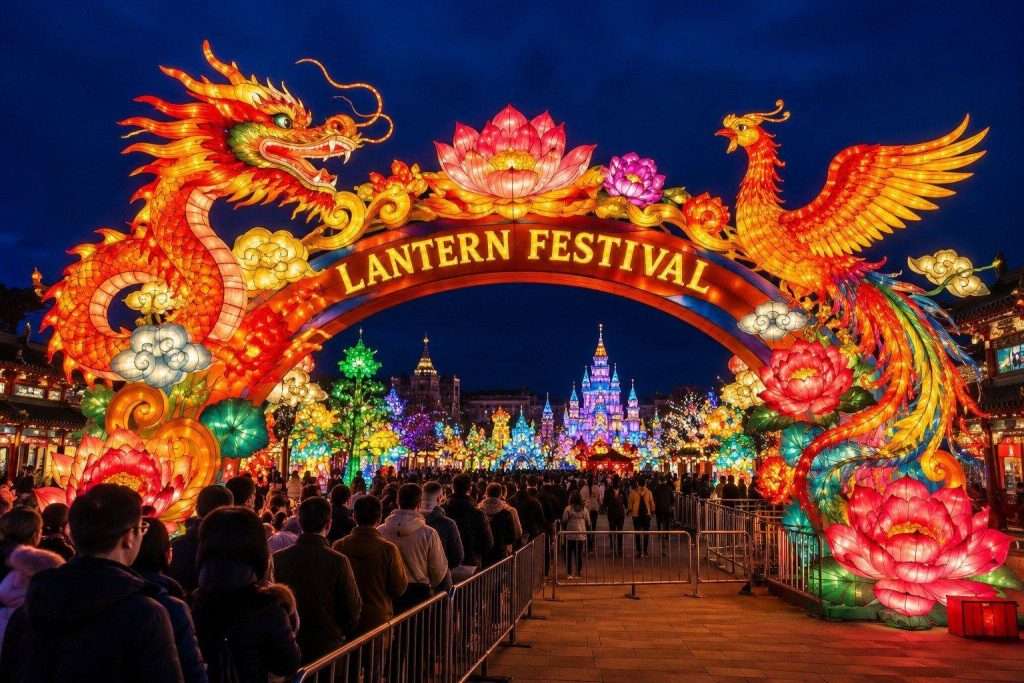
Every show has three to five anchor pieces — the tallest gate lantern, the most photo-worthy centerpiece, the one visitors travel for. Put those on the route first and connect them in an order that builds, so the view gets better as people walk, not worse. Run the route as a single-direction loop. Two-way flows cross, jam, and frustrate; a one-way loop keeps everyone facing the same way. At the narrow points and at each anchor piece, add a short branch lane so a crowd can split instead of stacking up. The branch is also where a family can step aside for a photo without blocking the line. The goal is simple: no point on the route where everyone stops at once.
String the key pieces into one loop
Every show has three to five anchor pieces — the tallest gate lantern, the most photo-worthy centerpiece, the one visitors travel for. Put those on the route first and connect them in an order that builds, so the view gets better as people walk, not worse. Run the route as a single-direction loop. Two-way flows cross, jam, and frustrate; a one-way loop keeps everyone facing the same way. At the narrow points and at each anchor piece, add a short branch lane so a crowd can split instead of stacking up. The branch is also where a family can step aside for a photo without blocking the line. The goal is simple: no point on the route where everyone stops at once.
Build height and depth so the view changes every few steps
A flat row of lanterns at one height goes stale after ten metres. Mix tall gate pieces, mid-height arches, and ground-level sets so the eye moves up and down. Place a distant piece across a lawn to pull visitors forward, then a close piece at eye level to slow them down. This is the old Chinese garden trick of “a scene at every step” — you never see the whole garden at once, only the next small view, so the walk feels longer and richer than the map suggests. We design the full set as one composition for exactly this reason. A piece placed alone looks like a prop; the same piece placed to open onto the next view looks like part of a place, and the lantern festival layout earns its space.

Put interactive pieces where the crowd can breathe
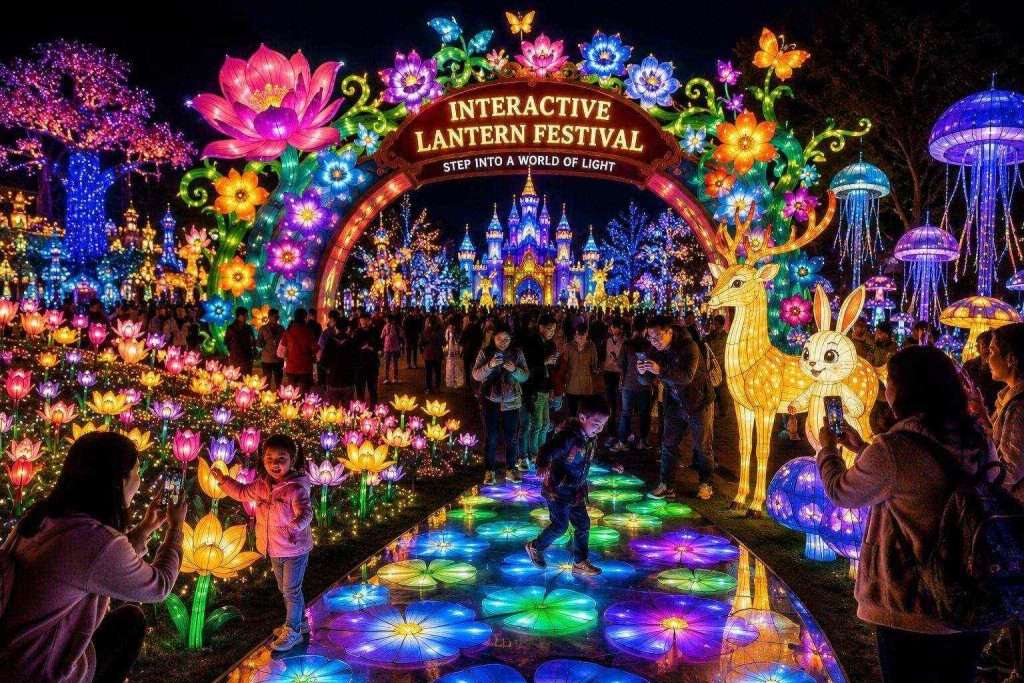
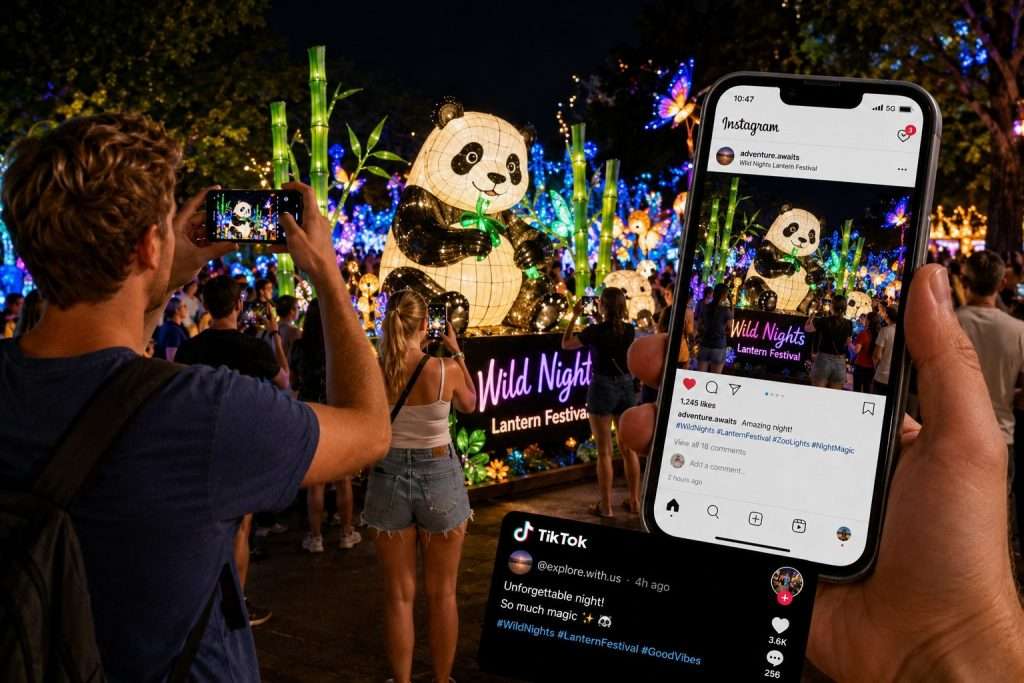
Interactive lanterns are popular, but they need room. Do not drop an interactive piece into the narrowest lane and hope the line stays short. Place it where the path opens up, with space for a group to gather and drift. For the interaction itself, phone-scan works better than on-site screens: visitors use their own device, so there is no extra hardware queue and no second line to manage. Match the interaction point to where the crowd is thin, not to where the novelty looks best on a render. A good interactive moment adds three minutes of dwell without adding a bottleneck — that is the only kind worth building into a lantern festival layout.
Plan rest, water, and activity zones into the route
Use this paragraph section to get your website visitors to know you. Write about you or your organization, the products or services you offer, or why you exist. Keep a consistent communication style. Consider using this if you need to provide more context on why you do what you do. Be engaging. Focus on delivering value to your visitors.
Tie the main path and side paths together
The main spine carries most of the flow; the side paths lead to the rest areas, the water view, and the quieter pieces. Light the paths themselves — not just the lanterns — so visitors can see where to walk after dark and stay on route instead of cutting across beds. A simple sightline from one path to the next tells people where to go without a sign at every turn. When the spine and branches read as one connected system, the site feels planned rather than patched, and the lantern festival layout holds up on the busiest night.
What to send your lantern vendor (procurement checklist)
The layout is only as good as the brief behind it. Before asking for a quote, pull together four things: a site plan with real dimensions, your expected peak footfall and how many nights the show runs, the zones that are fixed (a pond, a plaza, a gate you cannot move), and the anchor pieces you already have in mind. With those, a vendor can return a layout, not just a price. AuroraGong designs, builds, and installs lantern and light displays as one scope — we have done it for festivals, parks, and cultural venues in more than 40 countries since 2012, so the route, the structures, and the install are planned by the same team. Send the site plan and we return a lantern festival layout that moves people. See our custom lantern solutions page for how sizing, motifs, and lighting are planned before anything is built.
Get the loop right and the lanterns take care of themselves
A lantern show lives or dies on the route. Get the loop right and the lanterns take care of themselves. If you are scoping a show this season, start with the site plan — that is the fastest way to a layout that works on opening night. For European venues, our light sculpture work follows the same route-first principle at a larger scale.