
Extended hours after dark have become some of the most successful means of boosting revenues for many parks without the need to expand the park in any way. A properly created custom lantern display has the power to turn current areas into engaging attractions that would encourage returning, additional spending, and sharing.
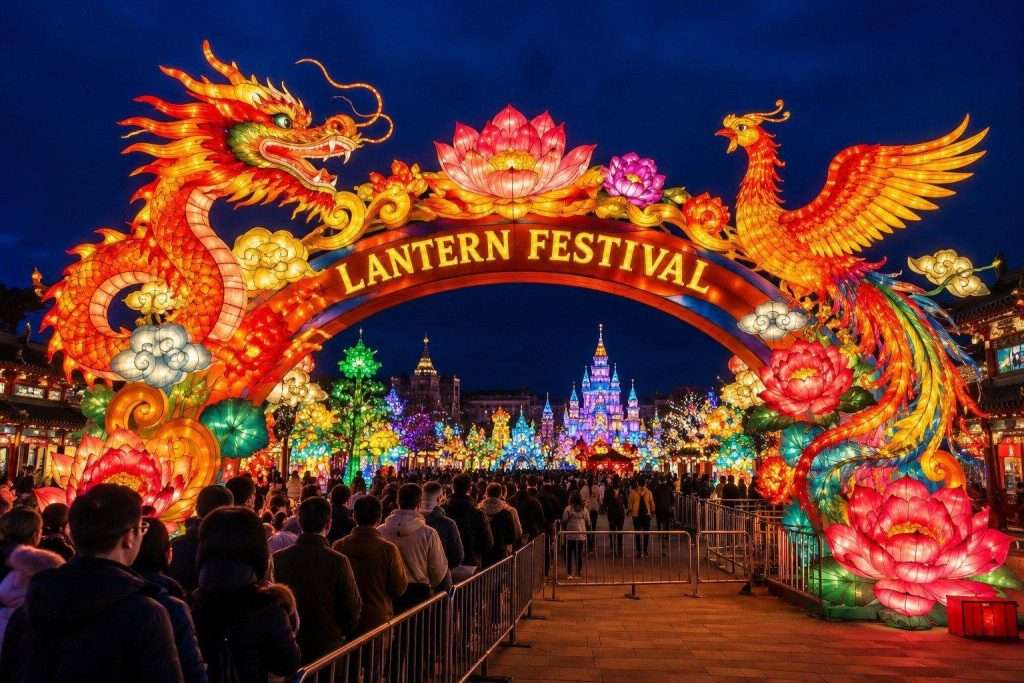
Nevertheless, not all lantern festivals prove to be a sound investment. It all boils down to planning and implementation.
Why Theme Parks Are Investing More in Nighttime Attractions
There is a trend in the global attractions industry toward giving more attention to the nighttime economy. The TEA/AECOM Theme Index shows that top theme parks are continuously improving their immersive guest experiences to draw crowds and to bring them back for more visits. IAAPA points out that seasonals and night attractions are useful methods of extending park operating hours and increasing guest interactions.
Nighttime attractions cost less to create compared to new rides as they help to bring alive gardens, plazas, lakes, and pathways without having to incur huge costs of construction.
A well-designed custom lantern display offers more than attractive theme park lighting. It creates new reasons for visitors to return during holidays and seasonal events while making better use of park infrastructure after sunset.
For many destinations, successful nighttime events help to:
- Increase repeat visitation
- Extend guest dwell time
- Boost food, beverage, and retail sales
- Generate more user-created social media content
- Maximize the value of existing park assets
Rather than replacing existing attractions, lantern festivals create additional revenue opportunities by transforming underused nighttime spaces into memorable visitor experiences.
Is a Custom Lantern Display More Cost-Effective Than Other Night Attractions?
Every nighttime attraction has different strengths. The best option depends on project goals, operating schedule, and available budget.
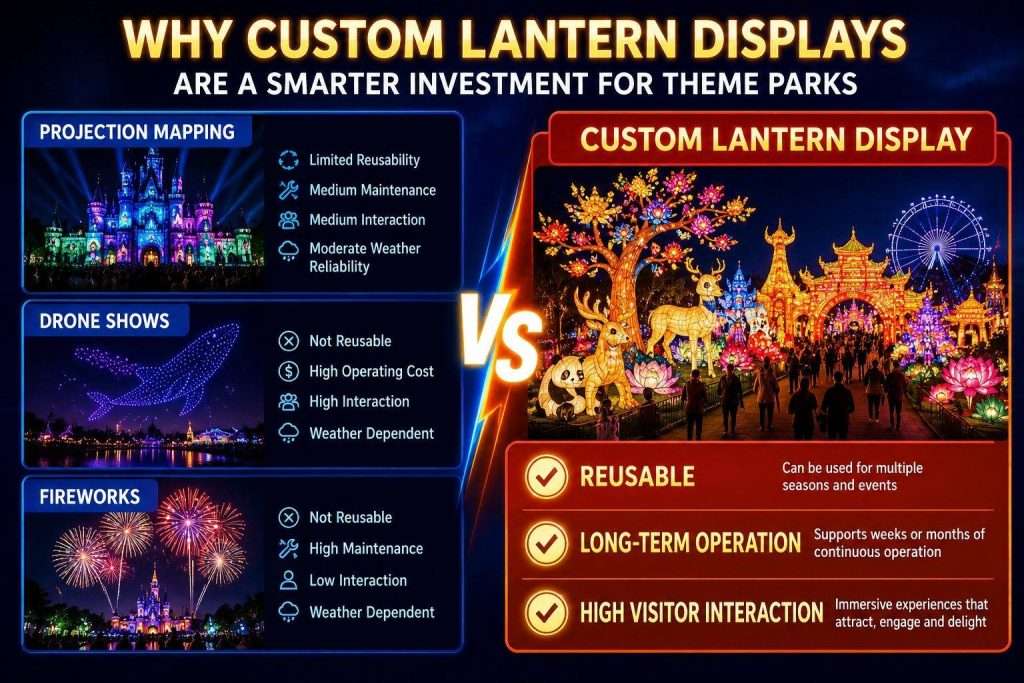
| Attraction Type | Reusable | Maintenance | Visitor Interaction | Weather Reliability |
| Projection Mapping | Limited | Medium | Medium | Moderate |
| Drone Shows | No | High | High | Weather-dependent |
| Fireworks | No | High | Low | Weather-dependent |
| Standard Decorative Lighting | Yes | Low | Low | High |
| Custom Lantern Display | Yes | Low-Medium | High | High |
One advantage of a custom lantern display is its long service life. In contrast to performances that need recurrent costs to operate each time, lantern exhibits can stay open for weeks or even months on end, which helps in spreading out the initial costs of the project over time.
Some of the lantern displays can be reused, moved, or adapted for future festivals.
ROI Depends on More Than Ticket Sales
One common misconception is that lantern festivals only generate revenue through admission tickets.
In reality, successful projects often increase revenue across multiple areas.
Instead of asking, “How many tickets can we sell?”, operators may benefit more from asking:
- Will visitors stay longer?
- Will families spend more on food and beverages?
- Will guests purchase themed merchandise?
- Will the event encourage repeat visits?
- Can the festival attract corporate sponsorships or local tourism partnerships?
Viewed from this perspective, the investment becomes part of a broader visitor experience rather than a standalone lighting project.
Typical Investment Costs for Custom Lantern Displays
The first question that most operators ask when planning their projects is: How much does a custom lantern display cost?
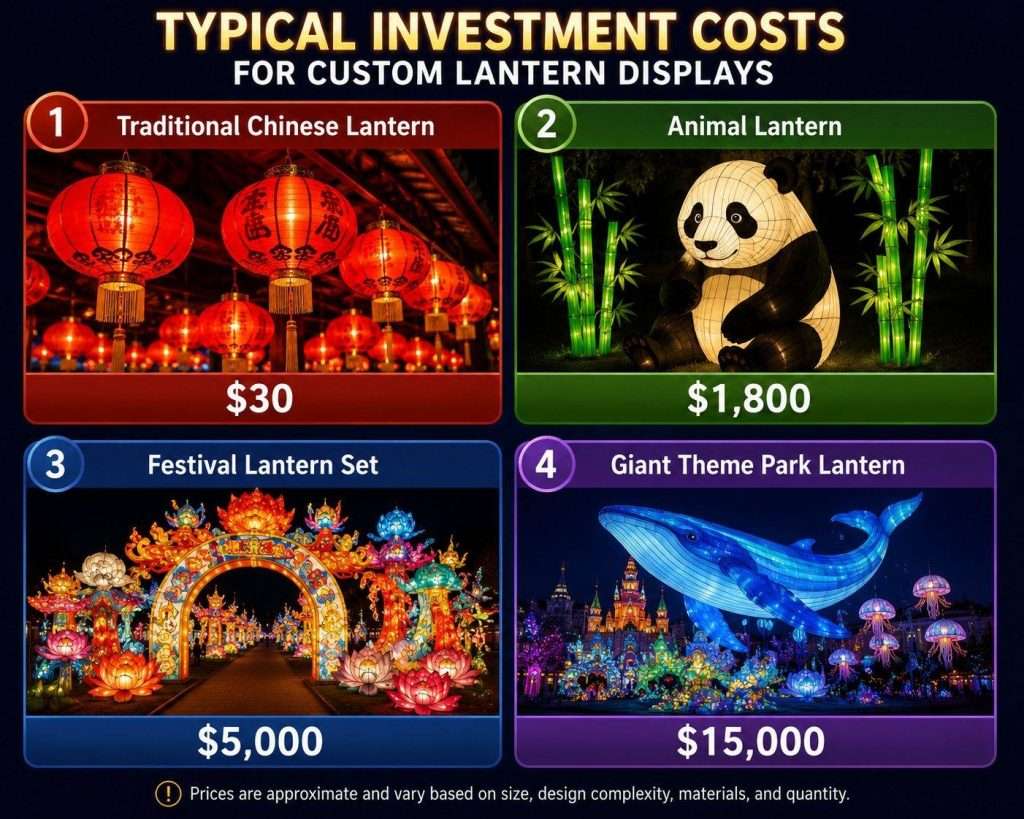
The cost of the custom lantern displays can be quite different depending on the project size, design, materials, etc. However, here are the approximate prices for your reference.
| Lantern Type | Typical Price (USD) |
| Traditional Chinese Lantern (Round Lantern, Winter Melon Lantern) | Around $30 each |
| Small Realistic Animal Lantern | $1,500–2,000 |
| Medium Festival Lantern Display | Around $5,000 |
| Large Festival Lantern Display | Around $15,000 |
Theme parks in general require a cluster of lanterns to be put up instead of just a lantern exhibit. The budget of the project will greatly depend on the number of themed areas and interactive parts and the number of personalized sculptures created.
As opposed to building permanent attractions and organizing massive nighttime entertainment performances, customized lantern exhibits allow making a more flexible investment.
Eight Factors That Determine Investment Value
1. Visitor Experience
Good lantern festivals have a narrative to them instead of just putting lights on display.
Interactive walkways, themes, familiar characters, and photo spots make people want to stay in the park longer.
2. Reusability
In contrast to decorative items meant only for one occasion, good lantern displays usually use a structure that can be reused.
They can be easily modified to create a new display by changing the theme, lights, or decorations.
3. Maintenance Requirements
Maintenance will always be predictable if strong materials, waterproof lights, and modular electricity are used.
Inspections will normally concentrate on lighting efficiency, structural integrity, and cleaning the surfaces instead of carrying out extensive maintenance work.
4. Installation Time
The schedule for installing equipment depends on the scale of the project, but coordination during the design phase greatly reduces the need for on-site assembly.
In addition, modular assembly will allow a lot of equipment to be put together before delivery to the park.
5. Safety
Safety of the visitors must be the first concern in any public attraction.
Good structural design, sturdy foundations, fire-resistant materials when needed, proper installation of electricity, and well-designed visitor movement are all factors that ensure safe running of the event.
6. Weather Resistance
Outdoor theme park lighting must withstand changing environmental conditions.
Some ways in which this is done include waterproof lighting, steel structures that don’t corrode, UV resistance, and good anchoring.
7. Power Consumption
Modern LED lights use much less power compared to traditional lighting systems.
Since the lantern shows depend more on decorative lighting systems than floodlights, the running costs are relatively low even in expansive venues.
8. Customization
Theme parks never have exactly the same target market or image.
An entirely custom-tailored project can allow the park to create its own unique attractions based on new IP characters, wildlife themes, fairy tales, cultural stories, season-based themes, or even branded attractions that do not exist anywhere else.
Unique appeal can sometimes become one of the strongest motivations for choosing one place over another.
Lessons from Completed Lantern Festival Projects
From a collection of projects completed in the theme parks, botanical gardens, zoos, and public events, there are some recurring themes that become evident.
First, the good lantern festival starts from the guest’s experience as opposed to just designing good-looking lanterns. The most successful designs will take visitors through themed zones instead of just offering separate photo opportunities.
Second, customization adds much more value. When a park adds something from its local culture, seasonal theme, intellectual property, and even brand, they will provide an experience that is much harder to reproduce.
Third, lantern festivals should be connected to other experiences in the park. Dining, entertainment, retail, and interaction will make visitors spend more time and money in the park.
Overall, these projects show that the success of a lantern festival as a commercial venture cannot be achieved by good installations alone.
When a Lantern Festival May Not Be the Best Investment
A lantern festival is not a suitable idea for all projects.
For a very short-lived event, or for an event with very limited capacity of visitors, or for an event which does not have night-time services, other types of entertainment might be more profitable.
It is usually more profitable for lantern displays to be used in multi-day or even multi-month long events that will attract visitors back again and make use of the existing park facilities.
In other words, the success of the lantern festival relies more on the way the lanterns are integrated into the entire visitor experience than on the lanterns themselves.