
Every giant dinosaur lantern starts with a simple idea and is transformed through design, steel fabrication, hand sculpting, LED installation, painting, quality testing, and final assembly.
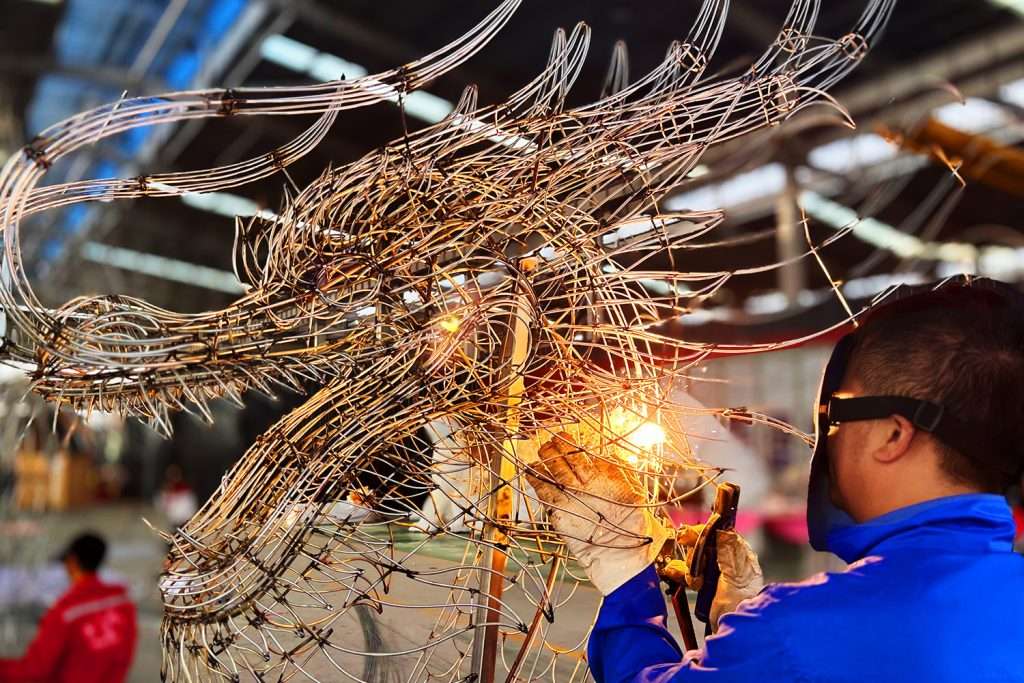
Whether you’re planning a zoo exhibition, theme park, or lantern festival, understanding the manufacturing process can help you choose the right supplier and ensure a successful project. Here’s an inside look at how professional dinosaur lanterns are made from start to finish.
From Concept to Blueprint
Every custom dinosaur lantern begins with understanding the client’s vision.
Before production starts, the design team collects key information, including:
- Installation location
- Theme of the event
- Dinosaur species
- Desired size
- Interactive features
- Budget and project timeline
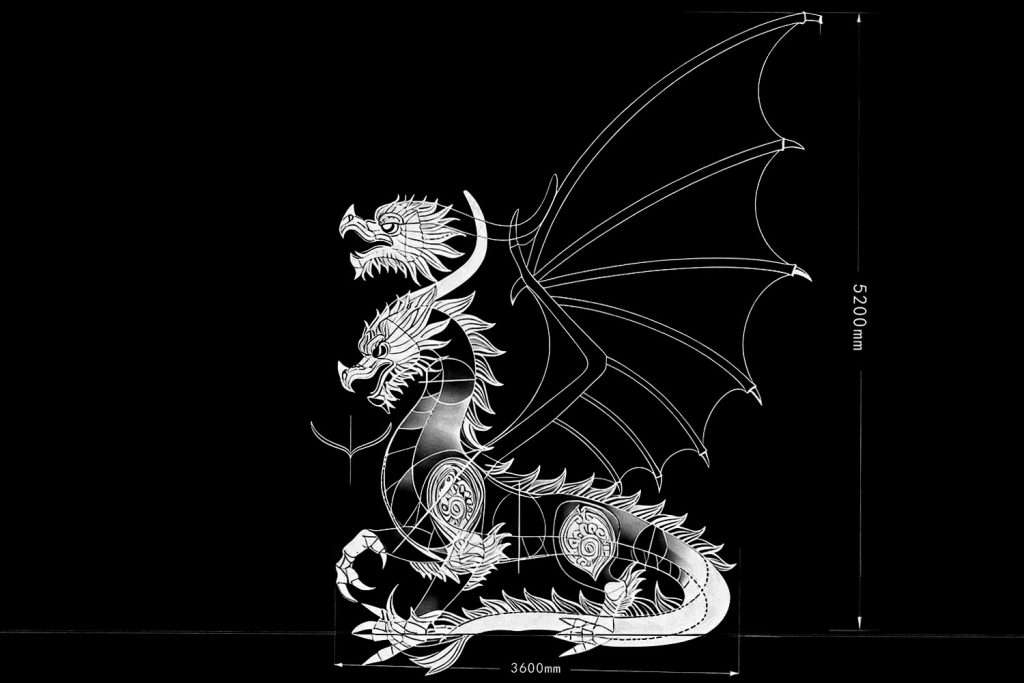
Using this information, designers create 3D renderings and technical drawings to determine the proportions, internal structure, lighting layout, and transportation method.
For large projects, engineers also divide the lantern into transportable modules, ensuring it can fit into shipping containers and be assembled efficiently on-site.
Building the Steel Skeleton
The steel frame is the hidden backbone of every dinosaur lantern.
Experienced welders use galvanized steel pipes and steel bars to create a strong internal framework capable of supporting the lantern’s weight while resisting wind and outdoor conditions.
The frame determines:
- Overall shape
- Structural stability
- Load distribution
- Installation safety
For large dinosaurs exceeding 8 meters in height, additional reinforcement is added to critical load-bearing points to improve stability during transportation and exhibition.
Although visitors never see the internal frame, it is one of the most important factors affecting the lantern’s lifespan.
Sculpting the Dinosaur Shape
Once the frame is completed, artists begin transforming the metal structure into a realistic dinosaur.
This stage combines traditional craftsmanship with artistic expertise.
Workers carefully shape the body using:
- Steel mesh
- Flexible wire
- High-strength fabric
- Sculpting materials
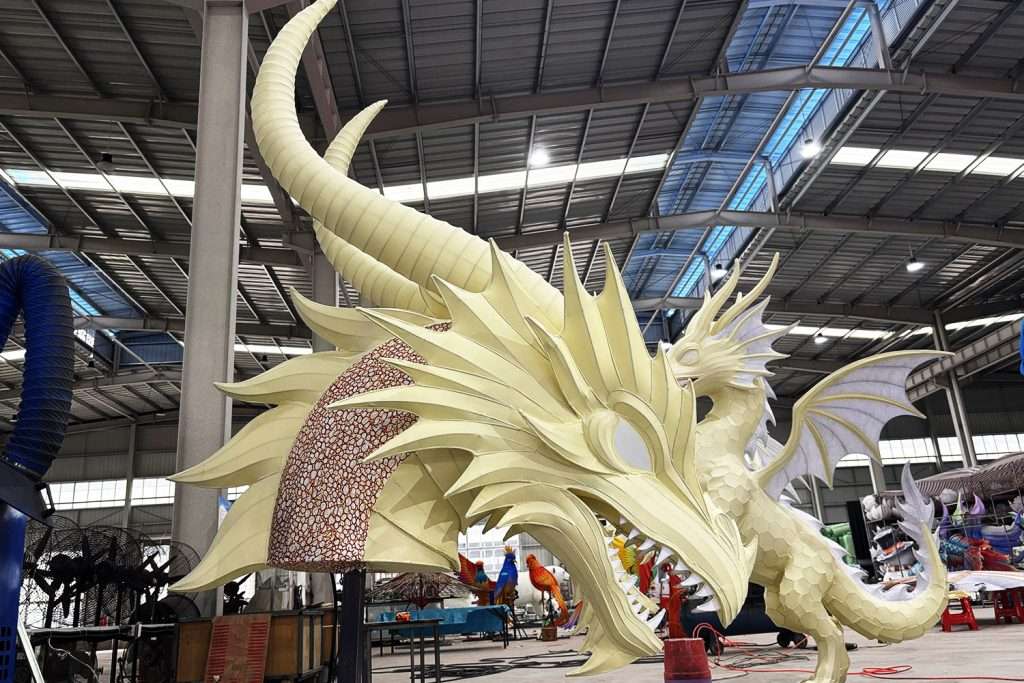
Every muscle, claw, tail, and facial feature is adjusted by hand to recreate the dinosaur’s natural posture.
Instead of relying on standardized molds, experienced craftsmen refine every detail individually, giving each dinosaur its own unique appearance.
This handcrafted process is one reason premium dinosaur lanterns achieve such realistic visual effects.
Installing the LED Lighting System
Lighting is what transforms a sculpture into a spectacular nighttime attraction.
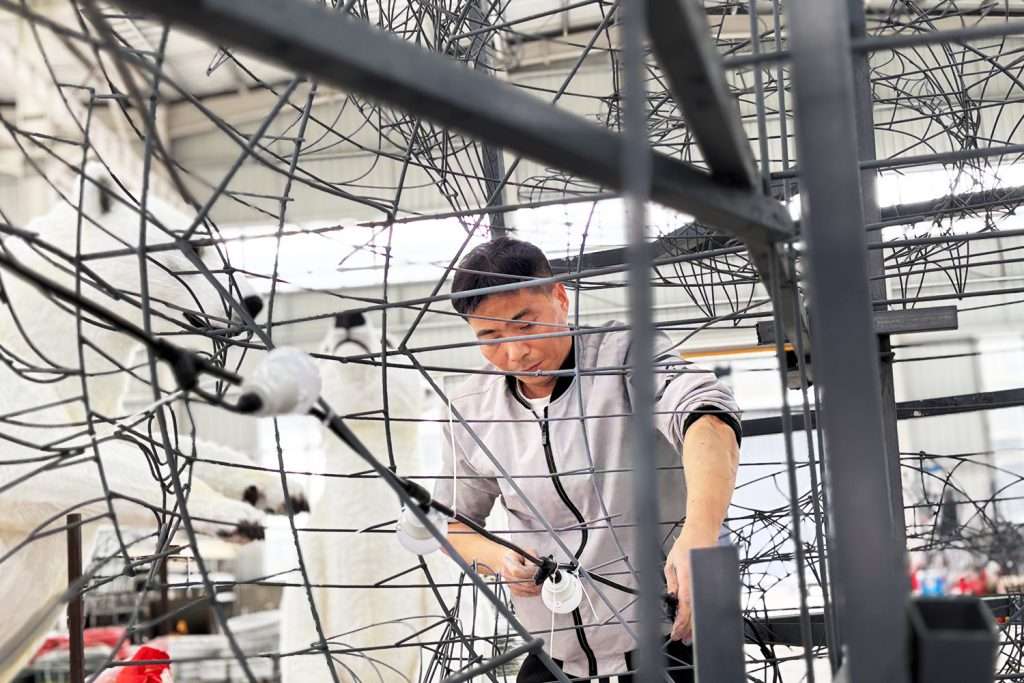
Technicians install thousands of energy-efficient LED lights throughout the dinosaur’s body, carefully routing cables inside the frame to keep the exterior clean and seamless.
Depending on the project requirements, the lighting system may include:
- Static illumination
- Color-changing RGB LEDs
- Dynamic lighting effects
- Programmable control systems
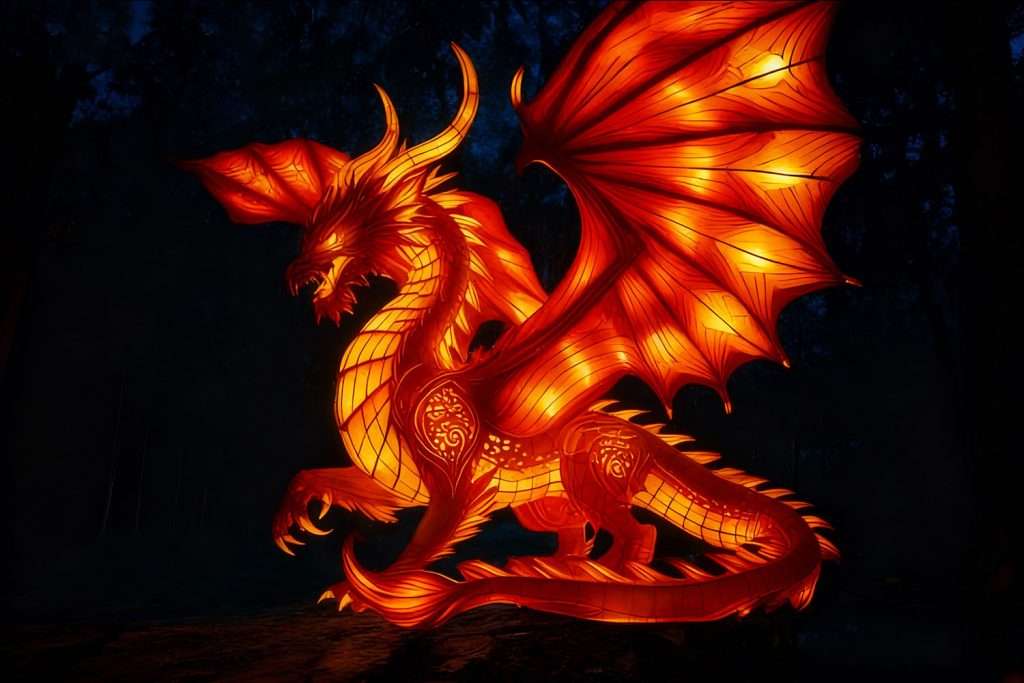
Outdoor dinosaur lanterns also use waterproof electrical components and insulated wiring to ensure safe operation during rain and humid weather.
The lighting layout is designed to highlight textures, create depth, and produce vivid nighttime visuals while minimizing energy consumption.
Hand Painting and Artistic Finishing
After the lighting system is installed, artists begin one of the most creative stages—painting.
Using brushes and spray equipment, they carefully apply multiple layers of color to create realistic skin textures, shadows, and gradients.
Special attention is given to details such as:
- Eyes
- Teeth
- Scales
- Claws
- Skin patterns
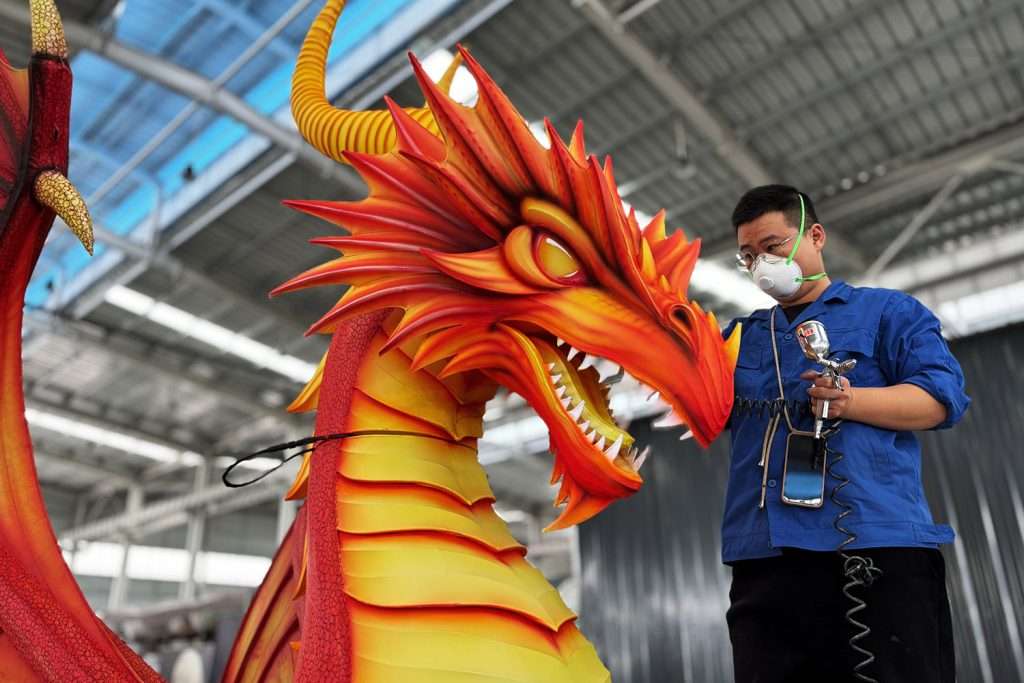
Because every dinosaur species has different characteristics, the painting process often involves extensive reference to scientific illustrations and fossil reconstructions.
The goal is not simply to create bright colors, but to make each dinosaur appear vivid and believable from every viewing angle.
Quality Inspection and Performance Testing
Before leaving the factory, every dinosaur lantern undergoes comprehensive quality inspections.
Technicians test:
- Structural stability
- Lighting performance
- Electrical safety
- Waterproof capability
- Surface finish
- Control systems
Large lanterns are typically powered continuously for extended periods to verify stable operation and identify any potential electrical issues before shipment.
Only after passing all inspections does the lantern move to the packaging stage.
Modular Packing and Global Shipping
One challenge of manufacturing giant lanterns is transportation.
To reduce shipping costs and simplify installation, most dinosaur lanterns are designed with a modular structure.
Large components such as:
- Head
- Body
- Tail
- Legs
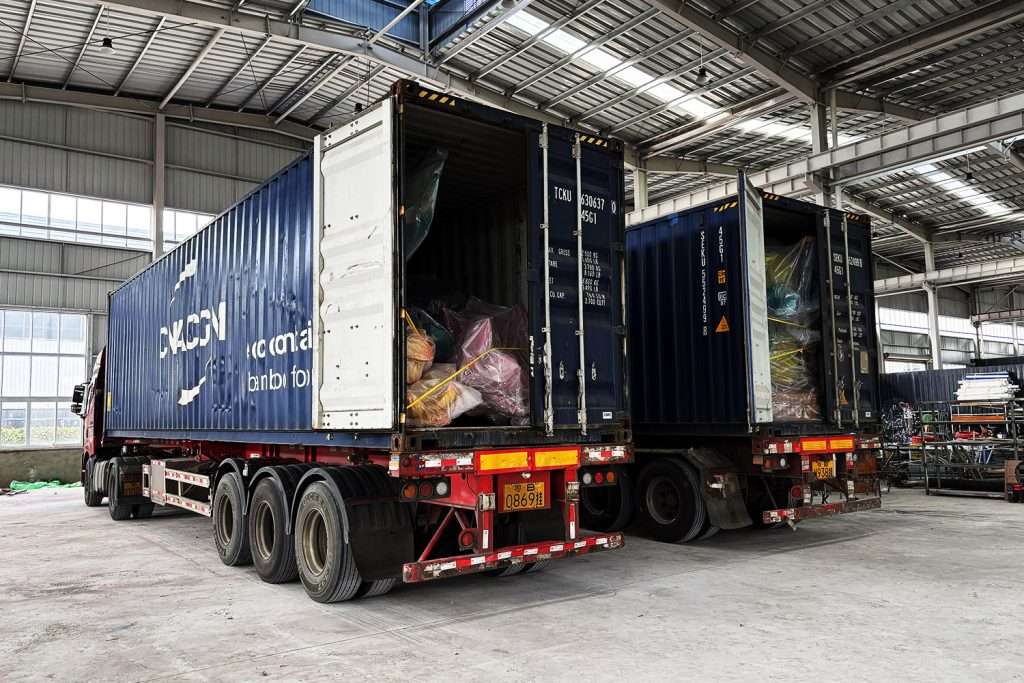
can be separated into manageable sections for loading into standard containers.
Each component is carefully labeled and protected with cushioning materials to prevent damage during international transportation.
This modular design also makes future maintenance and repeated use much easier.
On-Site Installation
Once the lantern arrives at its destination, professional installation teams assemble the modules according to engineering drawings.
The installation process usually includes:
- Positioning the steel base
- Connecting structural components
- Installing electrical wiring
- Testing the lighting system
- Final adjustments and safety inspection
Depending on the project size, installation may take anywhere from a single day to several weeks.
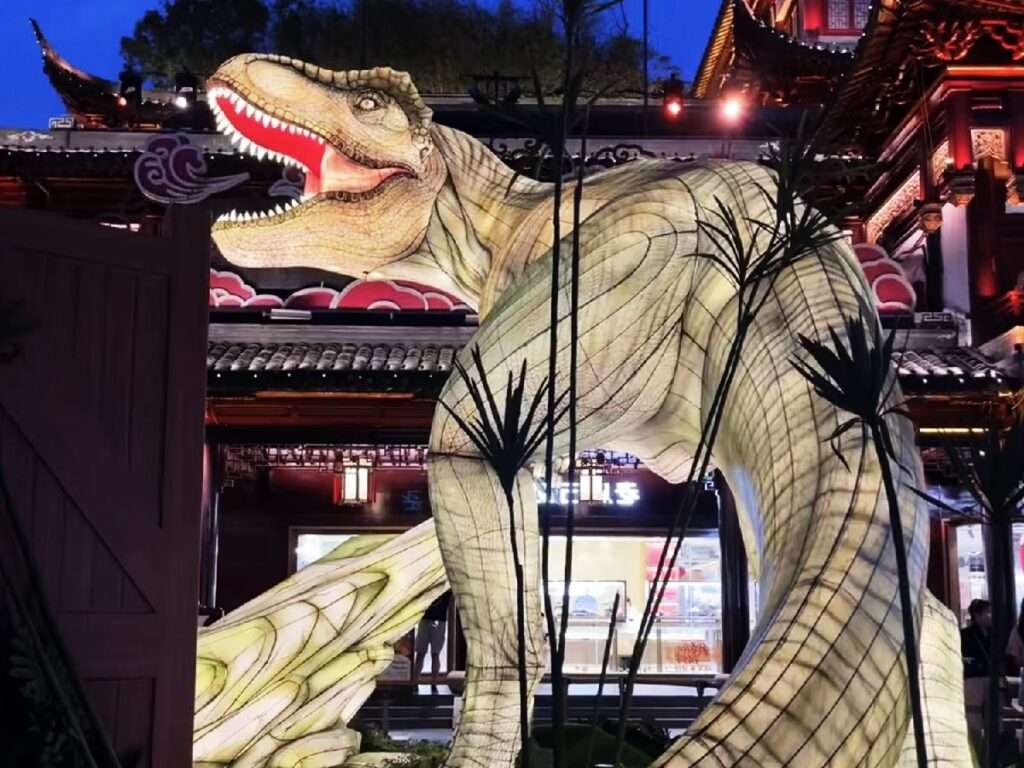
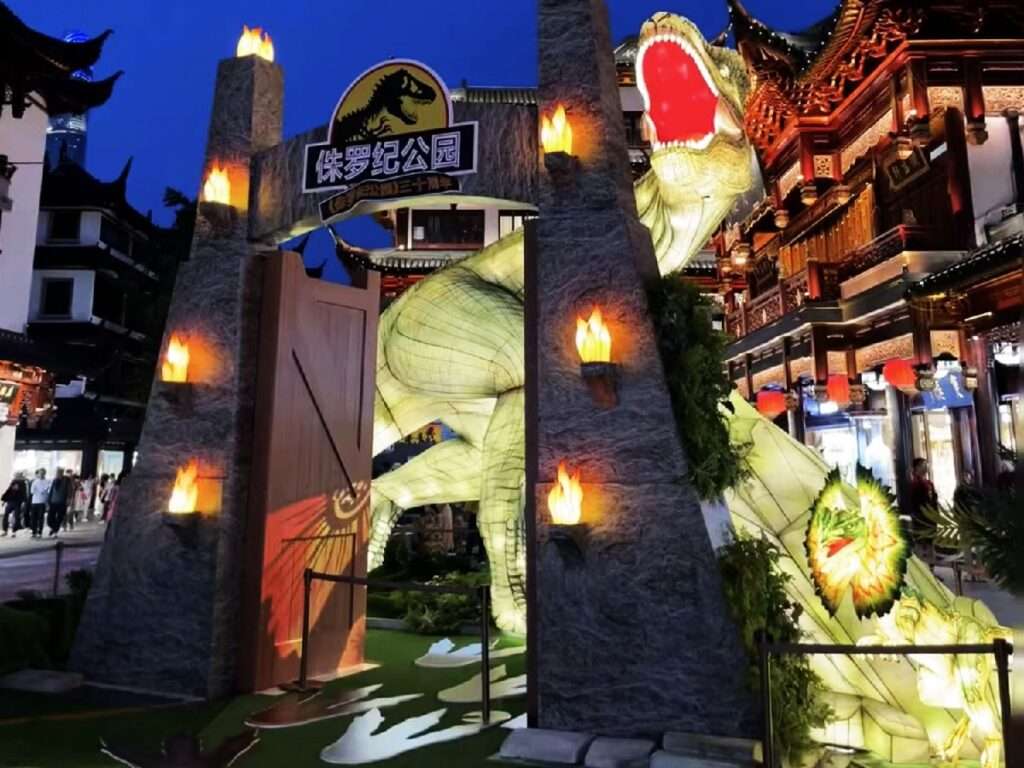
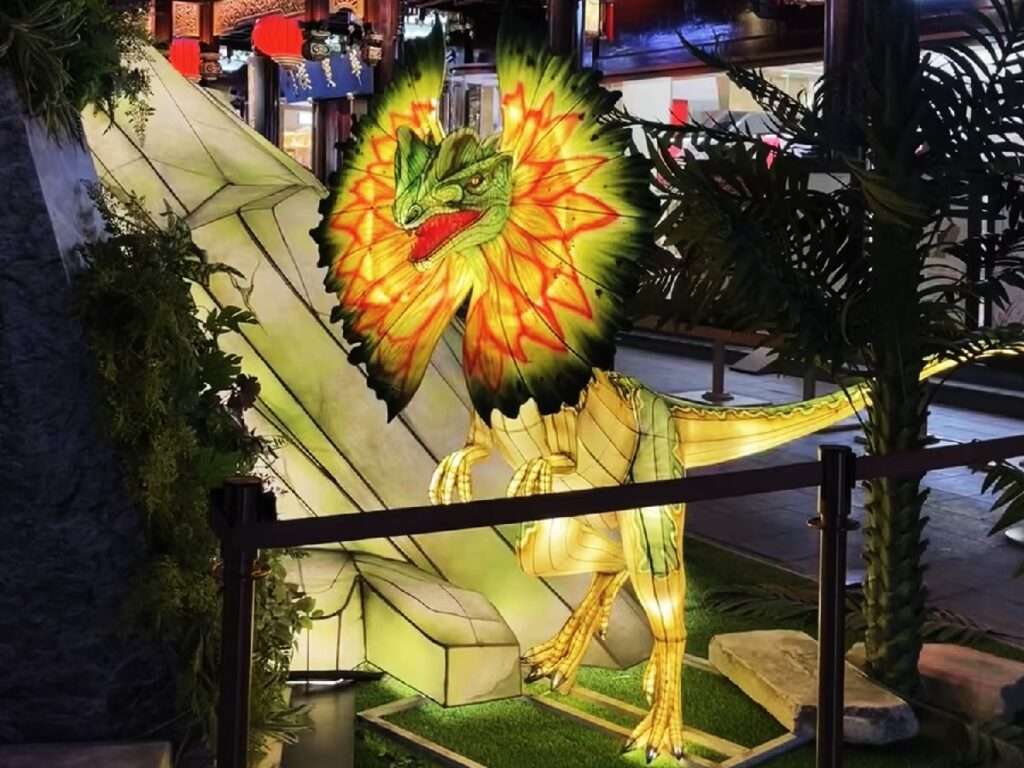
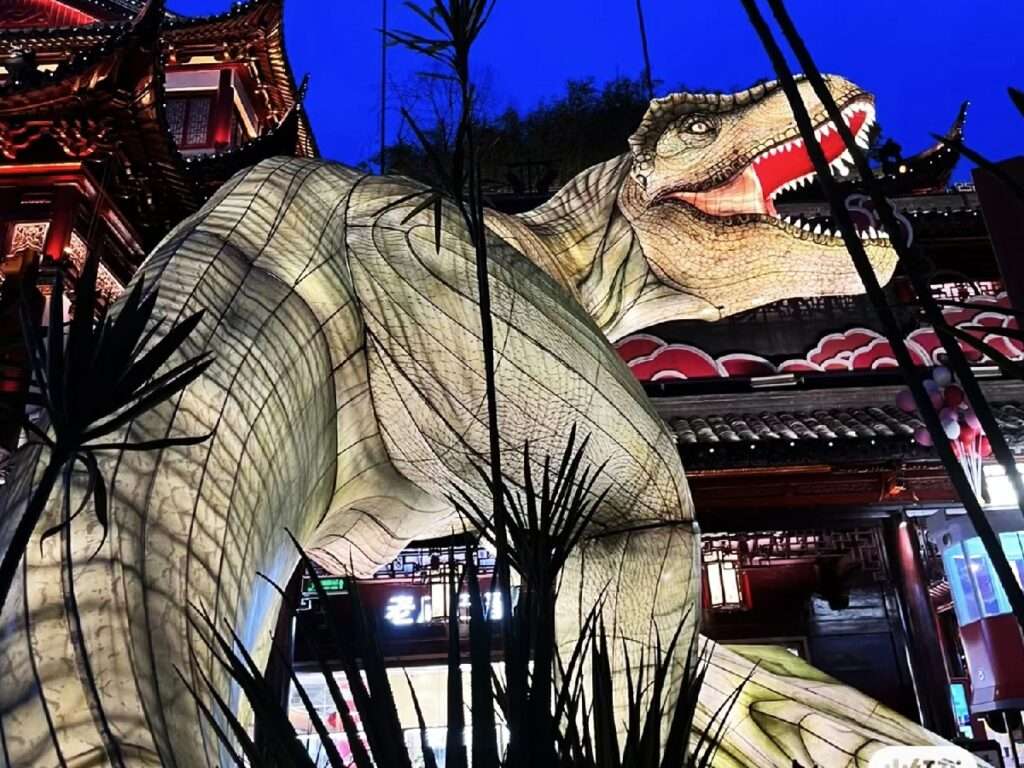
After dark, technicians conduct a full lighting test to ensure every section performs as designed before the exhibition officially opens.
What Determines the Production Time?
Many buyers ask, “How long does it take to build a dinosaur lantern?“
The answer depends on several factors:
| Factor | Impact on Production |
| Lantern size | Larger lanterns require more structural work and detailing. |
| Quantity | Multiple lanterns can often be produced simultaneously. |
| Custom design | Unique concepts require additional engineering and sculpting time. |
| Interactive features | Movement, sound, and animation increase production complexity. |
| Seasonal demand | Production schedules become busier before major festivals. |
As a general guideline:
- Small lanterns: 7–10 days
- Medium lanterns: 15–20 days
- Large custom lanterns: 30–45 days
Complex themed exhibitions may require several months of coordinated production.
Why More International Clients Choose Chinese Dinosaur Lantern Manufacturers
China has become the world’s leading manufacturing center for festival lanterns due to its complete supply chain, experienced craftsmen, and mature production techniques.
Professional manufacturers offer:
- Custom design services
- Large-scale production capacity
- Skilled manual craftsmanship
- Competitive manufacturing costs
- International shipping experience
- On-site installation support
For buyers planning zoo events, theme parks, cultural festivals, or holiday attractions, working directly with an experienced manufacturer often provides greater flexibility, better quality control, and shorter production cycles.
At AuroraGong, every dinosaur lantern is handcrafted by experienced artisans who combine traditional lantern-making techniques with modern engineering. From concept design to overseas installation, we help clients transform creative ideas into unforgettable illuminated attractions enjoyed by visitors around the world.
FAQ
Q1. What materials are commonly used to make dinosaur lanterns?
Most professional dinosaur lanterns are built with galvanized steel frames, LED lighting, colored silk or waterproof fabric, steel mesh, electrical wiring, and weather-resistant coatings. The exact materials vary depending on whether the lantern is designed for indoor or outdoor use.
Q2. Can dinosaur lanterns be customized to match a specific theme?
Yes. Manufacturers can customize the size, color, pose, species, lighting effects, and even integrate branding elements to match zoo events, holiday festivals, museums, or theme parks.
Q3. Are dinosaur lanterns safe for public exhibitions?
Yes. Professional manufacturers use flame-retardant materials, insulated wiring, waterproof electrical components, and reinforced steel structures. Before delivery, the lanterns are tested to ensure they meet safety requirements for public events.
Q4. Can dinosaur lanterns operate during rain or snow?
Outdoor dinosaur lanterns are designed to withstand normal rain, humidity, and seasonal weather. However, extreme weather conditions such as hurricanes or heavy snowstorms may require temporary shutdown or additional protection.
Q5. What is the largest dinosaur lantern that can be manufactured?
There is no fixed size limit. Many manufacturers have produced dinosaur lanterns over 15 meters (49 ft) long and 10 meters (33 ft) high. Larger projects are typically designed in modular sections for easier transportation and installation.
Q6. Can dinosaur lanterns include interactive features?
Yes. Depending on the project, lanterns can be equipped with motion sensors, synchronized sound effects, animated movements, smoke machines, or interactive lighting to create a more immersive visitor experience.
Q7. Do dinosaur lanterns require regular maintenance during an exhibition?
Routine maintenance is minimal. Daily inspections usually include checking electrical connections, cleaning the surface, and ensuring the lighting system operates properly. For long-term exhibitions, periodic inspections help maximize service life.
Q8. How should dinosaur lanterns be stored after an event?
After disassembly, each module should be cleaned, dried, and packed in protective materials. Storing the lanterns in a dry indoor warehouse helps prevent corrosion and extends their lifespan for future events.
Q9. What information should buyers prepare before requesting a quotation?
To receive an accurate quotation, buyers should provide the installation location, preferred dinosaur species, dimensions, quantity, required delivery date, whether animation is needed, and any custom design requirements.
Q10. What should you look for when choosing a dinosaur lantern manufacturer?
Look for manufacturers with proven project experience, original factory production, custom design capabilities, international shipping experience, quality control procedures, and installation support. Reviewing completed projects and customer references is also highly recommended.