
Chinese lantern festivals have moved way past the old school dragons and zodiac animals. These days, people can find themselves face to face with softly glowing heroes pulled from very popular global games, like Genshin Impact, Honor of Kings, and League of Legends. Each character is remade as a huge illuminated sculpture, standing there in real space. What makes the display feel lasting is that it works as a permanent piece, because there is no digital projection and no LED screens doing the showing. The artisans built the lantern structures using deep knowledge from ancient building methods, then they blended that understanding with modern manufacturing routines.
Zigong is the main hub for this process because people worldwide recognize it as the primary location for lantern production. The lantern makers of this region developed specialized methods that enable virtual game characters to become physical entities while retaining their full visual and physical characteristics.
 Genshin Impact
Honor of Kings
League of Legends
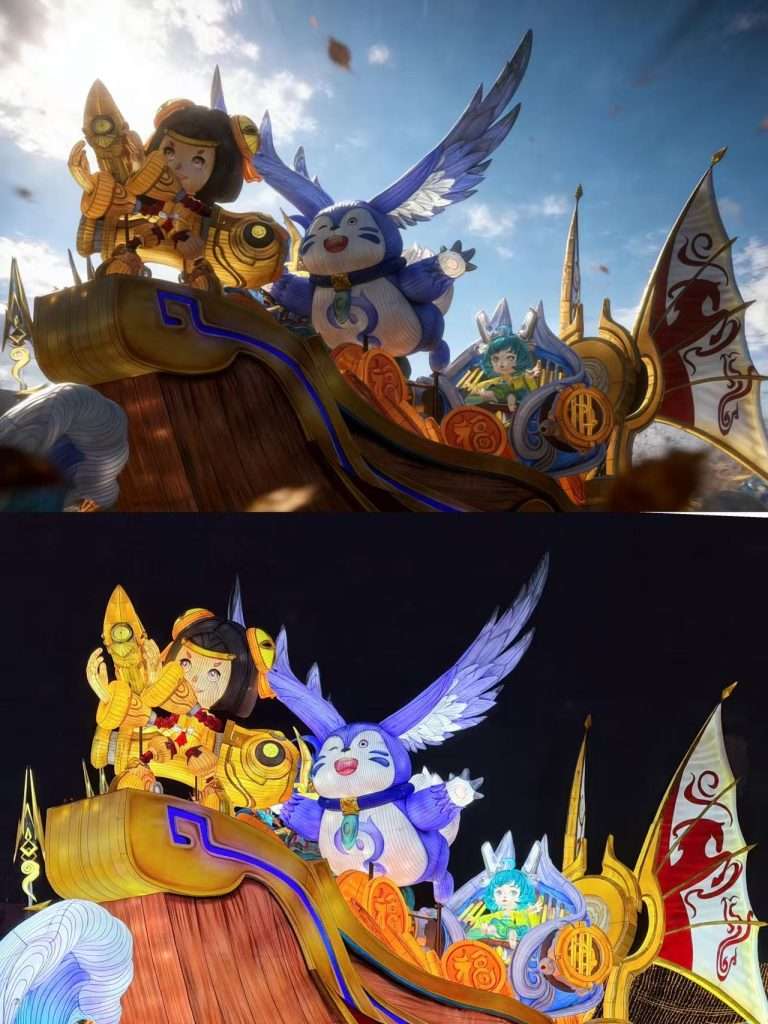
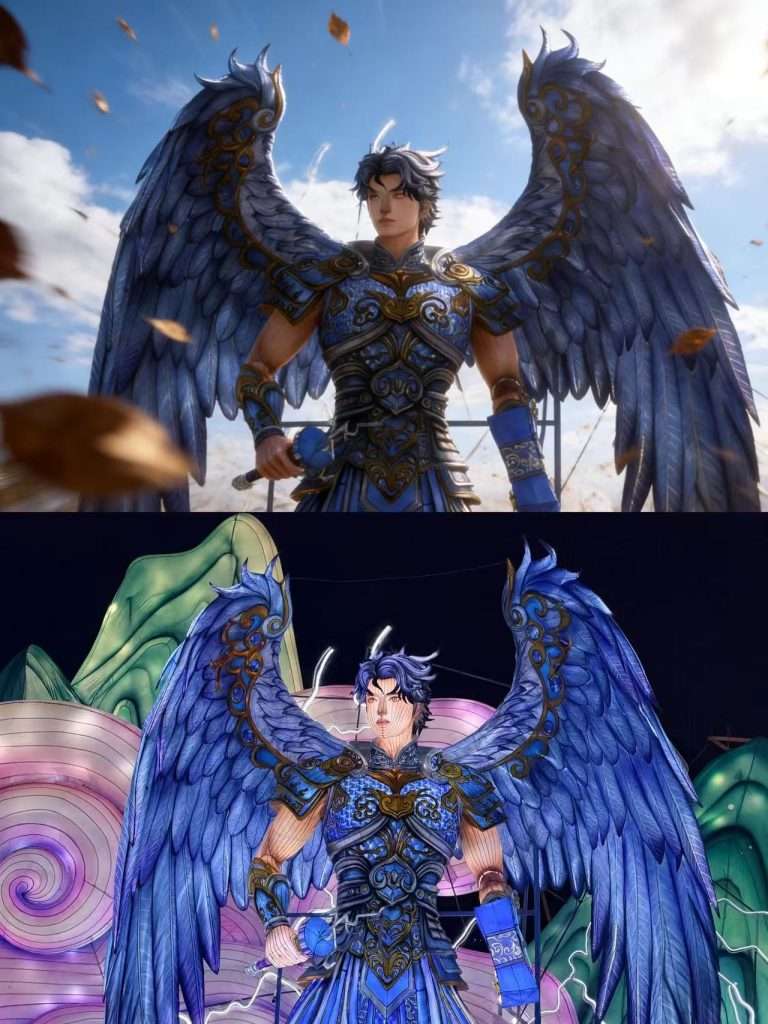
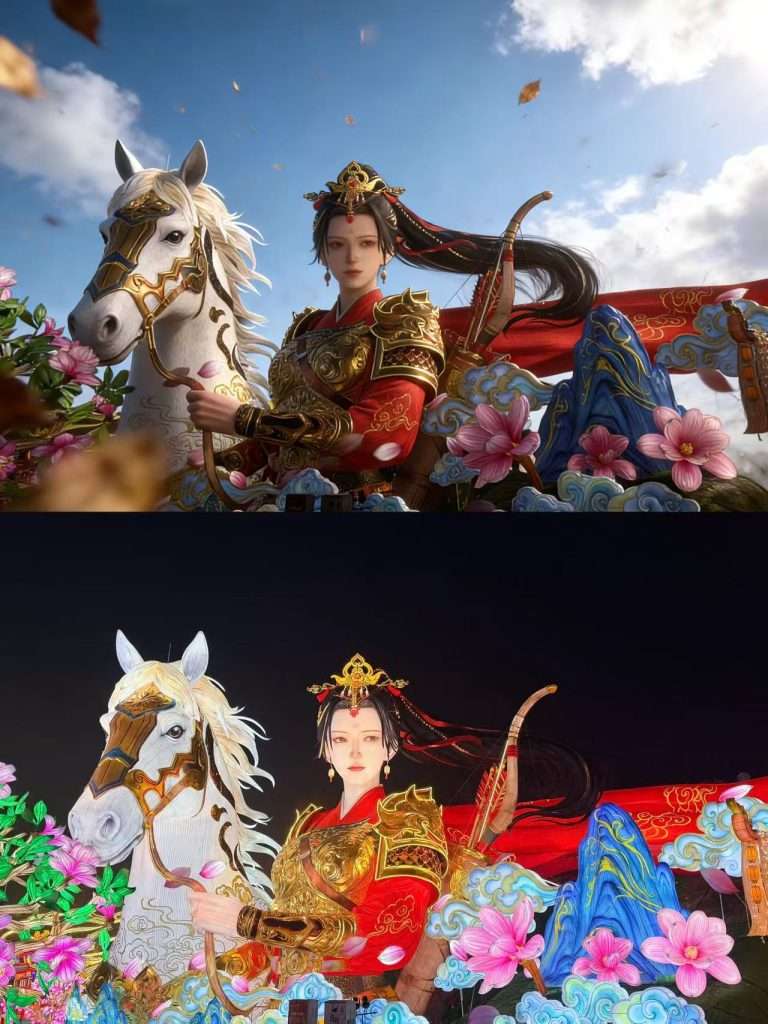
Turning A Digital Model Into A Physical Lantern Framework
At the start, specialists should verify intellectual property rights before building digital copies of the original work. The game character workflow begins by preparing virtual 3D models, these models bring mesh geometry, textures, and digital lighting effects together. From there, lantern manufacturers have to translate those digital assets into real products, meaning outdoor-ready lantern structures that can actually be used.
In practice, professional design teams study official references, paying attention to posture, body ratios, color gradients, and every costume detail. Engineers then rely on 3D modeling tools to shape the lantern character according to structural needs, including how the parts should hold. This effort usually needs two outcomes, one is a faithful visual resemblance, and the other is dependable mechanical strength.
People have to develop lantern characters that can work in real-world conditions, because digital models do not really feel things like wind loads or temperature shifts, also they do not have prolonged time outdoors. Engineers have to find the balance points, and the way weight is distributed, then design support connections so the installation stays safe. At this stage, you end up mixing industrial design pieces with mechanical engineering components, plus artistic design work that keeps the look coherent.
For festival character installations, the figures usually rise about 3 to 10 meters, especially during large-scale events. The whole system needs careful structure choices and proportional elements, so it keeps the visual appeal and also the safety features. The lantern makers in Zigong improved their process by using experience from exhibitions around the world, and they built that knowledge over several decades.
Building the Steel Skeleton: The Structural Core
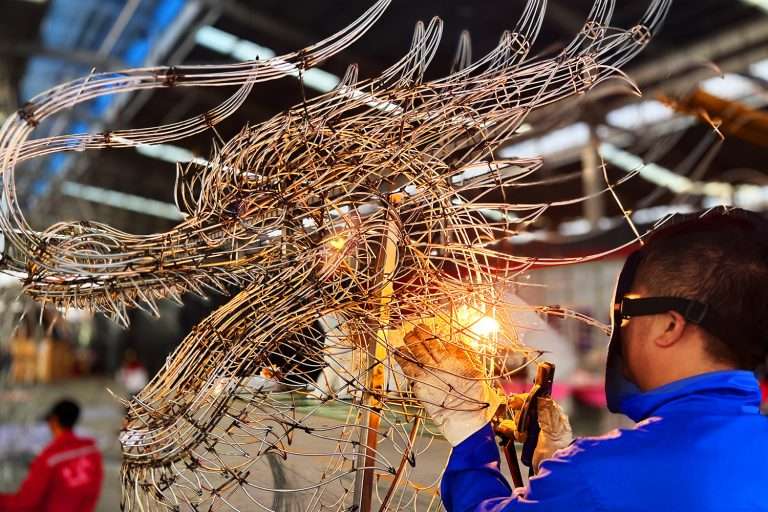
After the design gets approved, trained craftsmen begin to assemble the internal framework by using welded steel rods. The lantern structure works like a skeleton, it sets both its overall silhouette and its stable placement, plus the full set of measurement specifications that were approved.
The team builds the character’s look through manual steps. This includes bending steel parts, then welding them into the needed shape, not just once but again and again for each section. The process also calls for real physical duplication of the face features and the armor edges, as well as hair strands and the way clothing movement is meant to read in place. In practice, the work asks for welders who can manage precise technique while also applying artistic molding abilities.
Overall, the framework becomes the support system that connects every electrical component. It forms internal routes that keep the LED cabling and the connectors organized, and it also holds the power interfaces in their correct position. With this setup, the lantern runs electrical operations more neatly, so maintenance is reduced during long display sessions.
The steel skeleton represents a vital stage, because it builds both a genuine visual look and secure structural strength. It feels like the whole thing gets its backbone, right there, then.
Applying Fabric and Color to Reach Visual Authenticity
Craft workers usually put the specialized fabric coverings in place after the steel frame lands in its final construction phase, then they move on. Modern lantern production relies on synthetic fibers for durability and weather resistance; these were originally made from silk in earlier methods.
The fabric panels are cut and contoured very precisely so they follow the character’s outlines. This part demands detailed handwork because the more complicated the costumes, the more armor layers, along with flowing robes, and the more attention is needed for the shifting shapes. Skilled artists use layered pigments to render digital color plans, and they repeat the same effects from the original concept. The character’s visual depth from the game is brought back through careful shading, bright accents, and controlled gradients applied by hand.
This process needs total accuracy, because fans are able to spot even tiny shifts from the original design. The rigid visual references that top lantern manufacturers use make sure they put out genuine recreations, in a way that is consistent and measured.
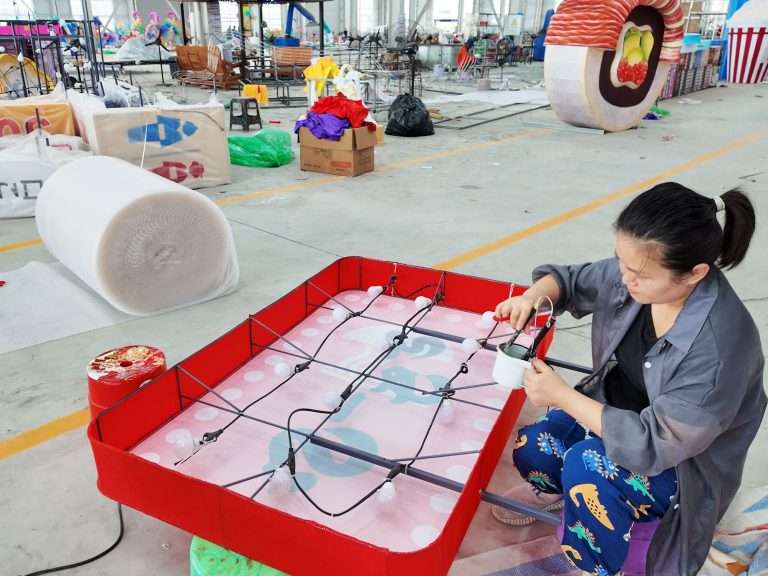
Integrating LED Lighting Systems to create almost real-life illumination
In architectural design, lighting turns into a kind of dynamic visual experience, mainly because the light itself has real power. Modern Zigong lantern manufacturers use programmable LED systems so they can take full command over how the light behaves, and they can also fine-tune brightness, color temperature, and those special visual effects. The lantern designers placed LED modules across the structure because they wanted an even, consistent glow across the whole piece. With diffused lighting, the fabrics can still show their colors clearly while keeping the original tonal value intact, not just washed out.
On top of that, advanced controllers help the system produce live-looking visual scenes, for example pulsing energy effects and glowing elements, plus slow transitions in brightness. The lighting sequences then make it feel like motion is happening, and the emotional mood becomes stronger, so the characters look more like real-life animation than a fixed display.
The professional Zigong lantern manufacturing process asks engineers and visual artists to work together, like in a shared workflow, to make decorative lighting displays that you can really see and appreciate.
Combining Traditional Craftsmanship with Modern Engineering
Zigong lantern production really blends older, handmade know-how with newer engineering, not just a clean mix. The lantern production process combines traditional craft practices with current industrial design. More than a thousand years ago, people already had lantern-making methods that manufacturers today still use, but with modern tools like computer-aided design, laser cutting, and industrial coatings.
To be fair, the weather-resistant treatments help protect the lanterns from rain and humidity, as well as from ultraviolet light. And the exhibition system keeps its structural stability during long stretches of outdoor display, because it uses a reinforced internal support framework.
So when you put the traditional knowledge together with state of the art engineering, Zigong lantern manufacturers can deliver their services to customers running theme parks, cultural festivals, and commercial exhibitions.