
Shipping festival lanterns internationally can lead to some unpredicted problems such as wrong sizes, lack of parts, incompatibility of electricity, and site conditions, which will lead to delayed installation and raise costs.
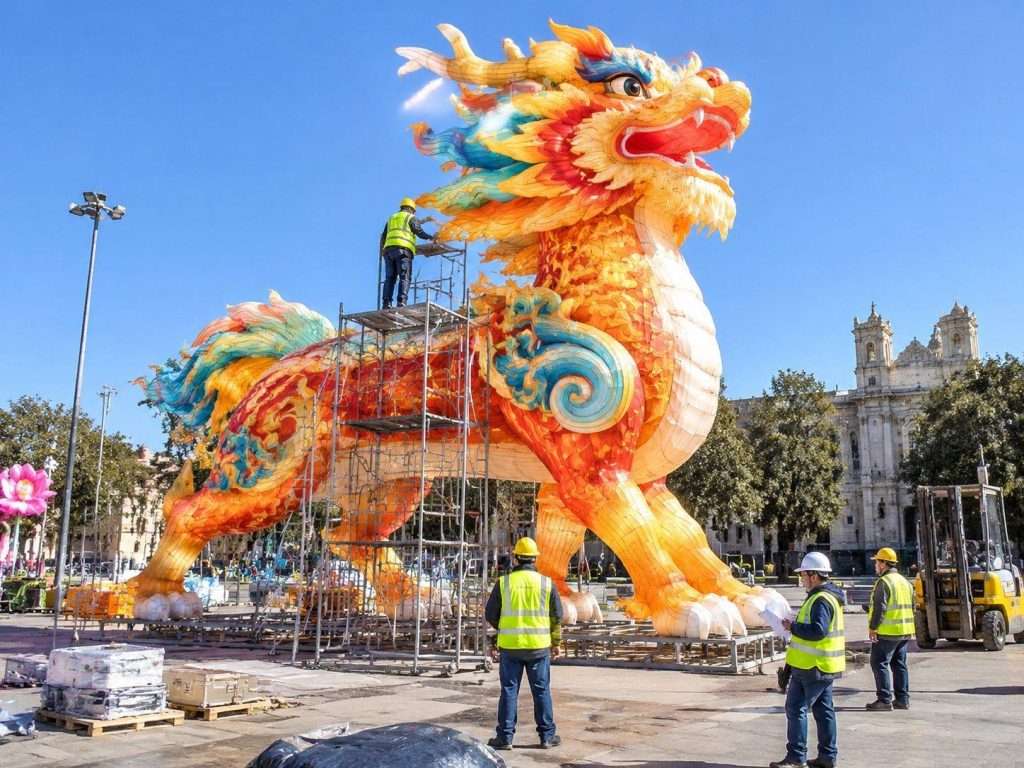
Being familiar with the major installation problems that can be faced prior to shipment is crucial for proper site preparation and avoiding any problems.
Size Mismatches Between Lantern Displays and Installation Sites
One of the most typical issues is the discrepancy between the size of the lanterns and the installation area available.
Large-sized lantern sculptures may match the layout from the initial design plan, but their installation may be quite challenging once delivered to the desired location due to incorrect site measurements or missed spatial limitations.
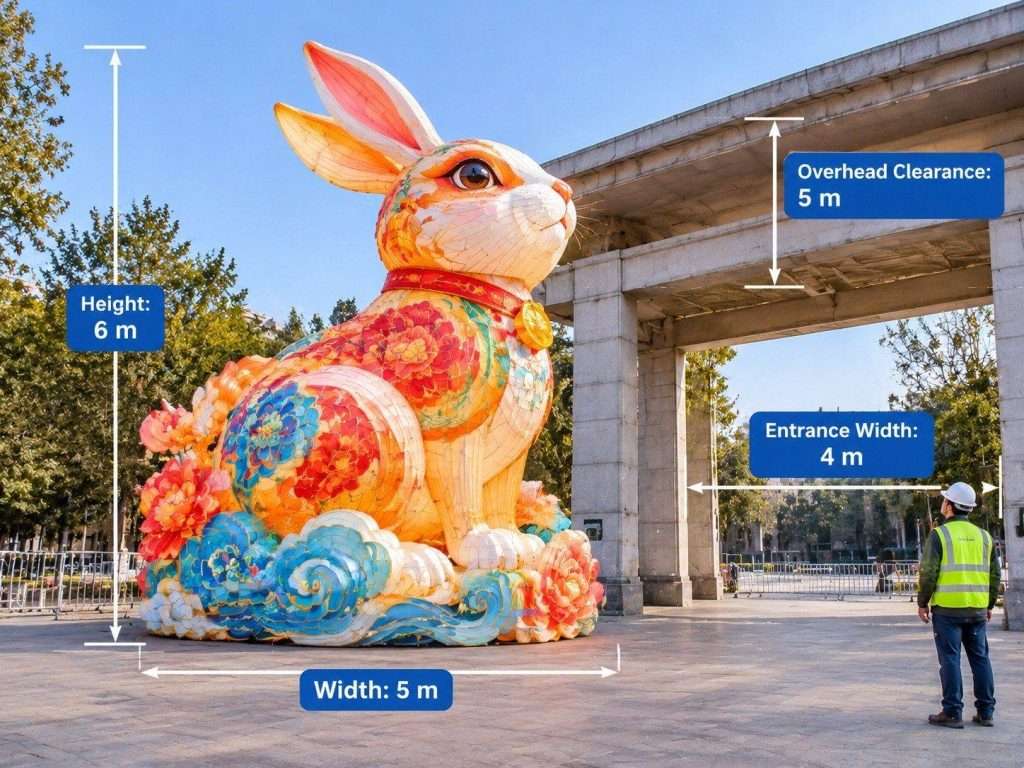
Typical problems include:
- Lack of installation clearance: The lantern is wider or taller than the designated area.
- Lack of access: Large pieces cannot move through doors, hallways, gates, and freight elevators.
- Height limitations: Overhead obstructions, tree limbs, cables, or building elements impede installation.
- Design conflicts: Placement of the lantern overlaps with landscape features, walkways, or underground structures.
In one case, the design is that of a huge animal lantern for an open square, but the site where it will be installed has difficulties in getting the lifting equipment in place even though the completed sculpture can fit into the space available.
How to prevent it:
Buyers need to furnish correct site drawings, installation dimensions, access dimensions, and photographs prior to the commencement of manufacturing.
For very large displays, a site survey or 3D layout can be taken in order to detect any conflicts.
Manufacturers should also verify the overall dimension, sectional dimensions, transportation dimensions, and installation clearances before shipping.
Missing or Incorrect Components After Delivery
Large lantern displays can be constructed in several sections to facilitate their transport and installation abroad.
But in a single construction project, there may be dozens or even hundreds of different parts that must be supplied to the site for the construction to take place.
If even a few of these important parts are not delivered, then the entire installation will not be able to take place.
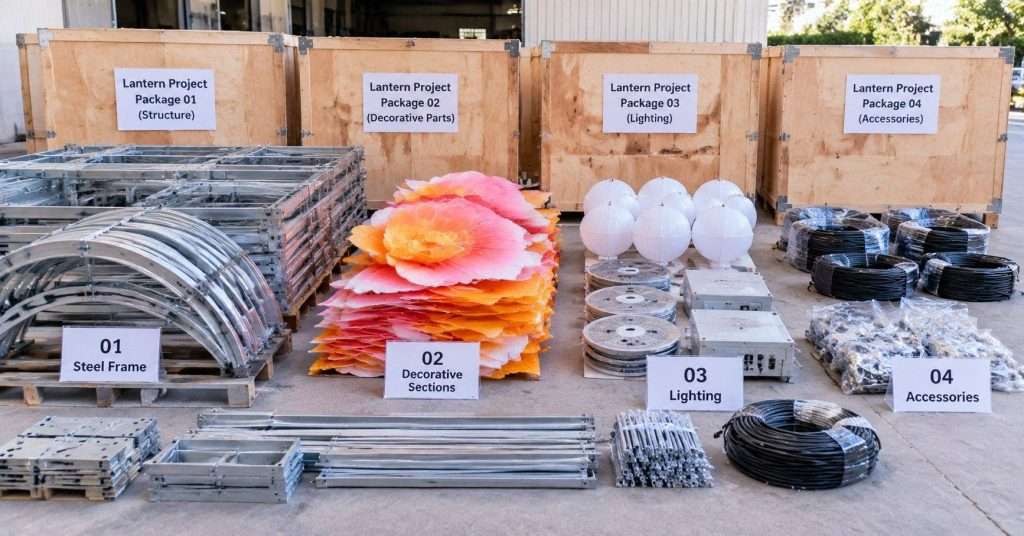
Common problems include:
- Missing bolts, fittings, or structural braces.
- Incorrect number of decorative segments or accessories.
- Lighting parts which don’t comply with the installation drawings.
- Unmarked parts which are hard to recognize.
- Damaged parts that have been identified only after unloading.
Foreign installations are especially prone to such defects as the replacement parts will likely have to be fabricated abroad and delivered overseas, causing considerable delays when the installation schedule coincides with a particular festival opening date.
How to prevent it:
Create a thorough packing list for every consignment, categorizing the contents according to lantern model, installation part, and packaging number. Every package must be properly labeled, and counts must be done on the connectors and other accessories prior to the shipment. The pre-shipping check must be done to ensure that everything is in accordance with the approved drawing and packing list.
Electrical Interface and Power Supply Problems
Electrical compatibility is also an issue that should be taken into account when setting up lantern displays in foreign countries.
Voltage standards and frequencies, plug types, and other electrical installation regulations may vary from country to country. Therefore, the lanterns designed to operate in one country may prove incompatible in another.
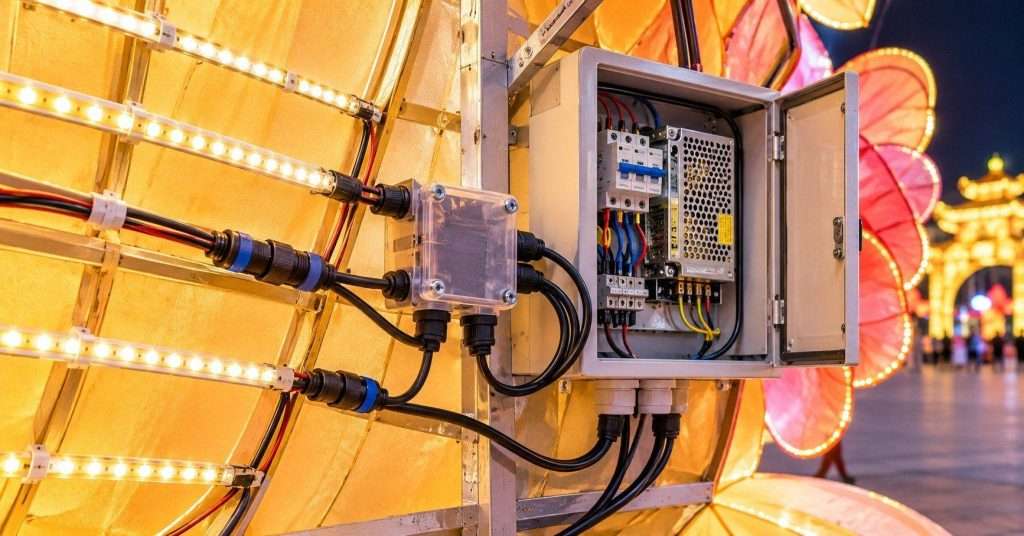
Several issues can arise:
- Mismatch of voltage: The lighting equipment provided does not meet the requirements of the local power supply system.
- Mismatch of plugs and connectors: The local electricians cannot plug in the provided cables and equipment directly.
- Inadequate power supply capacity: There is an inadequate electrical supply that will be able to power all lantern installations at once.
- Problems related to the control system: The controllers, power supplies, or interfaces are not matched properly.
- Protection issues: The electrical connectors have no protection against moisture, dust, or rain.
As an example, the large lantern display will include different kinds of illuminations such as sculptures, tunnels, and interactive installations of lights. In case there was no estimation of the electrical load, the local electrical power supply may become overloaded.
How to prevent it:
Prior to production, make sure that you check the voltage, frequency, and plug types as well as electrical safety specifications of the country to which you will be exporting your lantern display lights. This information will be provided by the manufacturer through electrical specifications and power load information.
Unexpected Site Conditions During Installation
Though the size and composition are proper, there can be problems in installing due to the on-site situation.
The site which looks good enough during the planning phase can become problematic during the time of installation.
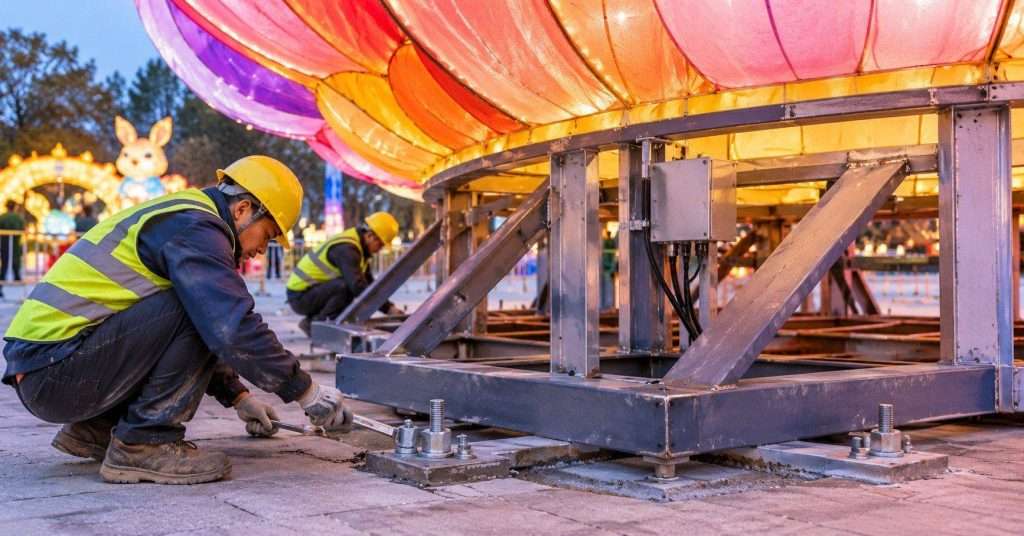
Common examples include:
- Uneven/unstable ground affecting the positioning of large installations.
- Soft ground which cannot sustain the necessary foundations or anchorages.
- Strong winds that affect the stability of tall lanterns outdoors.
- Heavy rainfall or improper drainage causing water build-up near electrical equipment.
- Difficulty in accessing cranes, forklifts or any lifting equipment.
All of these factors become especially important during outdoor lantern festivals because of the large scale of the installations and various height sculptures involved.
How to prevent it:
Site evaluation before production is vital. It is important for buyers to give information regarding soil conditions, drainage, exposure to the winds, lifting methods, and building laws in the locality. In case of a huge structure, it is wise to find out the specifications needed for foundations and anchorages beforehand.
Installation Delays Caused by Poor Coordination
Another problem that customers fail to consider is the synchronization between the lantern maker, transportation, local construction workers, electricians, and event managers.
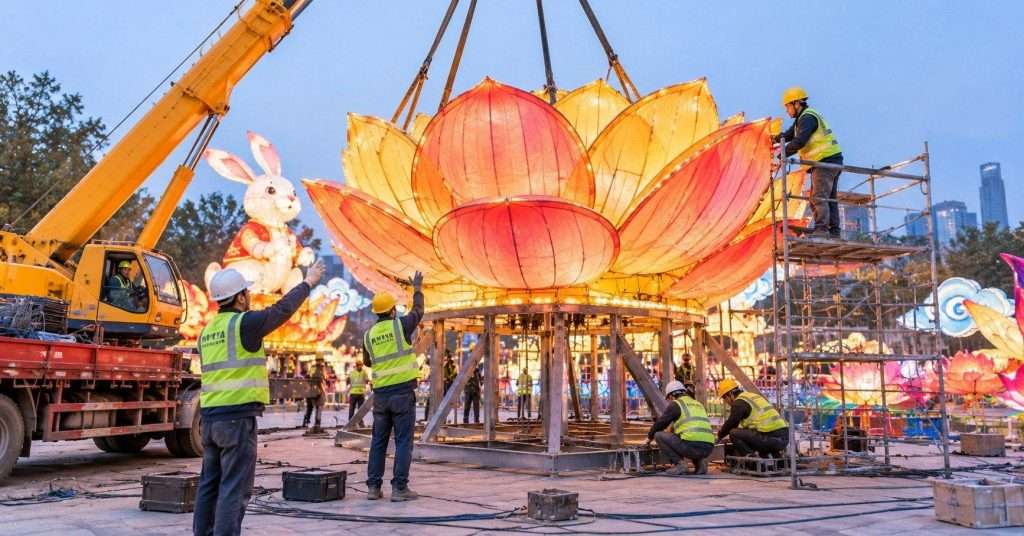
If all of the components get delivered at the scheduled time, there will always be delays in the installation process in case the various parties do not work using the same plans or timelines.
For example, the local electrician might not have finished putting up the power distribution system by the time the lantern installation crew comes. Or perhaps, the lifting equipment is not available during the placement of major parts.
How to prevent it:
Create an installation schedule prior to shipment. Clarify the roles of both parties involved, establish the delivery date of the equipment and materials, and distribute the most current installation drawings to all involved contractors.
In complicated cases, manufacturers should offer remote technical assistance, installation videos, and detailed assembly instructions. In case of necessity, installation specialists can be sent on-site for assembly and commissioning.
A Pre-Installation Checklist for Overseas Lantern Projects
The majority of installation issues may be avoided by preparing adequately before sending the shipment from the factory.
The following items must be validated:
The dimensions of the site, widths of entrances, and clearance overhead must be confirmed.
The dimensions of individual parts of the lanterns and their transport must be confirmed.
The locations of the foundations and the state of the ground must be assessed.
The packing list and quantities of components must be validated.
The connectors, fasteners, and spare parts must be included.
The voltage, frequency, power capacity, and electrical connection must be confirmed.
The installation and wiring diagrams must be available.
The local lifting and installation labor must be provided for.
The weather conditions must be taken into account.
Conclusion
The large lantern displays abroad goes beyond just having an aesthetically pleasing design. Getting accurate measurements, making sure there are all the parts, matching up the electric systems, and preparing the area is essential for avoiding delays that can be costly. Looking for help with lantern projects? Contact AuroraGong.