
Commercial art installations turn an ordinary shopping center, theme park or resort into a place visitors come to photograph and bring friends back to. The hard part is not the idea: it is making the idea buildable, shippable and installable on a site that may never have hosted anything like it. This guide sets out the seven stages we run on every project, from the first site survey to opening night, using our Light Festival in Kuwait as a worked example.
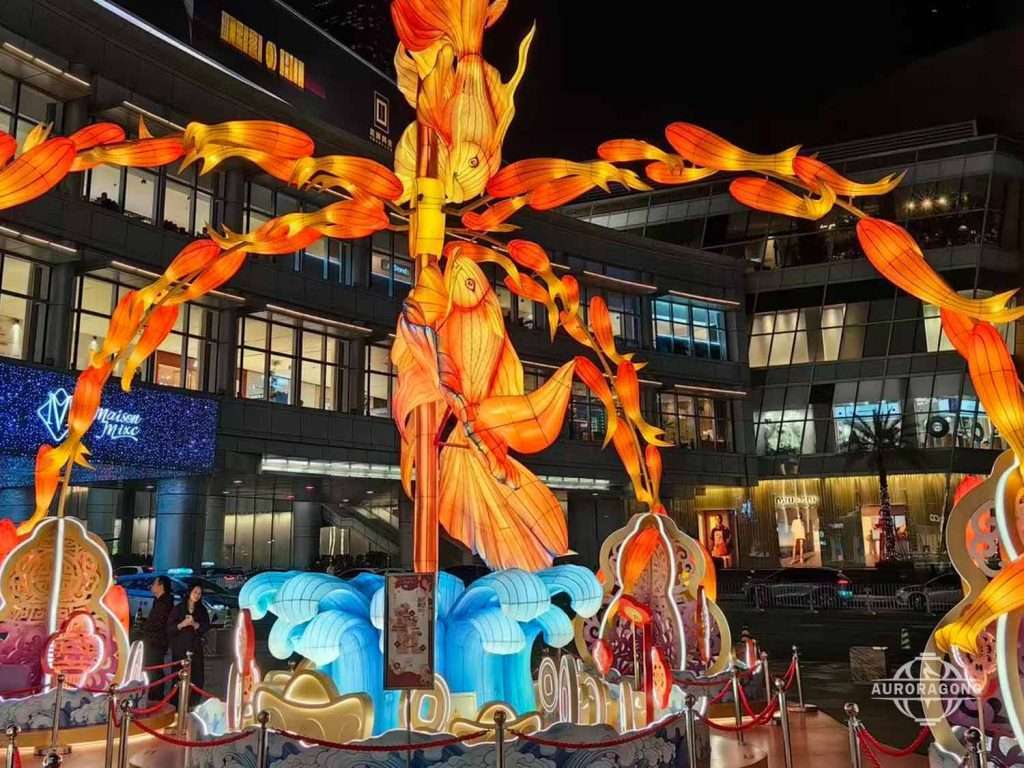
For commercial projects and event organizers, choosing the right manufacturing partner for commercial art installations matters as much as the concept: you need a partner with both a creative approach and the production capacity to deliver it.
1. Start with the Site and Installation Objectives
It is essential to establish the purpose of the project, its location, and the visitor experience in advance of designing commercial art installations. The approach for a centerpiece of a shopping mall atrium will be different from that of an illuminated sculpture installed at a festival, hotel garden, or resort entrance.
The initial brief should include information about site size, viewing distance, visitor traffic, opening hours, and exhibition period. Site photos, plans, height ceilings, and access routes are important to understand the possibilities of the installation prior to the manufacturing process.
A huge sculpture may look beautiful in a drawing but interfere with retail signs or the pedestrian traffic after the installation. It is also important to take into account the ground condition, windiness, drainage, and electrical safety in the outdoor commercial art installation.
2. Develop a Design That Can Be Manufactured
A good art installation requires the balance between aesthetics and manufacture capabilities. Curves, oversize figures, suspensions, and lit surfaces might require a different manufacturing process and different internal structures.
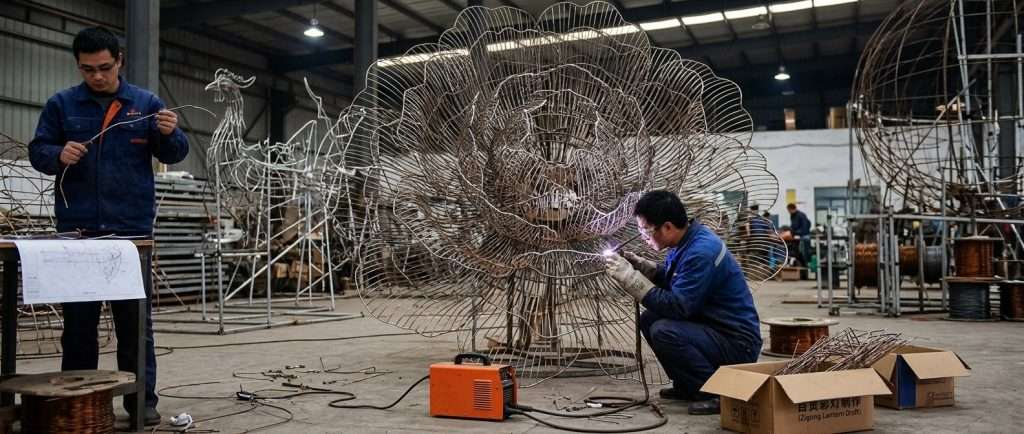
The example of custom lantern installations is particularly helpful here. Traditional lantern crafting can make use of metal structures, shapes, decorative surfaces, and lights to achieve big three-dimensional artworks. The specific method will depend on the design, scale, materials used, and environment.
While developing the design, manufacturer has to consider the following:
- Proportions: small decorative elements can be scaled up to be visible from afar.
- Internal structure: the structure needs to take care of the form, weight, connectors, and installation process.
- Surface treatment: materials used should ensure the right color, texture, and light transmission.
- Lantern installation: the lighting elements, wires, connection points should be taken into account along with the outer design.
- Assembly: large structures need to be assembled on-site, hence, divided into several transportable parts with connection points.
It means that the final design has to be more than an aesthetic rendering. It has to be clear for the manufacturer how to build the artwork.
3. Select Materials for the Environment and Intended Use
Material choice will impact the look, durability, weight, and maintenance of large scale commercial art installations. Metal is used for framework and materials like fabric, acrylic, fiberglass, etc., are used for surfaces to get the desired look.
Correct selection of materials depends upon the environment in which the installation will be set up. In the case of indoor commercial exhibits, attention needs to be paid to visual appeal and architecture, while in the case of outdoor installations, more consideration is given to protection from external elements.
Lighting should also be considered while making material choices. Frameworks can cast shadows and the wrong covering materials can decrease light transmittance. Testing of samples and factory lighting inspections can identify this problem before delivery.
When using components for seasonal displays, think about how easy they are to fix, replace, store, and reuse.
4. Coordinate Structural Design and Site Conditions
There are practical limitations imposed by large scale installations which might not be visible through the concept drawings. Total weight, center of gravity, base size, how the structure is to be fixed and the available points of fixings will affect how the installation is carried out.
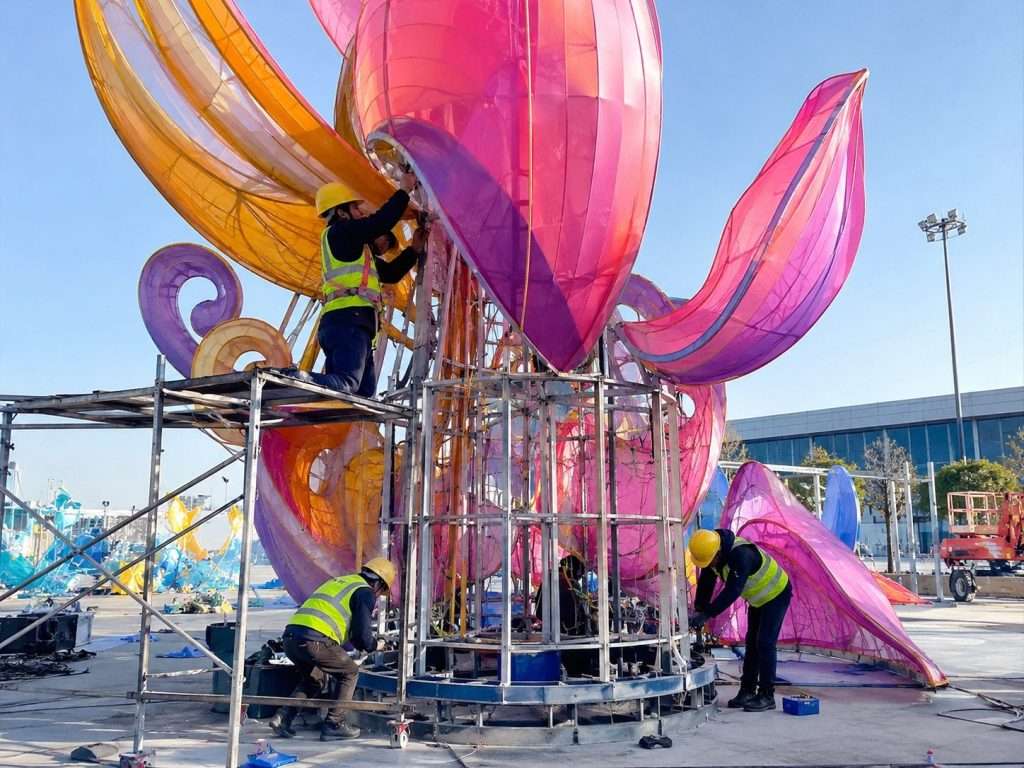
For indoor projects there needs to be confirmation of the maximum load on the floor, ceiling height, maximum suspension loads, and sizes of any service entrance points. For outdoor installations, wind loads, anchorage, ground bearing capacity, and exposure conditions need to be assessed.
The following process should be carried out by appropriately qualified engineers/structural specialists whenever necessary. The manufacturer of the ornamental product cannot assume that a structurally sound design is automatically suitable for installation in the public domain.
It should also be clear who will be responsible for structural calculations, electrical connections, permits, lifting machinery, and site safety issues.
5. Plan Modular Production, Shipping, and Assembly
The installation needs to consider the transport issues right from the start, especially if it requires international shipping.
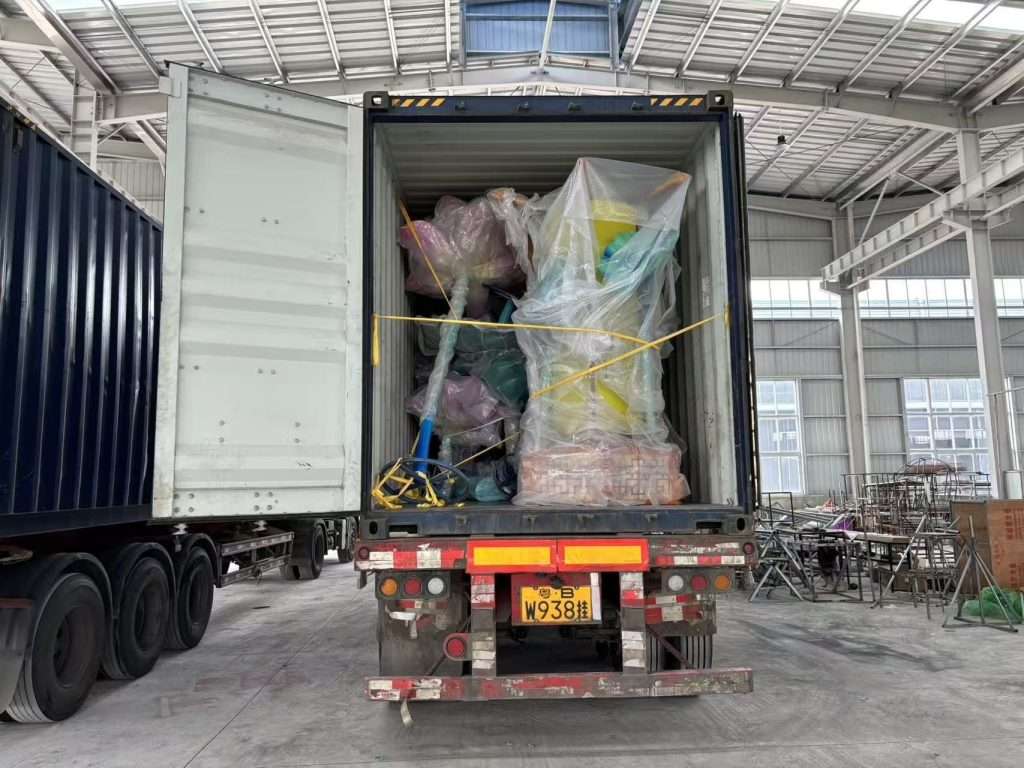
Once the installation is completed, it may be too big to be carried through an entrance of the exhibition space, or fit well inside a shipping container. While breaking the installation up into modules makes the transport and handling easier, it is essential to consider how to join the modules so that the whole installation still looks good once assembled.
The sizes of the modules, packaging, labeling, the ways of joining them, and the order of assembling need to be worked out by the manufacturer and the project team before starting production. Factory assembling will allow to test the fit and spot the potential problems before shipping.
The assembling plan will need to take into account the conditions of unloading, lifting, workspace, labor force, and the timeframe allowed for assembling. This is especially true for temporary displays at festivals with fixed dates.
6. Case Study: A Large-Scale Light Festival in Kuwait
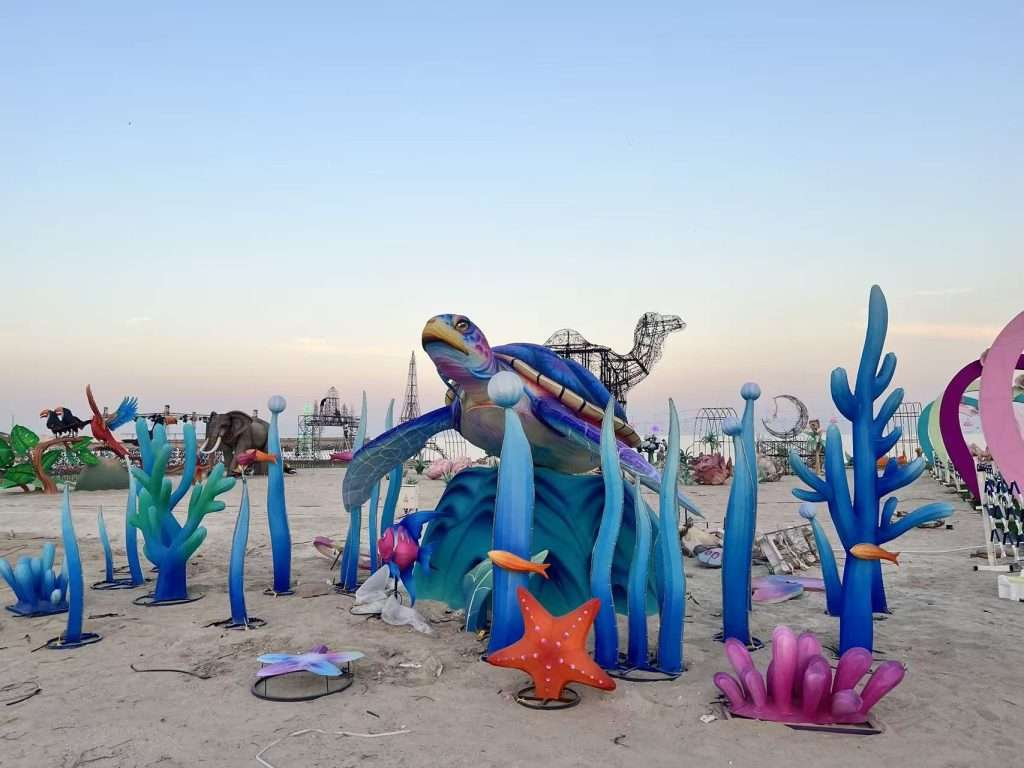
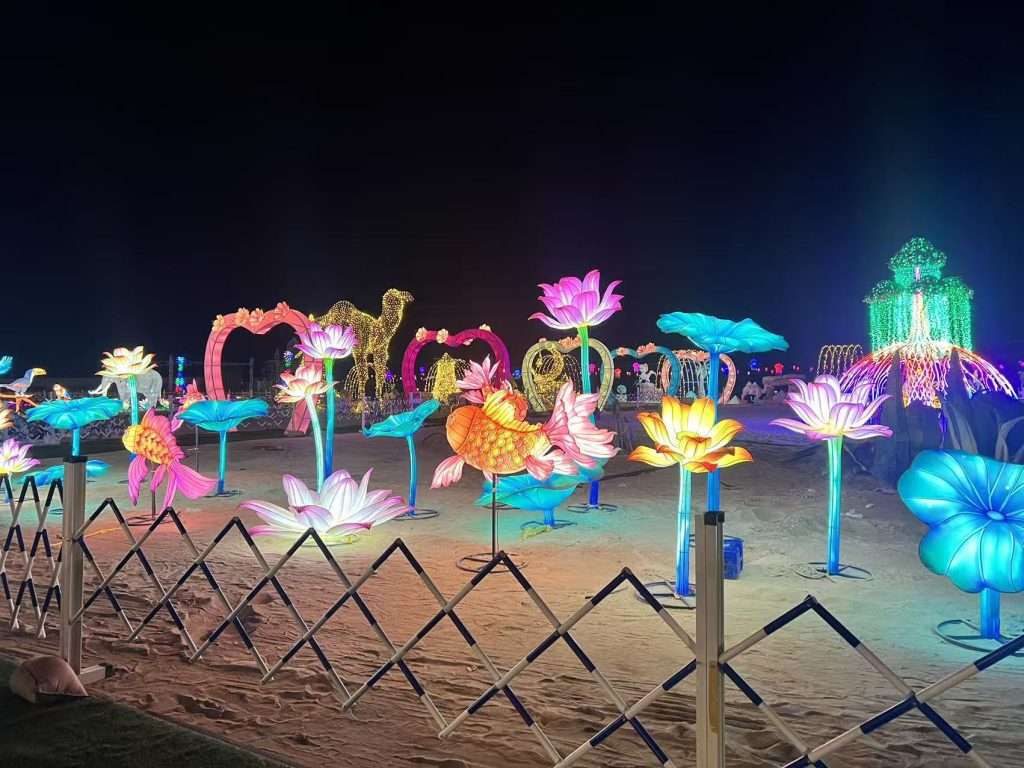
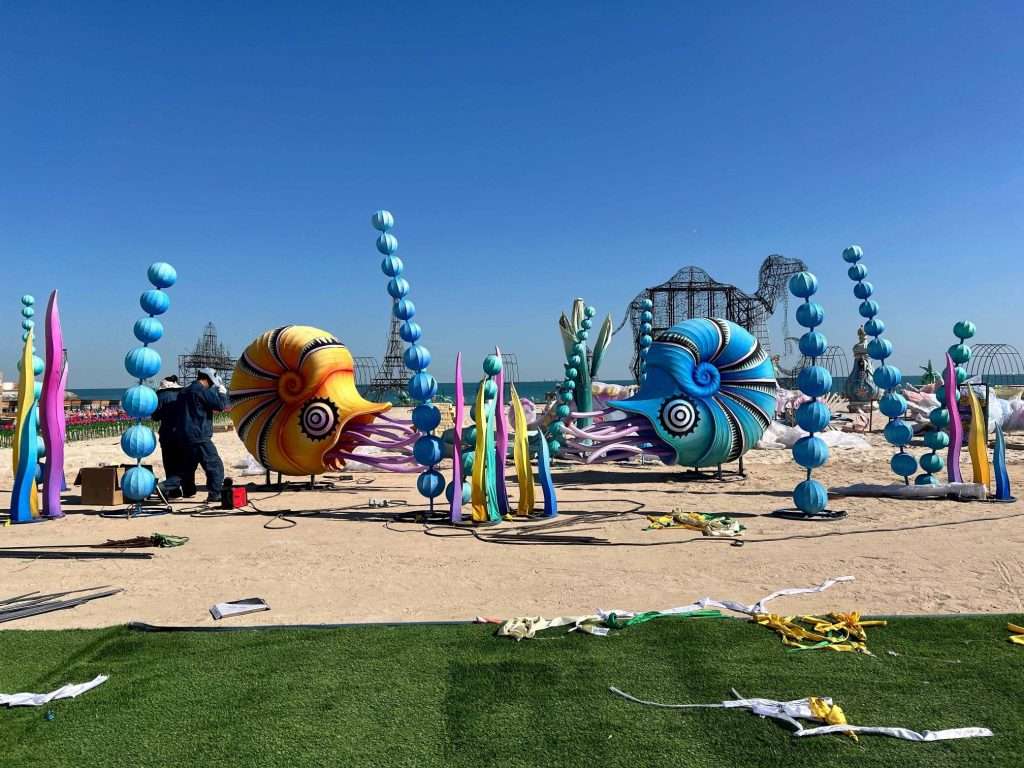
The Light Festival of AuroraGong in Kuwait is an example of the interplay between design, production, and logistics in an international art installation project.
The event took place at the Messilah Beach, Fiesta City, from November 2025 to February 2026 and included colored lanterns and decorative figures illuminated at night to create a more pleasant experience for visitors.
One week was needed for design and 35 days for production, and about 40 days for transportation. To ensure delivery within the required time frame, the cargo had to pass via Guangzhou port, which helped to save 15 days in comparison with the other route – Chongqing.
On-site installation involved one project engineer and four technical personnel sent by AuroraGong.
This case clearly shows the need to take into account design feasibility, shipping times and on-site technical assistance from the beginning of planning. These aspects are crucial for large commercial art installation projects.
7. Evaluate Costs, Maintenance, and Supplier Capability
The price for a major commercial art installation will vary depending on design, material used, lighting, fabrication, transportation, and installation considerations. In case you are comparing quotes, ensure that all the above-mentioned factors are included.
Another consideration will be maintenance of the installation. Determine whether parts such as lighting elements and any damaged areas can be easily repaired. Can the installation be dismantled and stored for future use?
Before settling on your preferred company, take some time to look at similar projects carried out by the company. Look at pictures and blueprints of such projects for practical proof of capability of the manufacturer.
Conclusion
Commercial art installation that is successful requires imagination coupled with technical know-how and precision in fabrication and delivery. Commercial art installations have the potential to transform a commercial place into a destination using unique designs of displays if the proper manufacturer is engaged.
Looking for a customized commercial art installation? Please contact AuroraGong.