
Designing a dinosaur theme park is more than just a creative decision; it’s a multidisciplinary engineering and business planning project involving architecture, mechanical systems, environmental control, and long-term operational strategies. One of the most important early decisions is whether to build an indoor or outdoor dinosaur park. Different decisions will lead to different design solutions.

Why Is A Completely Different Planning Logic Needed?
Although both formats use animatronic dinosaurs and themed environments, they operate under fundamentally different constraints:
- Indoor parks are governed by controlled environmental engineering
- Outdoor parks are governed by climate exposure and structural resilience
Animatronic dinosaurs are electro-mechanical systems with motors, gearboxes, control units, and surface materials (typically silicone or foam-based skins). These systems respond differently depending on:
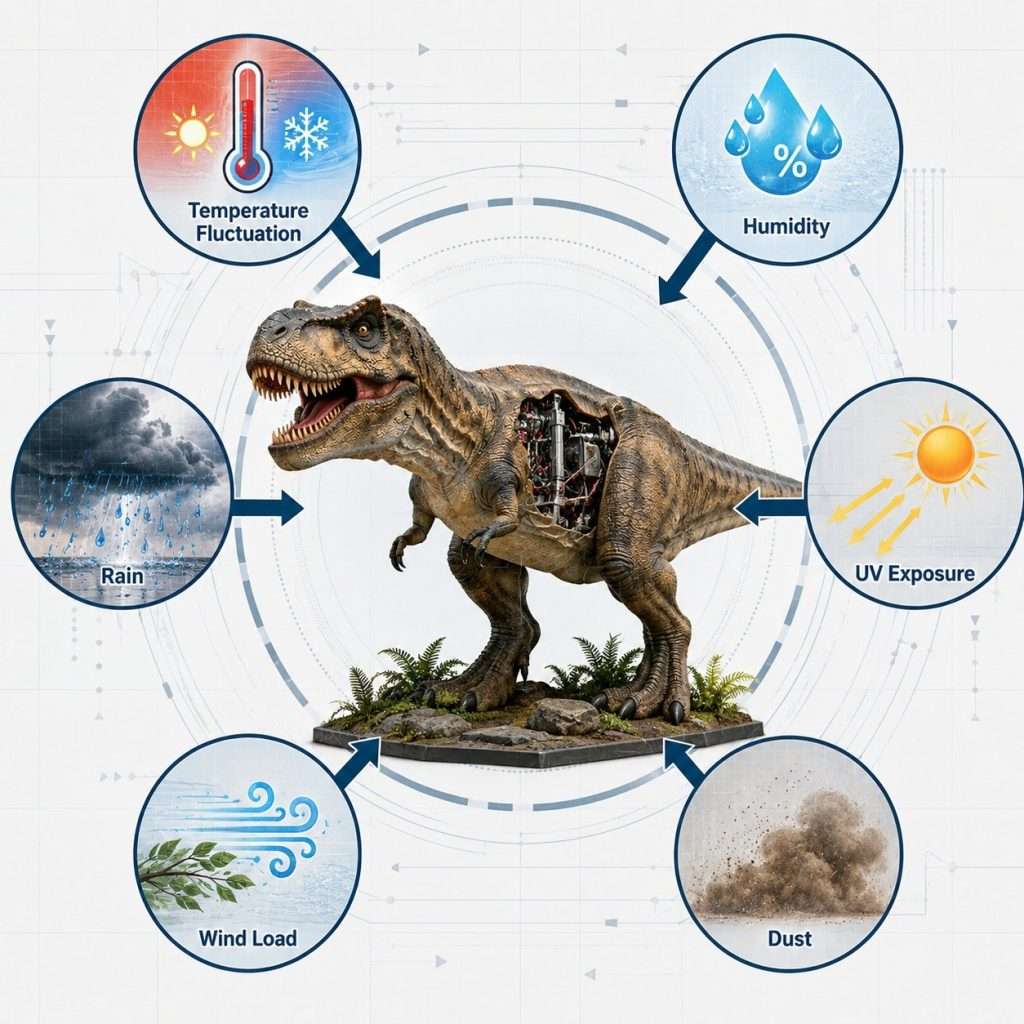
- Temperature fluctuation
- Humidity levels
- UV exposure
- Rain and dust infiltration
- Wind load and vibration
This means the planning process is not aesthetic-first—it is environment-first design engineering.
Indoor Dinosaur Park Planning Requirements
Indoor dinosaur parks are typically built in shopping malls, exhibition halls, or dedicated entertainment buildings. Their biggest advantage is environmental stability, but this comes with strict architectural constraints.
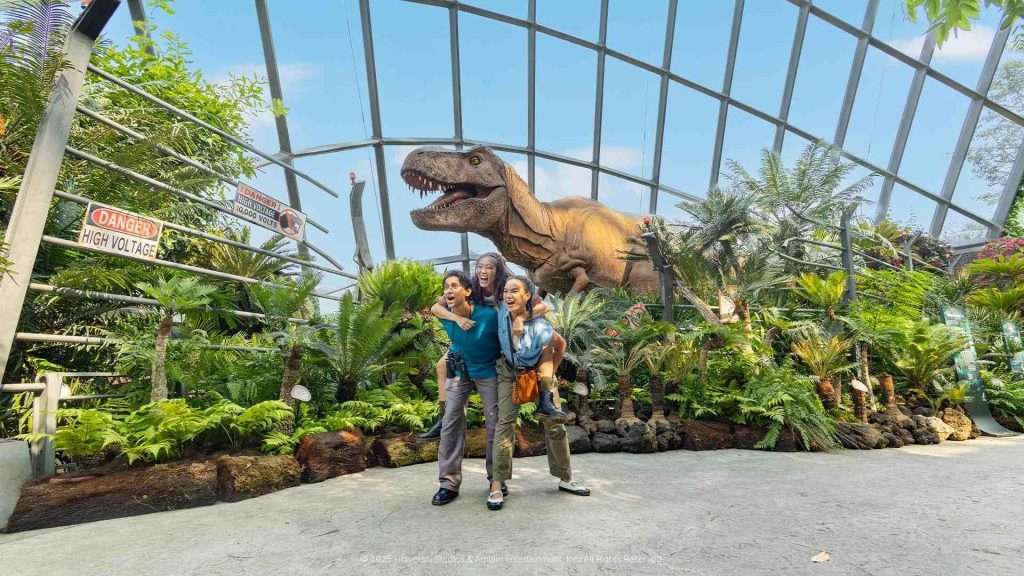
Structural and Space Requirements
Indoor installations must consider:
- Minimum ceiling height (often 6–12 meters depending on dinosaur scale)
- Load-bearing capacity for suspended or large moving animatronics
- Dedicated foundation points for large mechanical models
- Hidden maintenance access routes
Large animatronic dinosaurs often require internal steel frames, meaning floor load distribution becomes a critical engineering factor.
Environmental Control Systems
Indoor parks rely heavily on HVAC and environmental engineering:
- Temperature control (to protect motors and control boards)
- Humidity regulation (to prevent corrosion and material deformation)
- Air filtration (dust protection for mechanical joints)
- Ventilation for enclosed exhibition zones
Without proper environmental control, even high-quality animatronics experience accelerated wear.
Lighting and Immersive Design Systems
Indoor parks typically simulate natural environments using:
- Programmable LED lighting systems (day/night cycles)
- Directional spotlights for storytelling focus
- Soundscape systems for immersive audio
- Fog or atmospheric effects (controlled environment only)
This allows for highly controlled visitor experience design.
Key Strengths of Indoor Parks
- Predictable visitor experience year-round
- Lower weather-related operational risk
- Higher control over storytelling and immersion
- Easier crowd flow management in structured layouts
Key Limitations
- Higher upfront construction cost per square meter
- Limited scalability due to building constraints
- HVAC and energy consumption increase long-term operating cost
Outdoor Dinosaur Park Planning Requirements
Outdoor dinosaur parks are typically built in large open spaces such as resorts, theme parks, or tourist destinations. They offer scalability but introduce environmental exposure challenges.
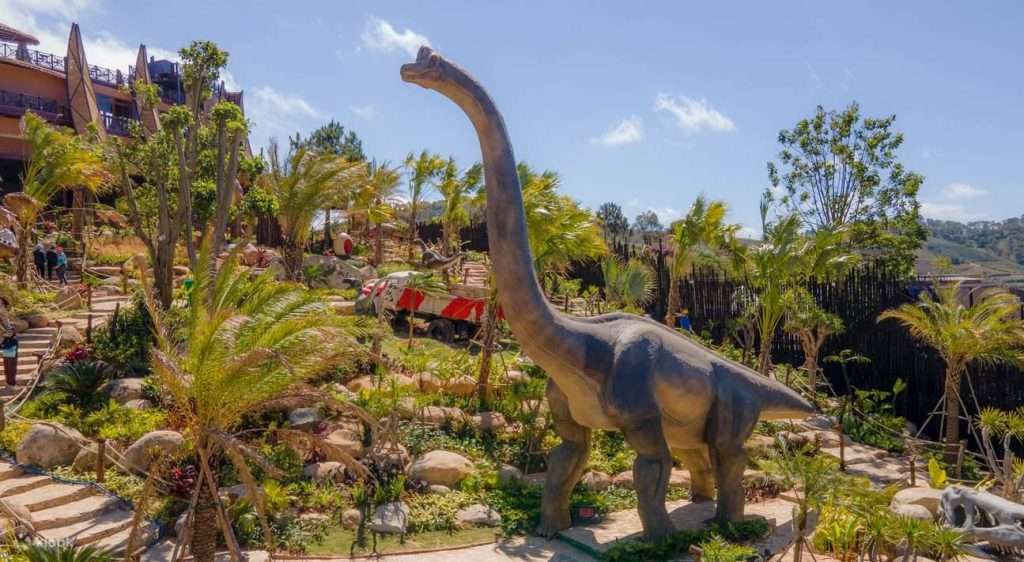
Foundation and Structural Engineering
Outdoor animatronic dinosaurs require:
- Reinforced concrete foundations or steel anchoring systems
- Wind-load resistance design (critical for large moving structures)
- Seismic considerations in applicable regions
- Cable routing systems protected underground or in sealed conduits
Large dinosaurs must be engineered as wind-resistant kinetic sculptures, not just display models.
Weatherproofing and Material Selection
Outdoor environments require significantly more durable materials:
- UV-resistant silicone or polyurethane skins
- Anti-corrosion coatings for steel frames
- Waterproof IP-rated motors and control systems
- Sealed electrical enclosures for controllers and sensors
Without these, maintenance cycles become extremely short.
Drainage and Terrain Design
Outdoor parks must integrate civil engineering systems:
- Site grading for water runoff
- Drainage channels to prevent flooding near mechanical bases
- Anti-slip visitor pathways
- Soil stabilization for heavy installations
Weather resilience is a core design requirement, not an afterthought.
Key Strengths of Outdoor Parks
- Large-scale immersive environments
- Lower spatial restriction per exhibit
- Natural lighting reduces infrastructure dependency
- Strong visual impact for tourism destinations
Key Limitations
- High exposure to weather-related degradation
- More frequent maintenance cycles
- Seasonal variability in visitor experience
- Higher long-term operational complexity
Cost Structure Comparison
| Cost Dimension | Indoor Park | Outdoor Park |
| Site & Base | Building / Renovation | Land / Landscaping |
| Structure | Reinforced building | Concrete foundations |
| Environment | Full HVAC system | Weatherproof design |
| Experience Tech | Lighting / Sound / AV systems | Minimal / Natural setting |
| Maintenance | Controlled, predictable | High wear, frequent repair |
| Cost Model | High CAPEX | High OPEX |
Key Insight
Indoor = upfront investment heavy
Outdoor = long-term maintenance heavy
Visitor Experience Differences
| Dimension | Indoor Park | Outdoor Park |
| Core Experience | Controlled storytelling | Scale + realism |
| Layout Style | Guided pathways | Open exploration |
| Visual Effect | Cinematic lighting | Natural environment |
| Consistency | Stable year-round | Weather-dependent |
| Immersion Type | Structured / educational | Physical / experiential |
| Best Locations | Malls / museums / city venues | Resorts / tourism sites / large parks |
How to Choose the Right Model
A practical decision should be based on constraints, not preference.
Choose Indoor
- Limited land availability
- Urban commercial environment
- Need for year-round stable operation
- High demand for controlled storytelling experience
Choose Outdoor
- Large available land area
- Tourism-driven business model
- Desire for high visual impact and scale
- Willingness to manage environmental maintenance
Hybrid Model (Increasingly Popular)
- Indoor exhibition + outdoor adventure zone
- Controlled storytelling + open landscape experience
- Modular expansion strategy
This model balances risk and scalability.
FAQ
1. Which is more profitable: indoor or outdoor dinosaur parks?
Profitability depends on location, visitor volume, and operating cost structure. Indoor parks often have higher stability; outdoor parks have higher scalability.
2. Are animatronic dinosaurs suitable for outdoor environments?
Yes, but only when properly engineered with UV protection, waterproofing, and structural wind resistance systems.
3. What is the biggest hidden cost in dinosaur park projects?
Long-term maintenance of animatronic systems, especially in outdoor environments.
4. Can indoor dinosaur parks feel realistic?
Yes, through lighting simulation, sound design, and controlled environmental storytelling systems.