
The Zigong International Dinosaur Lantern Festival has now run for thirty-two editions and is the largest recurring lantern event in China. Most of what is written about it is aimed at visitors. For the people planning festivals, theme parks and public light shows outside China, the more useful question is a different one: what does an event of this size actually require, and what does it tell you about the suppliers who can build it? That is what this page covers.
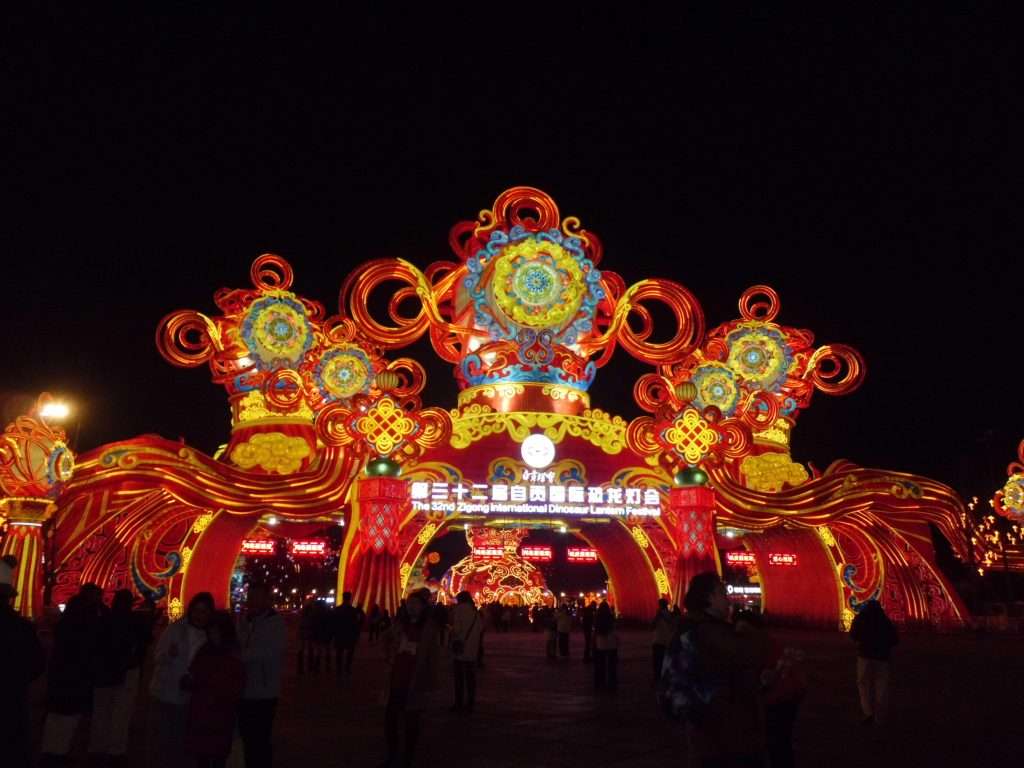
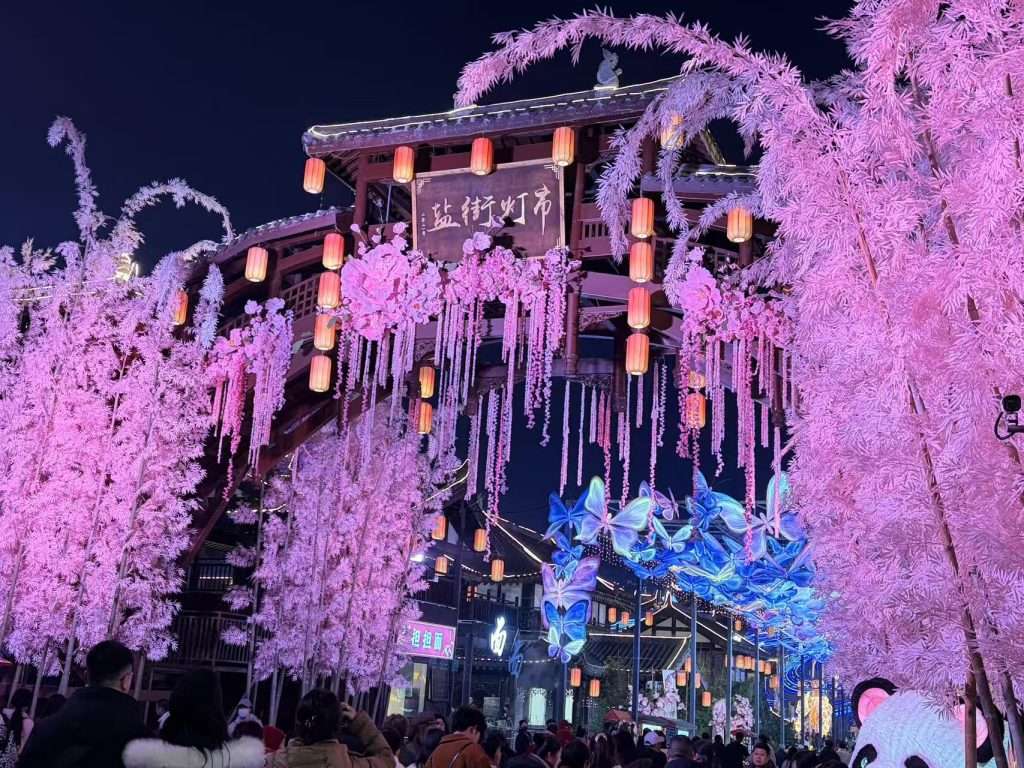
A Chinese Example of Traditional Lantern Art Going Global
Zigong is unusual in China in that the lantern trade here was never seasonal. Workshops have been producing continuously for decades rather than reviving a craft each New Year, and that continuity is why the industry could scale when overseas demand arrived. The skills were already in place — frame builders, painters, silk workers, electrical teams — in a city that had been producing festival lanterns every year for longer than most of its buyers have been in business.
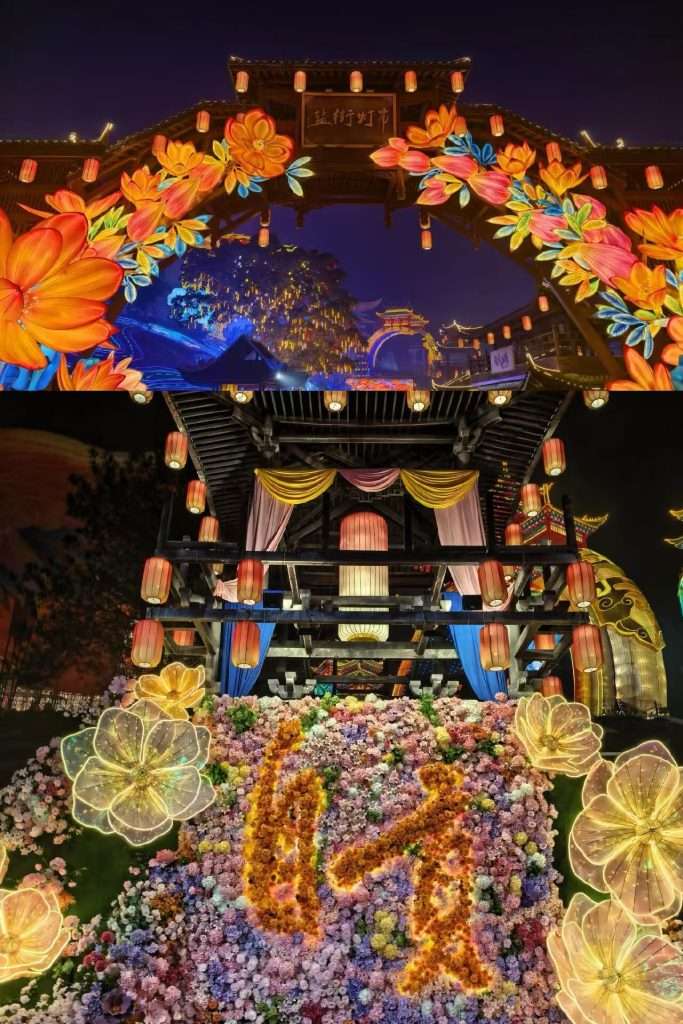
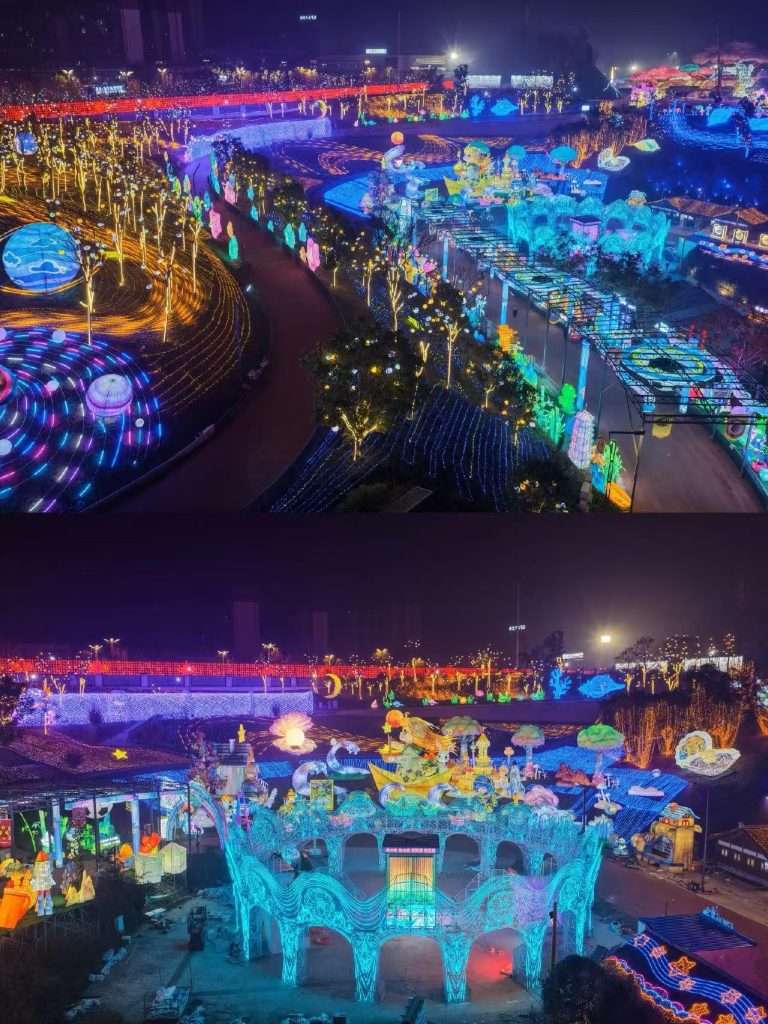
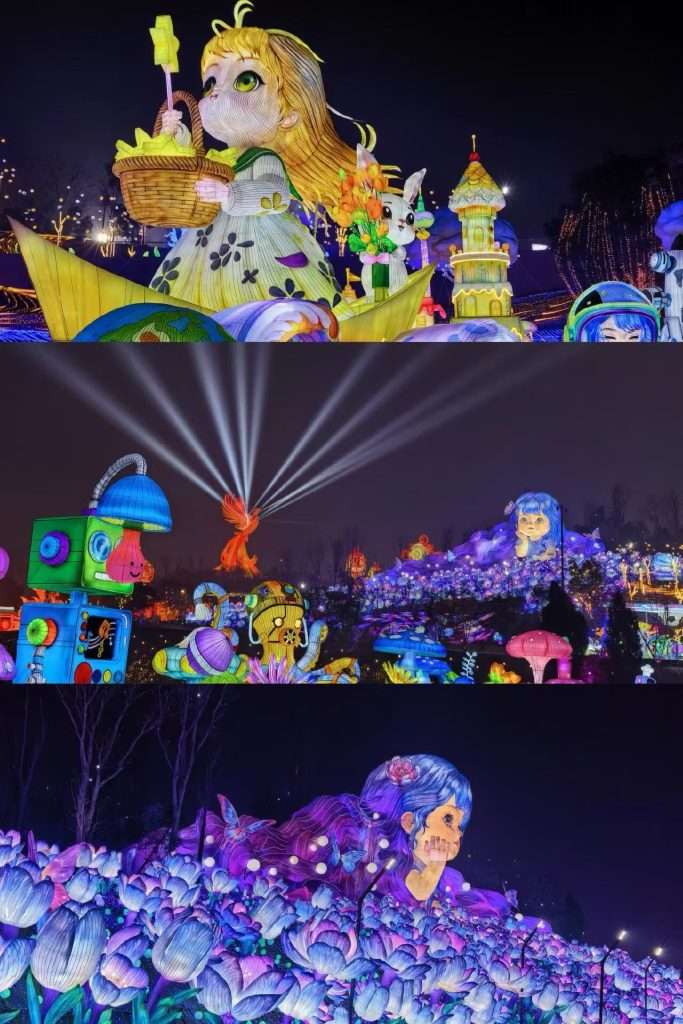
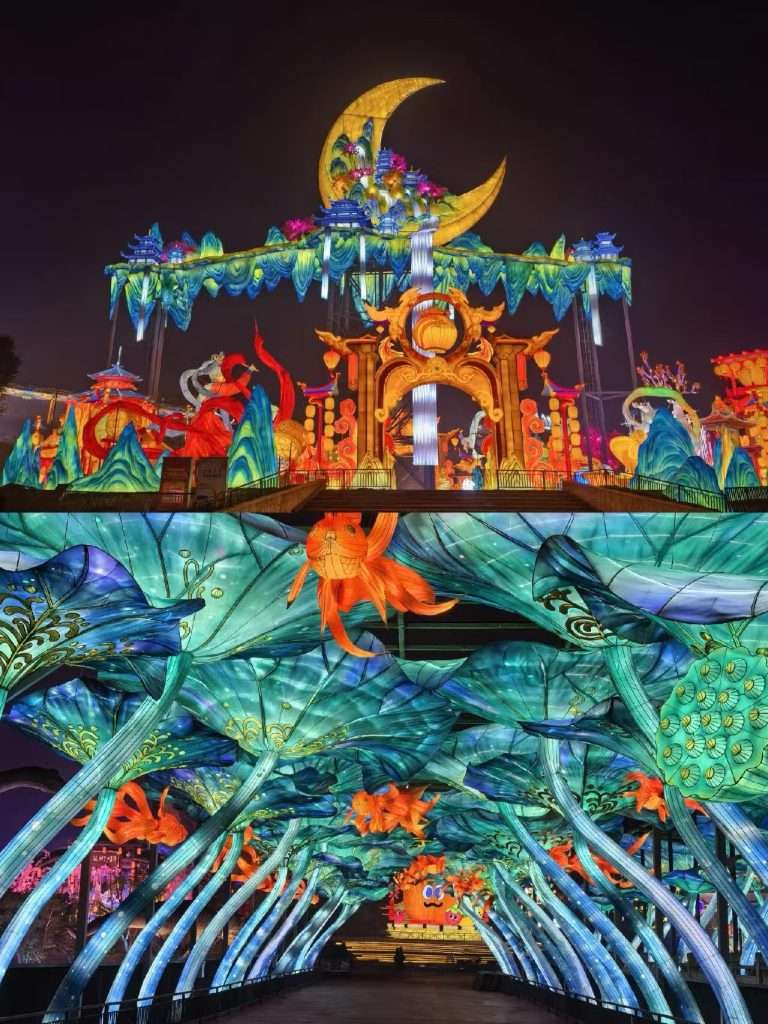
A festival at this scale is not a big version of a small one. It is measured in tens of thousands of square metres, designed to be walked through rather than viewed from a distance, and built to stay intact through a full season of weather and crowds. That combination rules out most of the construction methods a first-time builder would reach for. It is also why every major piece is planned as a structure, with site assembly decided at the drawing stage instead of improvised on arrival.
The dinosaur theme is specific to this city. Zigong is a major source of Jurassic fossils and has a museum collection to match, so a lantern industry and a palaeontology collection grew up in the same place. Thirty-two editions in, the Zigong International Dinosaur Lantern Festival has produced something no other city has: lanterns built as dinosaurs, at dinosaur scale, moving.
It also turned out to travel well. A dinosaur needs no translation, no cultural context and no caption. Venues that would hesitate over a scene drawn from a story their audience does not know will commission a dinosaur without a second meeting, and children recognise the shape before they can read the sign.
For an overseas buyer the festival matters less as an event than as evidence. A supplier who delivers this can also deliver the smaller version of it: a themed entrance, a defined route, a single landmark piece on a lawn. The festival is the demonstration. Your project is a scaled instance of the same work.
One more thing worth saying, because it decides how smoothly a project goes. The buyers who do well here treat it as a construction project rather than a purchase. Questions about clearance, ground surface and route width get answered early; questions about colour palettes get answered in the same conversation. Suppliers quote from a site, not from a catalogue, and the first document that moves a project forward is usually a rough plan drawing.ent media interest from international news organizations. More than 80 countries and regions have hosted Zigong lanterns which serve as the first lighted entrance that introduces international audiences to traditional Chinese culture. It can be said that the Zigong Lantern Festival has become a calling card for Chinese lanterns on the world stage.
Behind this international stage, a number of professional brands specializing in lighting art and themed lighting fixtures have been nurtured and promoted, with AuroraGong being a representative example.
AuroraGong: A Systematic Presentation of Multi-themed Lighting Art Products
The company’s product range follows the same logic as the festival: several themes, each one built around a different kind of venue rather than a different kind of object. What follows are the categories buyers ask about most, and what each is actually used for. Most projects combine two or three of them rather than ordering a single piece. The range is also structured so that categories can sit in the same site without clashing — a Chinese festive gate and a dinosaur group can share a venue when the palette and the lighting are planned together from the start.
1. Chinese-Style Festive Lanterns
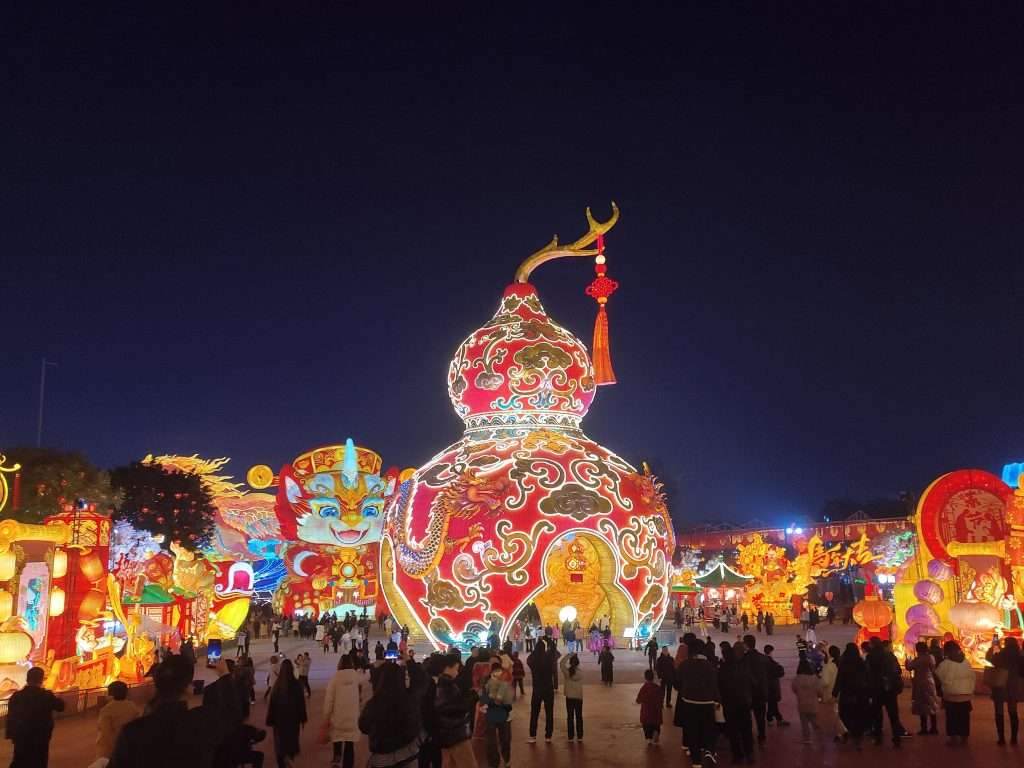
The foundation of the range and still the largest part of it. The vocabulary is traditional — gateways, painted figures, flower forms, characters from well-known stories — but the brief rarely is. An installation for a European city square has to read from across that square, survive a cold season, and fit a footprint the client already owns and cannot extend. Those three constraints shape the structure far more than the theme does.
Where this work goes is fairly consistent. City squares, park entrances, cultural and temple venues, and shopping centre atria through the winter season. The pieces are usually planned as a set rather than individually, because a square holds a composition — a gate, a central piece, and lower elements arranged around it — and buying those separately tends to produce a collection rather than a scene. Buyers working to a fixed budget often start with the gate and add the rest in a later year, which is why the pieces are designed to be added to.
2. Game-Themed Lanterns
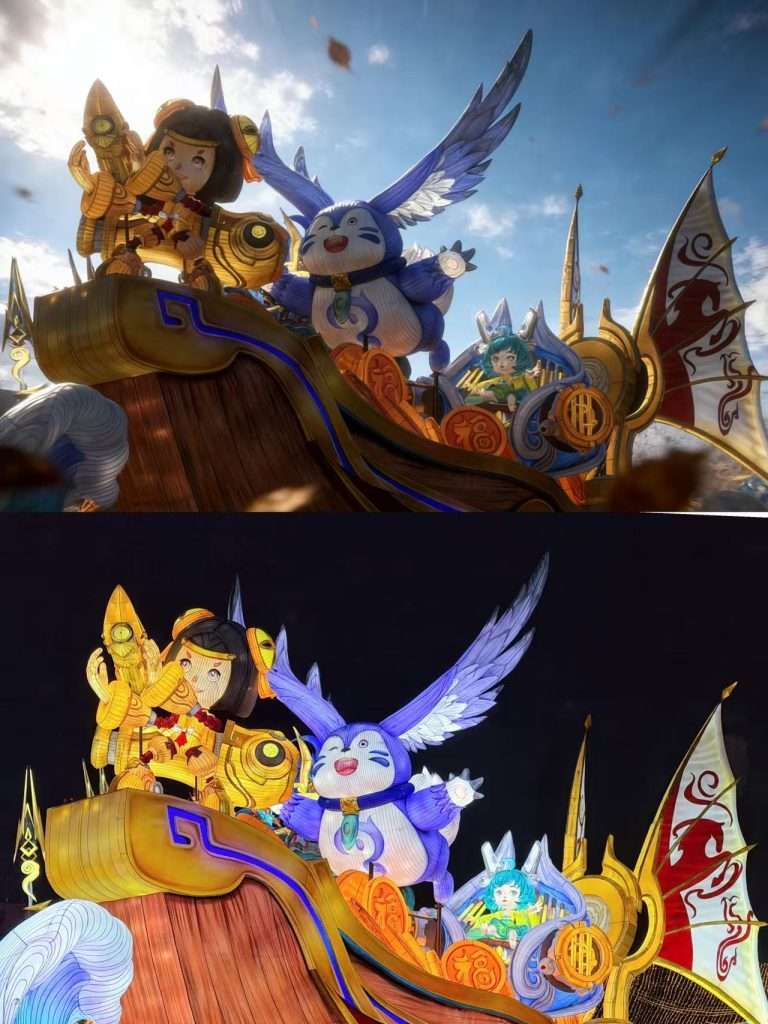
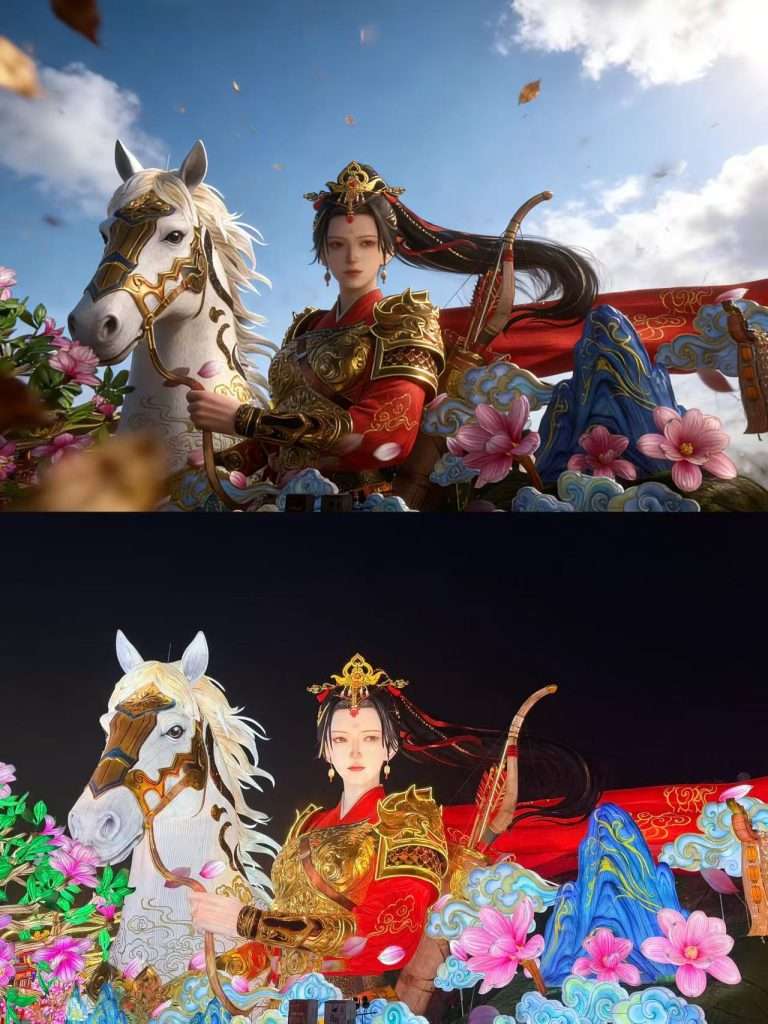
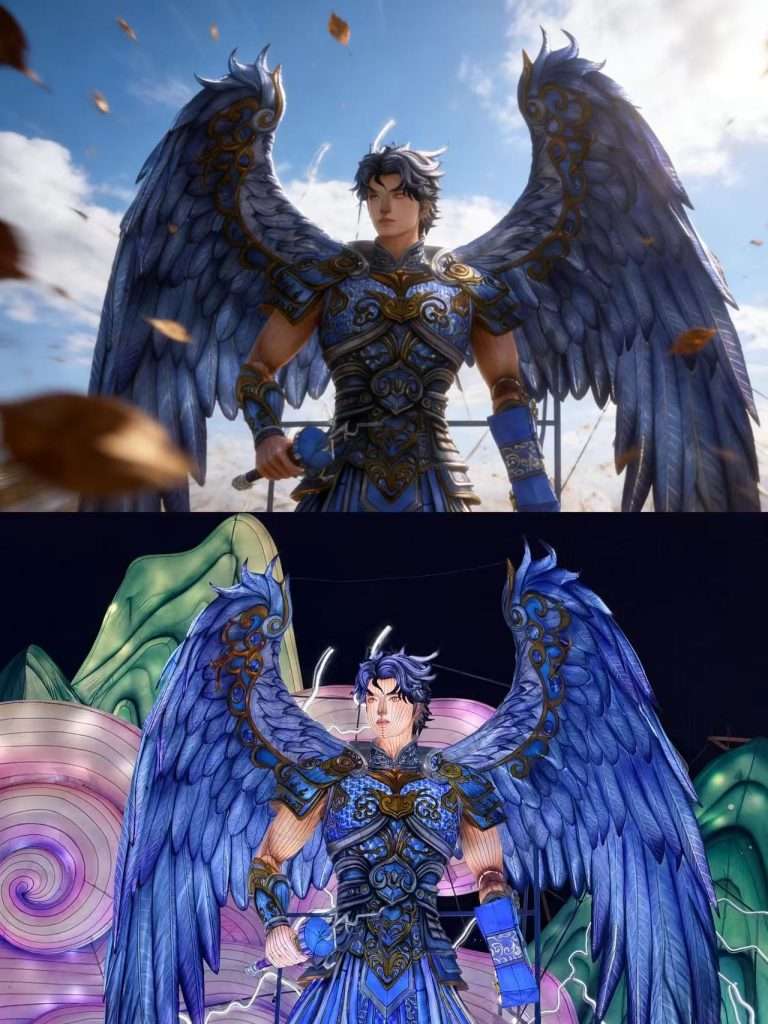
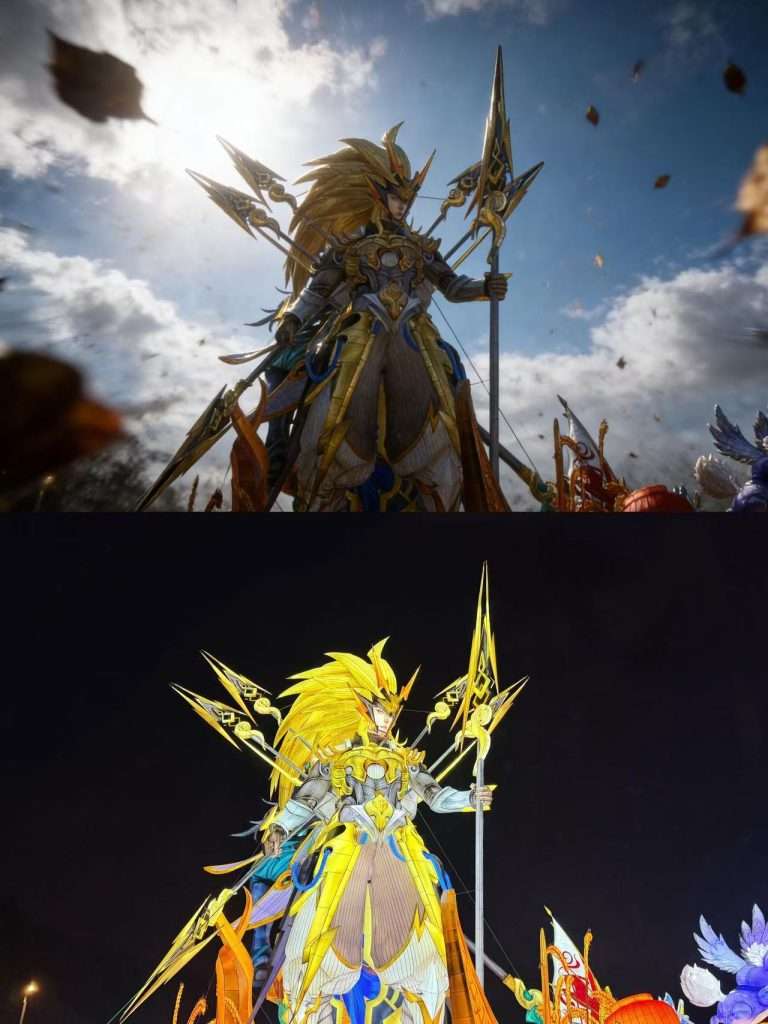
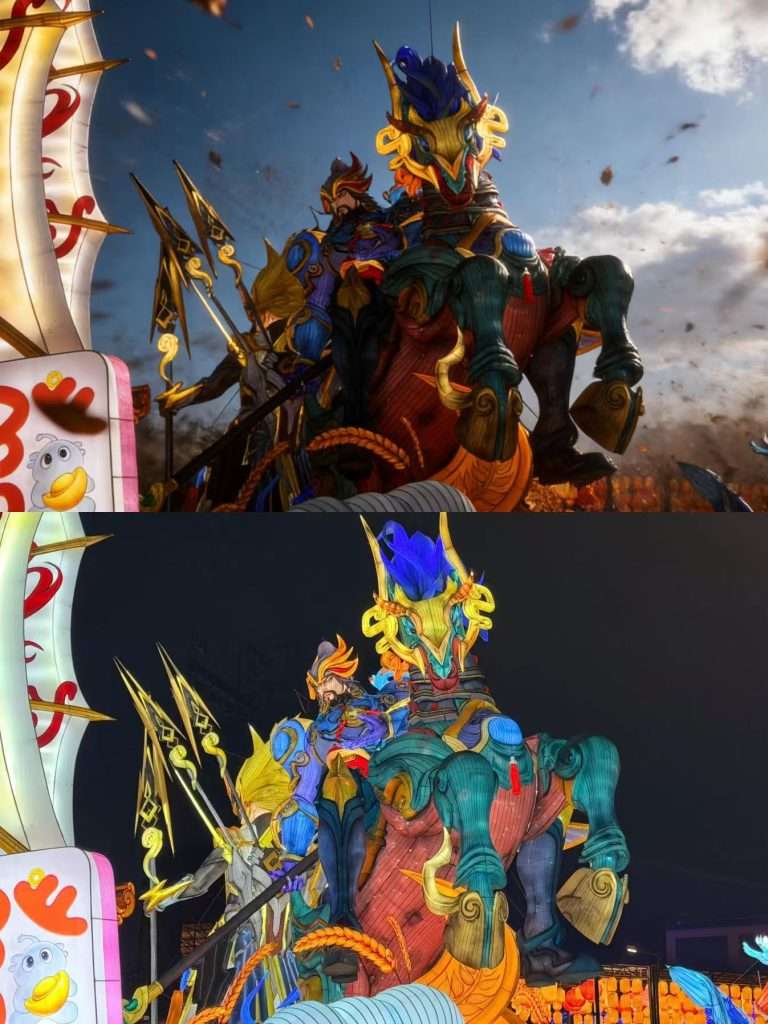
Displays of this kind are commissioned by clients who already hold the rights to the characters they want built, and the sequence matters. The licence belongs to the client; the supplier’s job is fabrication to the artwork supplied. It is the point where first-time buyers most often assume the wrong thing. These projects are usually tied to a launch date or an anniversary, which makes the schedule the hard constraint and the design the flexible one.
In practice the client supplies character artwork, reference sheets or a style guide, and the build follows it. Sizes are set by the scene rather than by the character: a figure that has to be photographed beside visitors needs to sit near human scale, while one that reads from across a plaza does not. Where an opening date is fixed, we work backwards from that date and say early if the schedule leaves no room for a late design change.
3. Traditional Mythological Figure Lanterns
Figures from Chinese mythology — Nüwa, Nezha, Chang’e, Sun Wukong — are public material, which makes this the easiest theme to use internationally. There is no licence to arrange and no character design to approve. The design question moves to recognition instead: audiences outside China often know these figures from films and games without knowing the stories, so compositions are built to be understood without a caption.
Each composition is built around one recognisable moment rather than a full narrative — a figure mid-gesture, a pair set against each other, a character with its attribute in frame. Venues that want the story told usually add it on their own signage, which keeps the lantern itself free of text and lets the same piece work in a venue where three languages are spoken.
4. Light Sculpture and Illuminated Sculpture
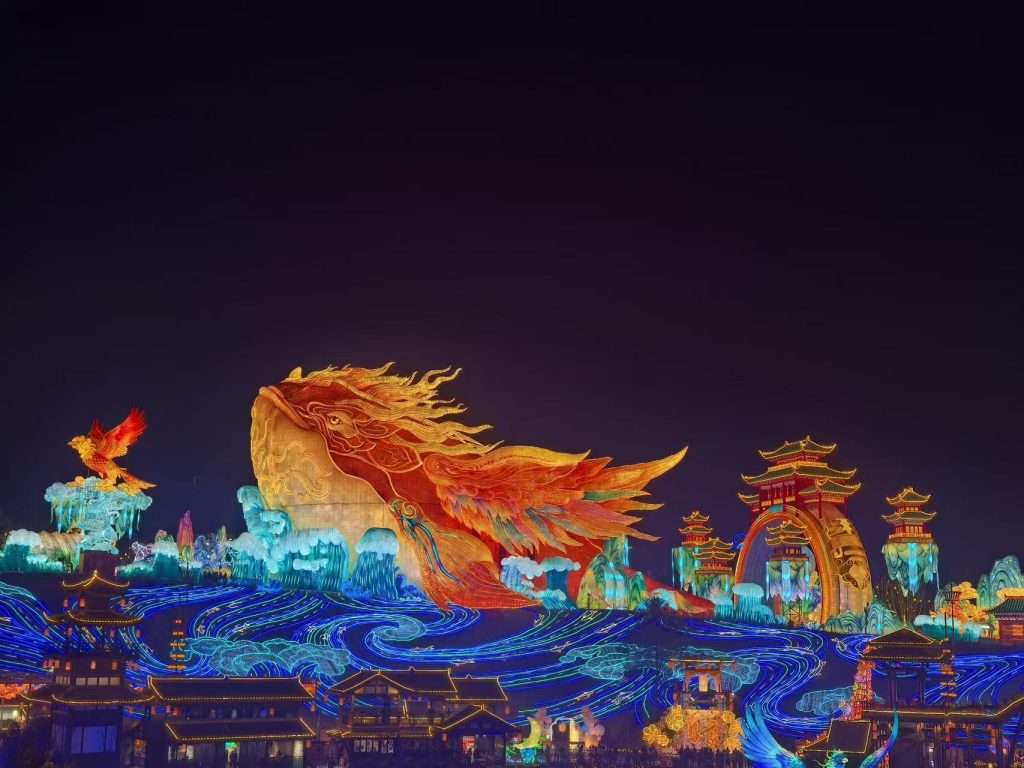
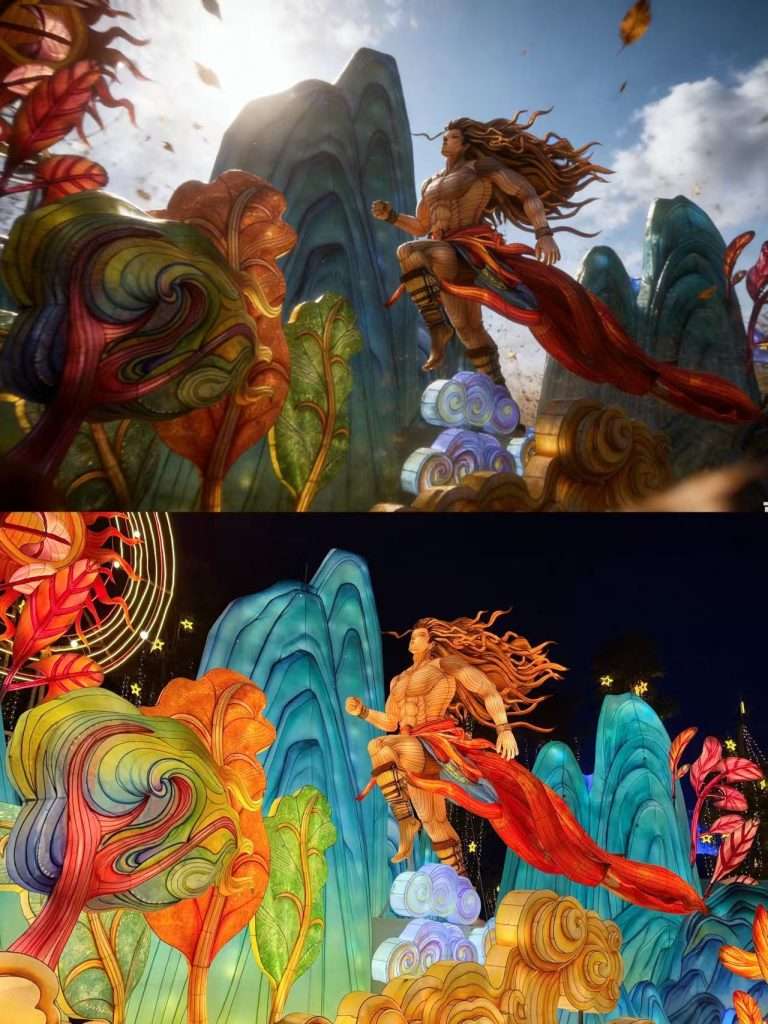
This is where a lantern stops being a lantern and becomes a light sculpture in its own right. The piece carries its own form instead of being carried by a frame, which is what allows it to stand on a lawn, sit in water, or hold a position in a landscape without reading as temporary. It is usually the category that gives a wide, otherwise empty site its focal point.
Because these pieces are self-supporting, they are also the ones placed where nothing else fits — a lawn that cannot be dug up, a water feature, a slope that would defeat a framed structure. Placement is settled with the client early, because the piece is designed around the surface it stands on rather than adapted to it afterwards.
5. Animatronic Simulation Devices
The category that turns a static scene into an attraction. Simulated animals and animatronic dinosaurs with concealed mechanisms, programmed movement and synchronised sound are what a venue usually means when it asks for something visitors will stay in front of. They are also the pieces with the strictest site requirements: movement needs clearance, a level standing area, and space behind the piece that visitors never see.
Programming follows the setting. A piece in a walk-through area moves continuously and slowly; one that performs on a schedule is built around a pause-and-perform cycle, which needs a marked waiting area and a route that keeps moving past it. Sound is planned at the same time as movement, because a level that works in an open park is not a level that works inside a shopping centre.
Chinese Light and Shadow Expression on the International Stage
A display that travels well is not the same as a display that looks good at home. Overseas venues are rarely empty fields. They are city squares with loading restrictions, shopping centres with ceiling heights, parks with mature trees and drainage nobody can move. Every one of those constraints changes the structure, and the ones that hurt are always the ones discovered late. This is why the first useful thing a client can send is a site plan, not a mood board.
Themes cross borders unevenly. A dinosaur, a flower, an ocean scene and a moon read the same in any language. A scene built on a story the audience does not know needs that story designed into the composition, not written beside it — a decision made before anything is built rather than a caption added afterwards.
Then there is the schedule. A festival the size of the Zigong International Dinosaur Lantern Festival takes three weeks to build, which is not a model for a two-week window in another country. The difference gets absorbed at the drawing stage: pieces planned so they arrive in sections, join on site, and need less time and less equipment than the original build. Buyers who have run an international installation before ask about this before they ask about design.
Where a display has to work in more than one market, the version that travels should be designed first. It is easier to plan for the tighter site and the shorter window and then relax those constraints for a project at home than to do it the other way round, and discovering it late costs a rebuild rather than an adjustment.
What we need in order to quote accurately is short, and most of it is about the site: a plan or rough sketch, the surfaces the pieces will stand on, how visitors will move through, whether vehicles need access, and the dates the display has to be open. Everything after that — structure, lighting, themed detail, installation planning — is ours.
That split is deliberate. Design, fabrication and installation are handled as one scope, which is why nothing about how the display is built needs managing from the client’s side. The first thing a client sees is a finished installation, on the date it was promised.
Thirty-two editions of the Zigong International Dinosaur Lantern Festival is a long time to refine one format. What it has produced is closer to a working method than a catalogue: read the site, choose the theme that fits it, plan the build around the site’s real limits, and design the pieces so they can get there.
Looking for finished pieces rather than the process? Our dinosaur lantern displays cover festival routes, theme parks and zoo night trails, with every size set by the space the piece has to stand in.