
For many visitors, the magic of Jurassic Park lies in one unforgettable feeling: the moment when dinosaurs no longer feel like exhibits, but living creatures sharing the same space. Achieving this effect in the real world is not about a single technology or visual trick. It is the result of carefully integrated mechanical engineering, realistic design, motion control, sound design, and environmental storytelling. Modern animatronic dinosaurs, such as those produced by AuroraGong, are built precisely for this purpose — to recreate the awe, tension, and immersion of a Jurassic Park experience.
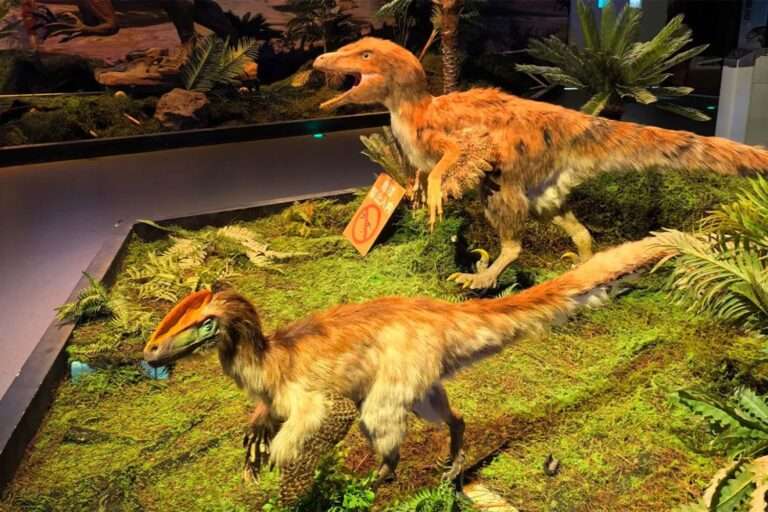
From Structure to Movement: Making Dinosaurs Feel Alive
One useful aspect of the Jurassic Park experience is not the appearance or any sound effects, but what is under the skin. Every realistic animatronic dinosaur is backed by a metal support that serves as a bony structure. This helps the dinosaur balance all the weight in a relative manner and yet is able to carry out the continual repetitive movements without any risks over a long running period.
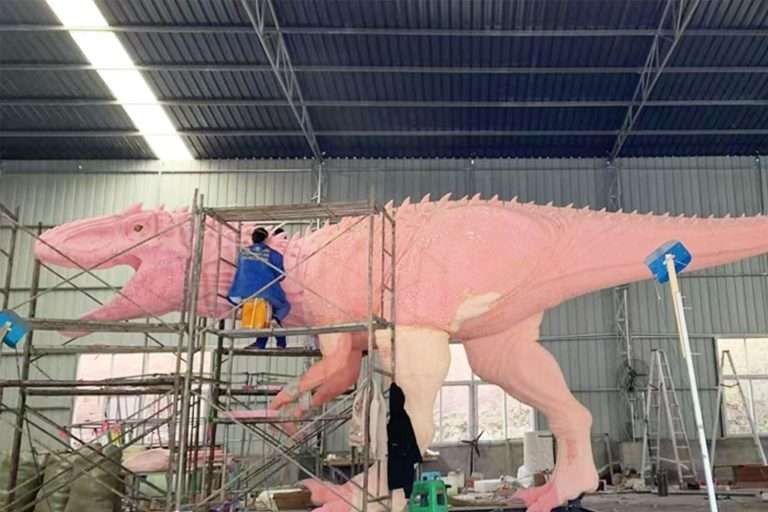
These ropes allow management of the head, neck, tail, jaws and the whole body so that the dinosaur looks like it is carrying and planting every motion instead of making rigid mechanical reaches. For instance, when a Tyrannosaur shifts its gaze or compresses its trunk to look around, it is achieved through perfect functional discharge of mechanical loads and kinematic organisation of motion as opposed to intense movements or exaggerated gestures.
Motion Programming: Recreating Natural Dinosaur Behavior
A static model cannot be compared to a dinosaur theme park, which is truly immersive. The barrier here is clearly in the way it moves. The Jurassic Park experience does not occur without the concept of moves that can be easily predicted. All movements of the dinosaurs look unintentional. How does this work? The movement logic with the speed, duration, even, radius – all these elements are constructed in advance.
The realistic animatronic dinosaurs are not about simple mechanics, rather it is about animal models that have behavior. Slowly inhaling and exhaling, a slight swaying of the tail, tilting of the neck head and the last coming such activities provide charges of life without physics. Such motion is also not a singular motion and it is then aligned with the other components of the prehistoric machine so that the dinosaurs move as if it senses what happens around the environment. Plexiglass separation ensures that the guests looking from a distance and awaiting a dinosaur are tense.
Skin, Texture, and Color: Visual Realism at Close Range
The visual features used in the description of Jurassic Park experience are very applicable when realism is concerned. Nevertheless, it is particularly applicable to allow visitors get the dinosaurs within a few meters; an extent of three meters at least. The process of manufacturing AuroraGong realistic animatronic dinosaurs uses high-density foam and silicone skin layers. The surface reproduces an image of reptile skin, muscles, and even wrinkles of the vicious creatures.
Skins of sculptures are normally hand painted with several coats of paint to give it a more realistic appearance. As seen in the bone-in Behemoth models these textures change accordingly, given different types of lighting, an illusion as if the animal is alive not just a statue.
Sound and Atmosphere: Completing the Jurassic Illusion
A visit to a theme park cannot be only about enjoying some rides since sound also plays a crucial role in creating a Jurassic Park experience. Sounds such as challenging deep inhalations, reverberant low growls or loud sudden outbursts and the surrounding environments’ airwaves all envelop the emotions of any person like the thrill or fear and this is where sound comes in.
If such sound is in time with a dinosaur action, for example, a growl at a certain period of open and shut of the jaws, then it won’t be a mechanical issue, but in fact, a very realistic animatronic dinosaur. This use of sound and motion will turn looking at the exhibit from an eye perspective into an experience where the attendees feel like it is all around them.
Scene Design: Turning Dinosaurs into a Story Experience
The actual adaptation of Jurassic Park doesn’t depend on one dinosaur; it involves how the dinosaurs are fitted into the environment at large. While incorporating animatronics within landscapes, which account for artificial trees, rocks and fences with artificial lights. A visitor’s experience is controlled by patterns of movement and views that are orchestrated with surprising or dramatic onsets.
In such a scenario, realistic animatronic dinosaurs play roles in delivering a story performance instead of merely sitting in cases. Be it a dinosaur theme park, a museum or any other tourist attraction, the environment helps to expand the size, the feeling and the story.
Conclusion
Recreating the Jurassic Park experience is not about copying a movie scene, but about delivering the same emotional impact. Solid framework from within, articulated movements, skin finishes, sound coordination and scene creation: these are the elements that allow animatronic dinosaurs to undergo from fantastical imagination into realistic illusion.
AuroraGong with their realistic animatronic dinosaurs, is evidence that such and such can transform simple exhibits or attractions into long-lasting memories. Watching the dinosaur move, the visitor stops the dinosaur theme park experience. This is the way in which the dinosaur theme park program manages to become the dinosaur experience, complete with all the detailed mechanics and traditions.