
Glowing Fish Lanterns projects combine cultural display, spatial experience, and commercial operation into a single themed installation. While commonly treated as simple decorations, these projects actually help businesses attract customers and generate profits when executed with the right strategy. However, in reality, many projects fail to achieve the latter.
AuroraGong, as a professional original design studio and manufacturer specializing in this industry, has helped hundreds of clients achieve one-stop solutions for Zigong lanterns, from design and implementation to profitability. We have summarized the following five factors that influence the success of glowing fish lanterns project.
No 1. Visual Appeal for Glowing Fish LanternsNo 2. Spatial Circulation Design for Glowing Fish LanternsNo 3. Lighting Effects on Glowing Fish LanternsNo 4. Weather Resistance for Glowing Fish LanternsNo 5. Turnkey Delivery for Glowing Fish Lanterns
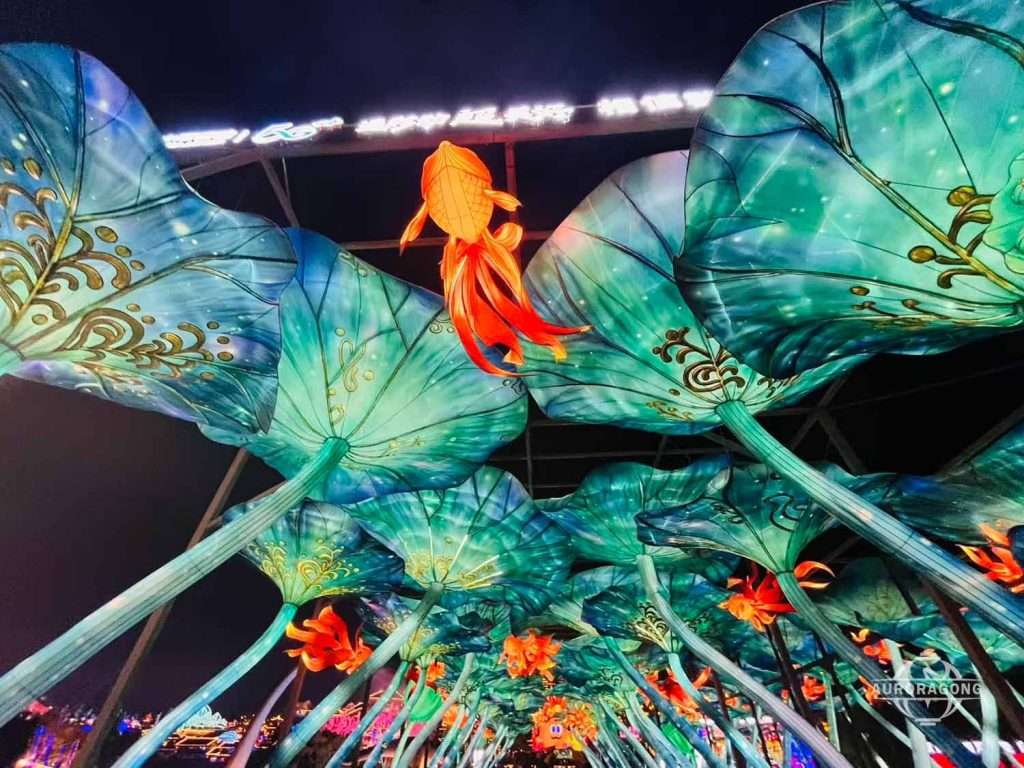
No 1. Visual Appeal
Visual appeal is the first hurdle for any fish lantern project.
It is important for an effective glowing fish lantern design to convey a theme like the sea, myths, or celebrations instead of just being a collection of lanterns. In addition, the proportion of the fish lantern, the consistency of its illumination, and its night time lighting all play an integral role in defining its appearance.
Practical Glowing Fish Lanterns installations depend on these factors in sequence: each phase builds on the previous one. For B2B projects, our team coordinates Glowing Fish Lanterns delivery from factory fabrication to on-site installation, ensuring every step supports the next.
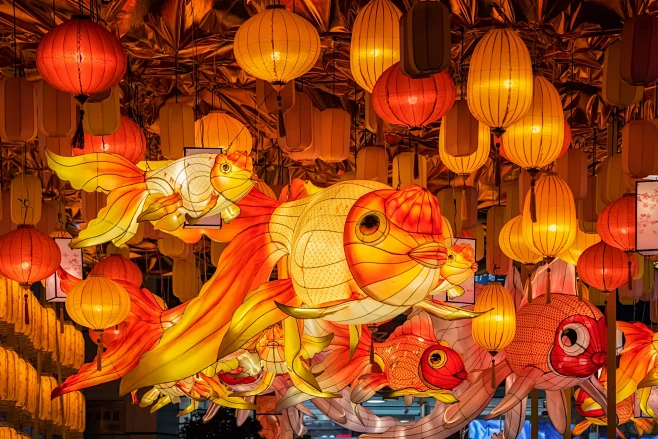
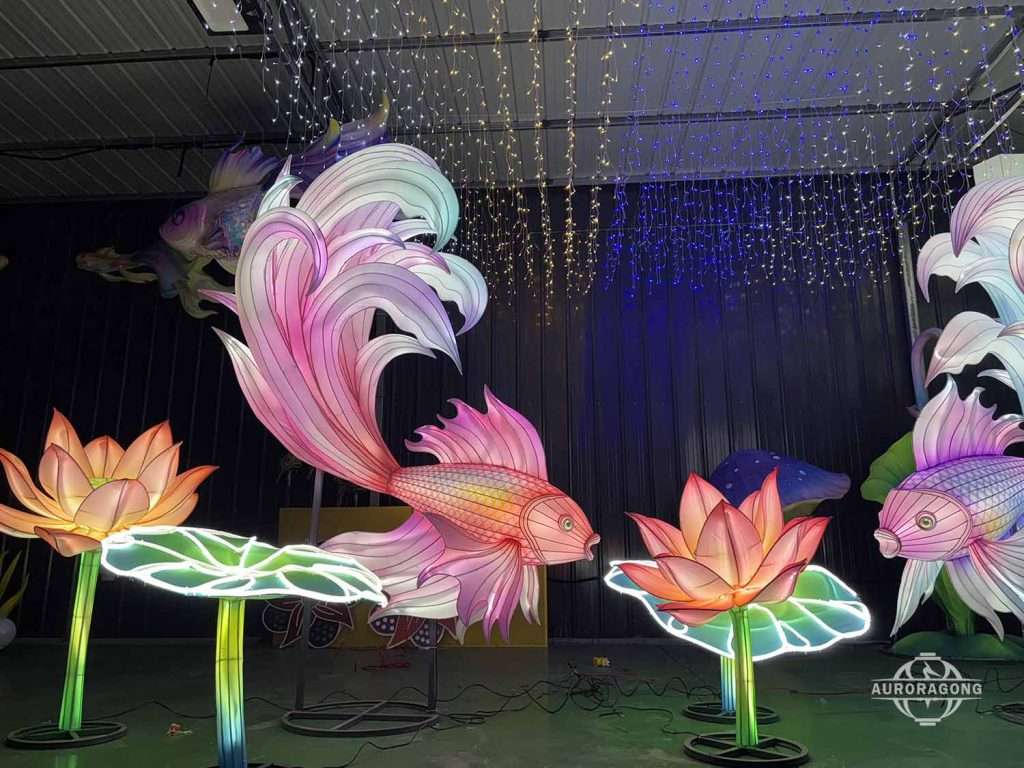
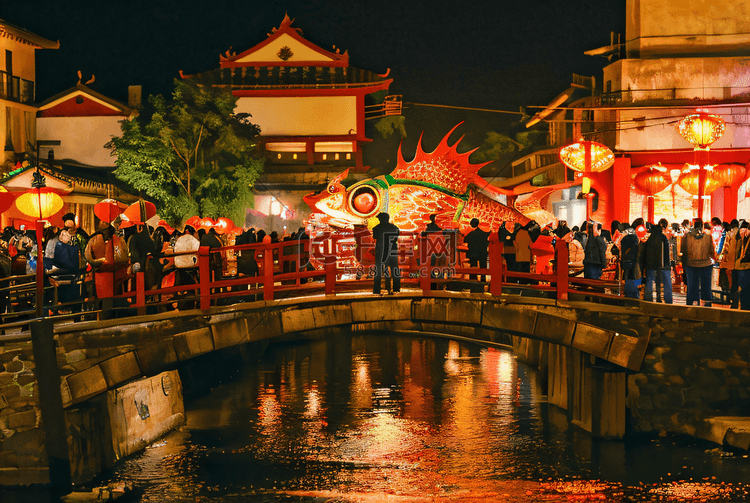
Most importantly, it should be “shareable.” Fish lantern scenes with photo-op potential are more easily shared on social media, resulting in sustained exposure and organic traffic.
No 2. Spatial Circulation Design
The core reason for the failure of many projects lies not in the lantern, but in the “path.”
Visitor flow design can greatly improve the visitors’ experience. For instance, utilizing a circular route prevents boredom and overcrowding, while a rhythmical approach to “highlight + transition + climax” will maintain visitors’ excitement and interest through the entire process.
Immersive experience is becoming more and more important. Through interactive lighting, sound effects, and even storytelling, fish lanterns can transform from mere “objects of observation” into “participatory experiences,” thereby extending the time visitors spend there.
No 3. Operational Capabilities
A fish lantern project that relies solely on its initial opening hype often quickly cools down.
Successful projects typically integrate with festivals or trending themes for sustained operation, such as nighttime light shows, themed performances, music festivals, or food festivals, creating multi-dimensional traffic generation. Simultaneously, by creating highly recognizable visual symbols (such as iconic fish lantern installations), the project’s memorability can be continuously strengthened.
In other words, the lantern is merely the carrier; operation is the traffic engine.
No 4. Business Conversion Capability
From a business perspective, profitability is the core criterion for any project.
A mature glowing fish lantern project typically builds its revenue structure around “tickets + secondary consumption.” For example, catering, cultural and creative products, and interactive experiences can significantly increase the value per customer. Furthermore, the project’s enhancement of the overall commercial complex or scenic area brand is also an important implicit benefit.
If there is only foot traffic but no conversion to spending, then even the highest popularity will be difficult to sustain in the long run.
No 5. Sustainability
Short-term popularity is not necessarily equal to success; operation sustainability matters most.
First, it is very important whether the lantern lanterns can be easily assembled, disassembled, transported and then put together. This factor can help in controlling the cost of the project for a long period of time. Second, it is important that the lighting system has good waterproofing, wind-proofing and anti-aging capabilities due to outdoor usage.
Third, regular updates of content are also significant because by changing certain themes, visitor boredom will be overcome.
Common Misconceptions
However, when looking at real-life cases of failed glowing fish lanterns, one will find that such failures are rarely due to “insufficient lighting,” but instead, the result of deep-rooted biases in the decision-making process. Some of the most common traps that people fall into are listed below:
1. Concentrating solely on the design of the lanterns without any consistent theme or storyline.
2. Allocating the majority of the budget to lantern production without allocating funds for promotion and event operations leads to a “peak upon opening,” quickly losing momentum and subsequent visitor support.
3. Failure to plan visitor paths scientifically may result in overcrowding, repetition of paths, or a monotonous tempo, all of which will have a direct effect on visitor dwell time.
4. A mere duplication of successful cases without taking into consideration the local culture and the audience’s taste will be ineffective and will fail to achieve high conversion rates.
5. The lack of secondary consumption instances, such as dining, culture and creativity products, and interactive activities, makes it impossible to enhance the average order value, thus failing to ensure a viable profit-making model for the project.
6. Compromising on quality and workmanship for cost savings results in higher maintenance expenses and lowers the quality of the entire project.
7. The lack of content updating process and design reusability will cause the project’s freshness to fade fast, making its sustainability and profit difficult to sustain.
It is only through creating a system of project design at the very beginning that such problems can be addressed and avoided, thus contributing to project success.