
Many ocean-themed nighttime tours are very popular in the first two weeks after opening, but they quickly encounter a problem: visitors take photos and leave, resulting in short stays and limited secondary dissemination.
After analyzing several overseas ocean-themed lantern exhibitions, AuroraGong found that the problem is usually not the number of lanterns, but rather the lack of storytelling, interactivity, and spatial rhythm design in the ocean-themed lanterns. Ocean-themed lantern exhibitions that truly make visitors stop to take photos, explore, and even repeatedly check in are not about having “more lanterns,” but about making visitors feel like they have truly entered a breathing marine world.
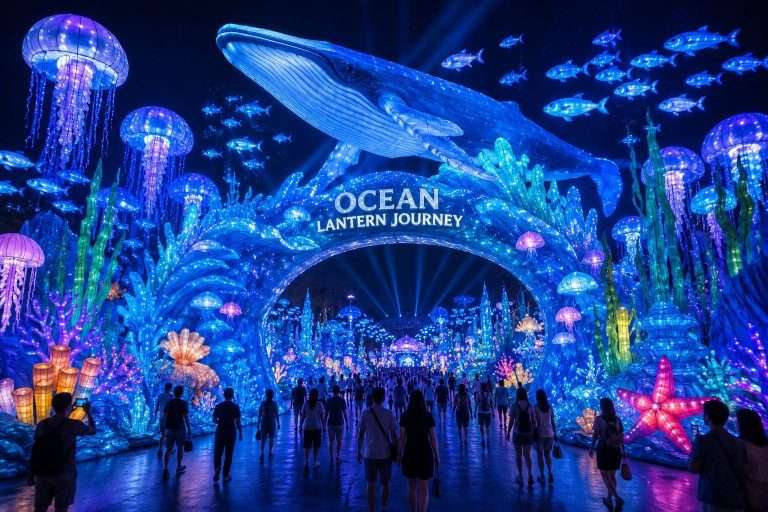
The following 10 design ideas, proven in our practice, can help users enhance the appeal and commercial value of ocean-themed lantern tours.
1. Deep-Sea Entrance Arch
The entrance area is recommended to feature a 4-6 meter high wave archway, complemented by gradient blue lighting and a low-fog system.
As visitors pass through the entrance, they will naturally experience a sense of ritual, as if “diving into the deep sea.”
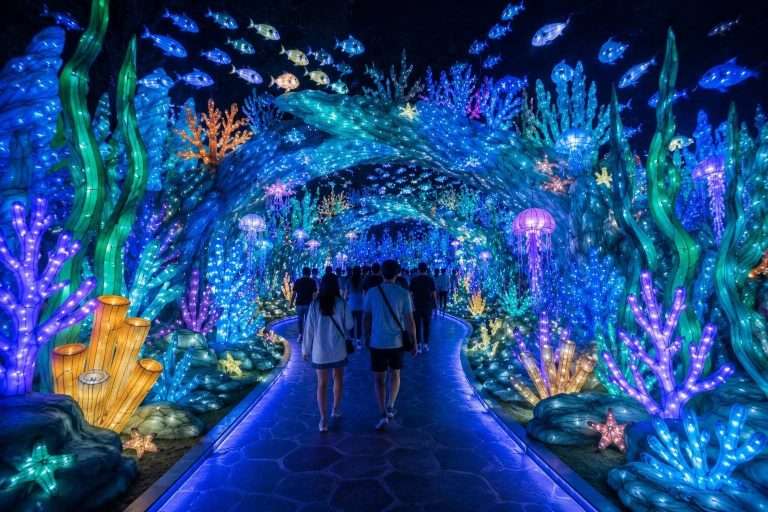
Project experience shows that the more immersive the entrance lighting, the more willing visitors are to actively take short videos to share.
2. Giant Whale Main Installation
The whale is always the visual centerpiece of the ocean theme lantern.
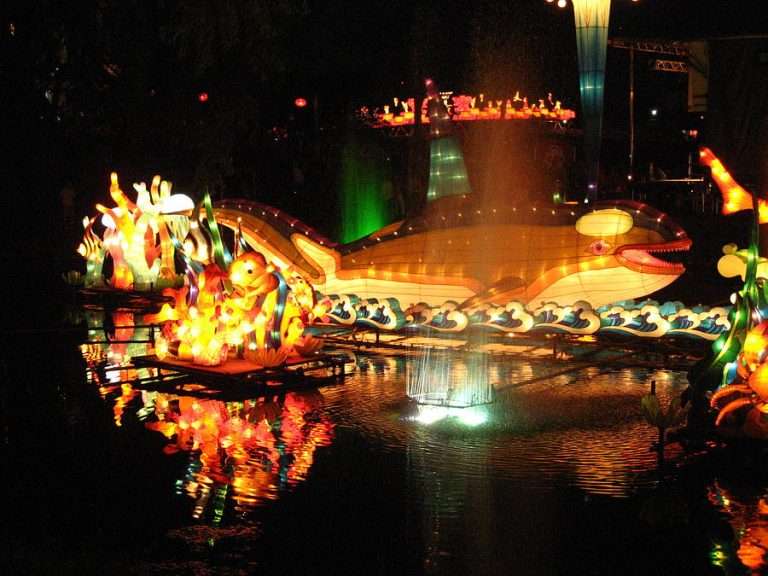
We typically advise clients to keep the main whale light’s height between 8-12 meters and use DMX lighting controls to simulate its breathing motion, creating a slow, gradual change in brightness.
This dynamic design is more likely to generate social media buzz than a static whale.
3. Glowing Jellyfish Matrix
The suspended jellyfish matrix is an interactive installation with extremely high visitor engagement.
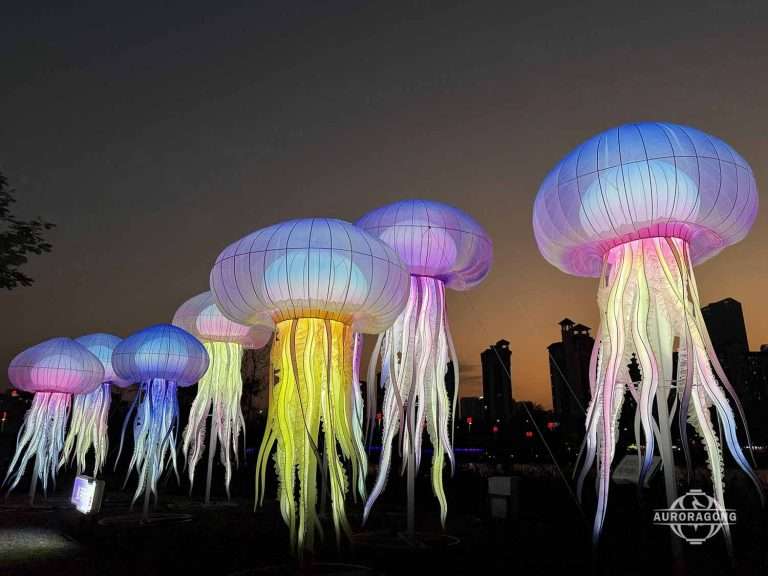
The optimal suspension height is recommended to be 3-4 meters, allowing visitors to observe details up close and capture the entire scene in photos.
Adding a random gradual brightening logic will create a realistic floating effect.
4. Underwater Coral Forest
Many ocean-themed lanterns are only suitable for “looking at”.
But visitors prefer to “walk in”.
It is recommended to use low-lying coral lights of about 1.5 meters to form a surrounding passage, making visitors feel as if they are entering an underwater secret realm.
This design is especially popular with families.
5. Shark Through a Tunnel
A translucent shark skeleton combined with dynamic spotlighting creates a sense of being surrounded by a school of fish.
In actual projects, the average dwell time on this type of installation is typically over 40% longer than in ordinary exhibition areas.
6. Interactive Digital Wave Projection
With the addition of a pressure-sensitive interactive system, ripples of ocean waves spread beneath visitors’ feet with every step.
This instant feedback is perfect for short video sharing and is one of the most popular innovative ways to experience ocean-themed lanterns.
7. Marine Environmental Education Area
In our actual projects, we found that simply displaying glowing sea turtles or environmental slogans typically results in visitors staying for less than 30 seconds.
However, adding simple interactive elements, such as the lights gradually brightening after visitors touch a sea turtle entangled in fishing nets, or a dynamic effect of “marine debris disappearing” triggered by footsteps, significantly increases visitor dwell time. Families, in particular, are more willing to repeatedly experience the activity and take photos to share.
This design transforms the ocean theme lantern from merely showcasing the ocean into a genuine experience of “protecting the ocean,” making it more memorable.
8. Ocean-themed Photo Zone
In nighttime tourism projects, photo zones are often one of the most direct and efficient traffic entry points, significantly enhancing secondary dissemination and social media exposure.
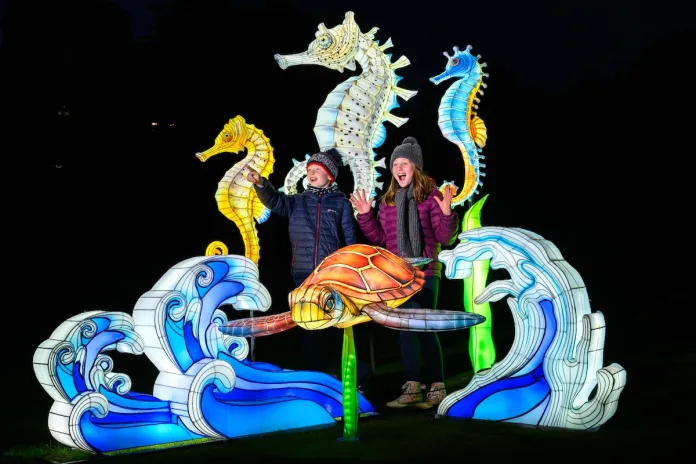
It is recommended to design lighting around a unified ocean-themed IP image (such as luminous marine life, anthropomorphic characters, or characters from a themed story) to enhance overall recognizability and memorability. Simultaneously, reserve space for the integration of the brand logo or project identifier at key visual locations, allowing for natural exposure and brand reinforcement without disrupting the visual experience.
9. Main Stage for the Music and Light Show
In nighttime tours, static lighting effects alone are no longer sufficient to sustain visitor attention, and their ability to evoke emotions is relatively limited.
By introducing a DMX lighting control system, real-time synchronization of light and music rhythm can be achieved, giving the entire ocean scene a sense of “breathing” and “movement.” For example, fish lights can simulate the dynamic trajectories of a group chasing and turning, wave lights can rise and fall with the beat, and jellyfish-shaped lights can present slow, breathing changes in brightness.
This multi-layered dynamic lighting arrangement transforms the originally static exhibition space into an “immersive ocean world” with rhythm and emotional expression.
10. Exit Commercial Extension Area
The exit area is often the last stop on the tourist route and a crucial node for repeat visits and sales conversion.
It is recommended to set up a lightweight ocean theme lantern photo spot, a small IP wall, or a themed merchandise display area to naturally guide interaction and consumption while maintaining the immersive atmosphere.
Through this “experience-ending + lightweight conversion” design, the overall ROI of the project can be effectively improved.