
Animal lantern displays in public spaces are not purely artistic installations. They are temporary spatial design systems that must balance visual storytelling, structural safety, environmental durability, and operational feasibility.

From a procurement perspective, the design process is not about “what looks good,” but about what can be safely built, maintained, transported, and approved for public use.
Start with Public Space Reality, Not Visual Design
Before any sketching begins, procurement teams and designers must define the physical constraints of the site, because public space design is always condition-driven.
Key Design Inputs (Non-Negotiable):
- Maximum wind exposure (site-specific, often mapped using EN 1991 wind logic principles)
- Available ground load capacity
- Electrical supply access (temporary vs permanent grid connection)
- Public traffic density and safety zones
- Installation time window (often 1–3 days in urban events)
In practice, many project failures occur because design is finalized before these constraints are confirmed.
Define Functional Zones Before Designing Animal Forms
A common mistake in animal lantern projects is starting from “animal shape ideas” instead of spatial function planning.
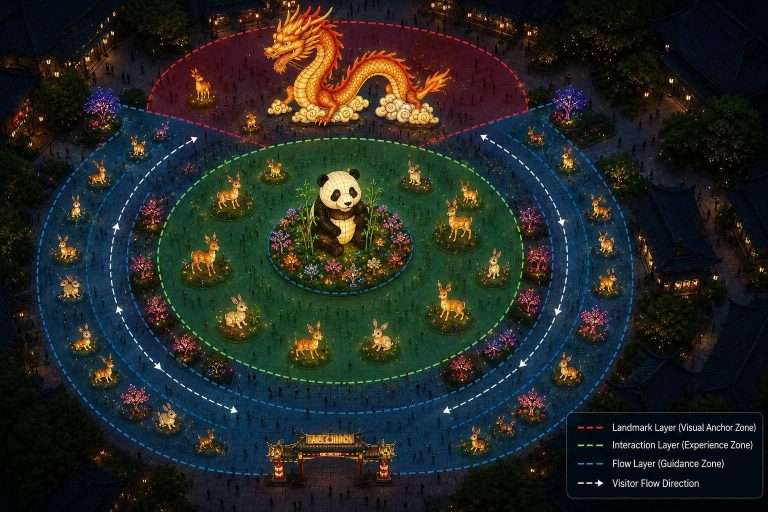
A proper public space lantern design is divided into three functional layers:
Landmark Layer (Visual Anchor Zone)
- Large animal structures (dragon, elephant, mythical creatures)
- Located at entrances or central visibility axes
- Purpose: attract first attention within 3–5 seconds of entry
Interaction Layer (Experience Zone)
- Medium-sized animals for photo interaction
- Designed for 1–2 meter human proximity
- Must consider crowd pressure and accidental contact
Flow Layer (Guidance Zone)
- Small animal lanterns
- Used for directional storytelling and crowd movement control
This zoning approach aligns with public space design logic used in urban event spatial planning and temporary exhibition design practices.
Translate Animal Design into Engineering Structure Early
At the concept stage, every animal form must be converted into a load-bearing structural model, not just a visual concept.
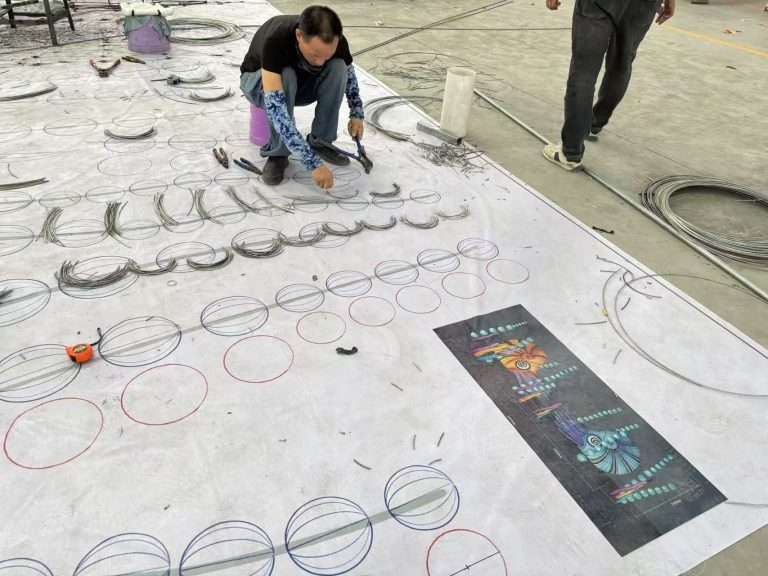
Engineering Translation Principles:
- Curved surfaces → segmented steel frame approximation
- Thin limbs (legs, tails) → internal reinforcement core
- Large hollow bodies → truss + distributed load system
This step ensures compatibility with structural expectations derived from Eurocode EN 1991 wind load modeling principles for irregular shapes.
Environmental Constraints Shape the Final Design
Designers must adapt animal lantern concepts to environmental realities, not the other way around.
Wind Resistance Design Logic
Public lantern structures behave like lightweight wind-catching surfaces. Even moderate wind becomes a structural design factor.
Using principles consistent with EN 1991-1-4 wind action models, designers typically:
- Reduce surface resistance in large flat areas
- Introduce perforation or segmented geometry
- Lower center of gravity for tall structures
Outdoor Electrical Design Constraints
Lighting systems must follow low-voltage safety principles commonly aligned with IEC luminaire safety logic:
- 12V / 24V low-voltage LED systems
- Segmented circuits (to prevent total system failure)
- Waterproof separation between electrical and structural components
This directly affects how animal lantern internal layouts are designed.
Material Behavior Under Real Conditions
Material selection is not aesthetic—it is environmental engineering:
- Textile skins must resist UV degradation (aligned with ISO 4892 testing principles)
- Metal frames must resist corrosion in humidity-prone environments (ASTM B117 reference logic)
- Connectors must withstand repeated wet-dry cycles
Design for Assembly, Not Just Appearance
One of the most critical procurement concerns is whether the design is logistically buildable in a real public environment.
Modular Design Requirements
Animal lantern systems should be designed as:
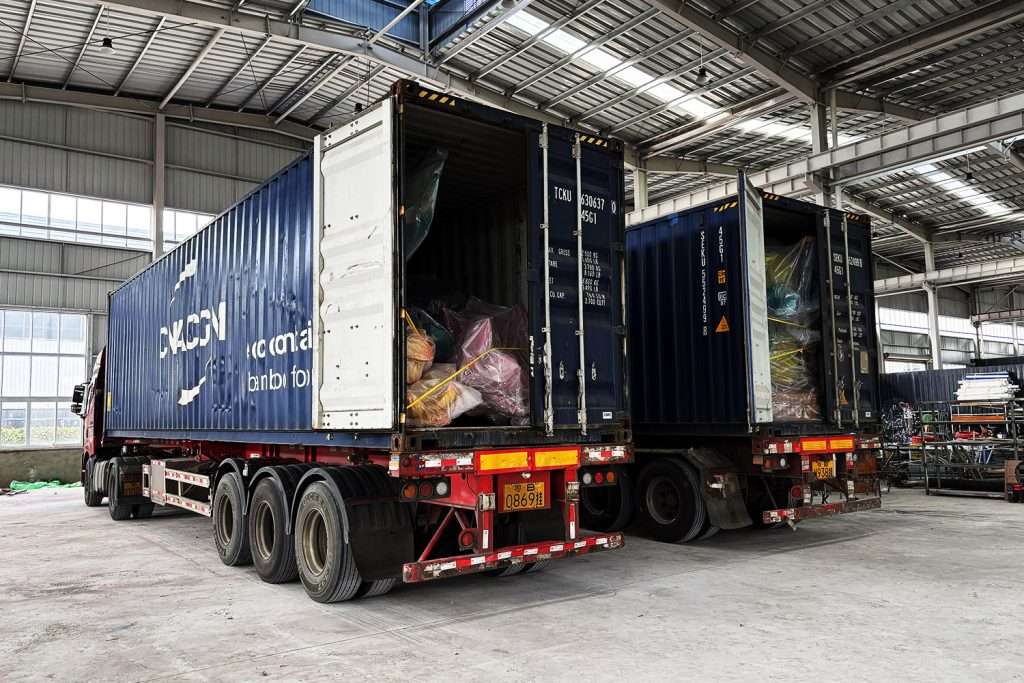
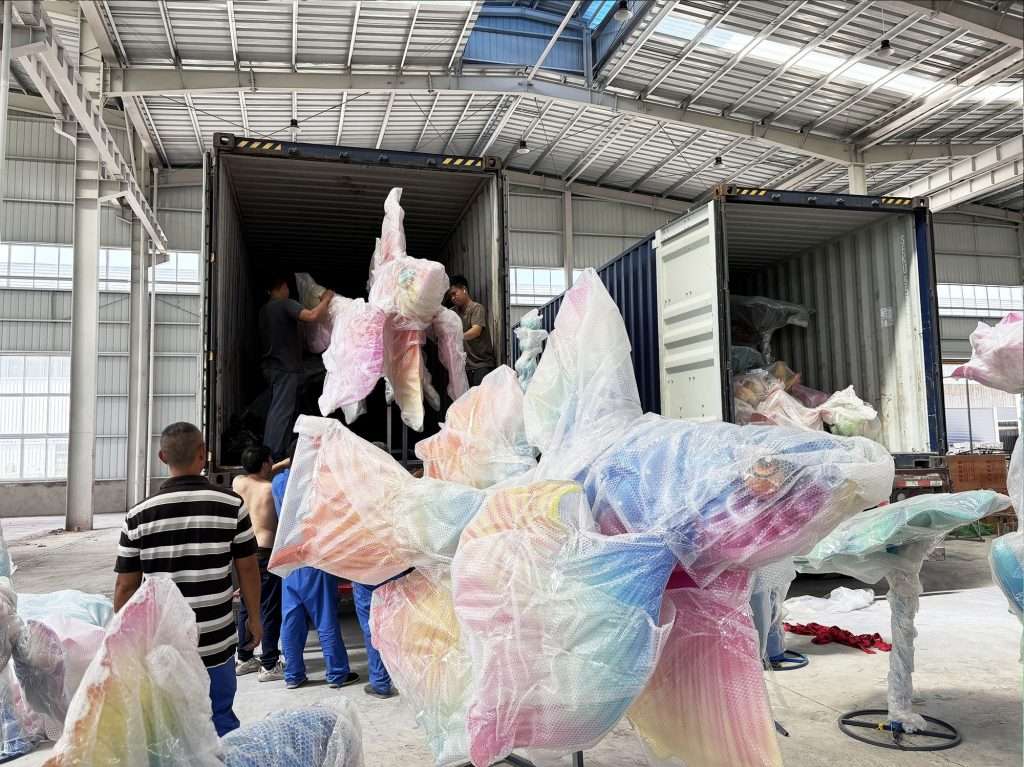
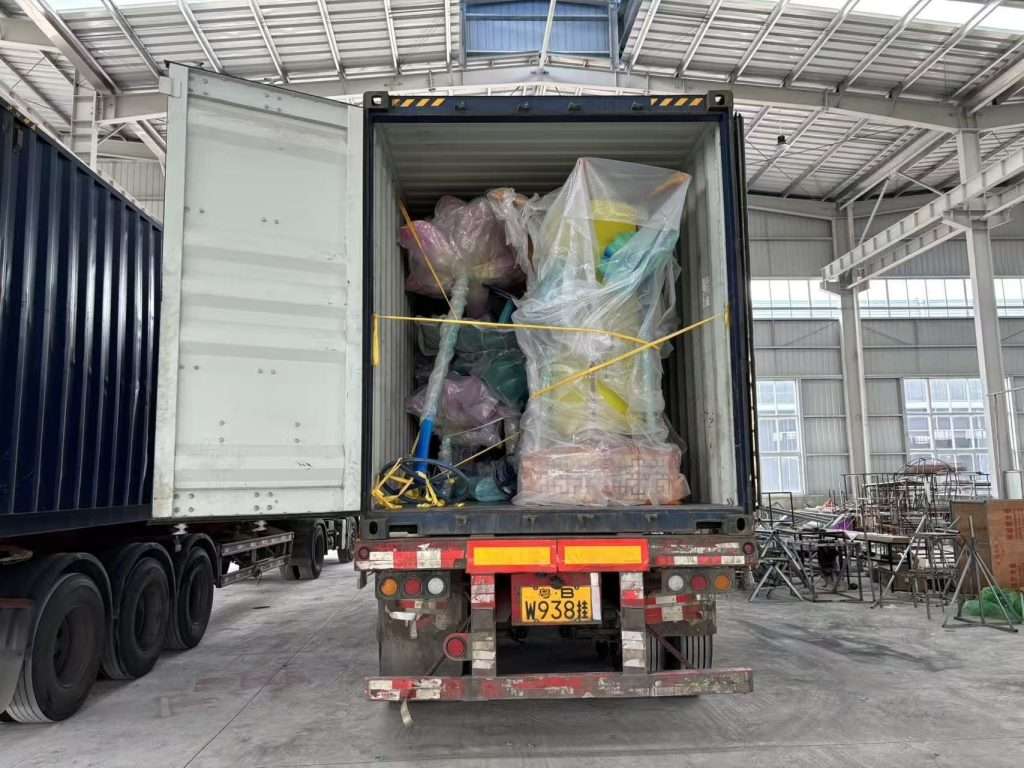
- Transportable modules (container-compatible sizing)
- Bolt-connected frame segments (no welding on-site where restricted)
- Pre-wired lighting units (plug-and-play electrical systems)
This aligns with temporary structure engineering practices used in global event construction.
Installation Time Constraint Design
Public installations often allow only:
- 1–3 days setup window in urban spaces
- Night-time installation restrictions
- Limited heavy machinery access
Therefore, the design must minimize:
- On-site fabrication
- Electrical debugging
- Structural adjustment
Safety Must Be Embedded in Design, Not Added Later
Safety is not a compliance phase—it is a design parameter.
Structural Safety Integration
- Redundant support points for large animals
- Load distribution paths are clearly defined in the frame geometry
- Anchoring system designed according to the site wind exposure logic
Public Interaction Safety
- No sharp edges in reachable zones
- Soft material layering for collision contact areas
- Stable base design to prevent tipping under crowd pressure
Electrical Safety Integration
- Fault isolation zones per animal segment
- Waterproof separation of connectors and lighting modules
- Low-voltage architecture for public touch safety
Operational Design: The Most Overlooked Stage
Design must include how the installation behaves after opening to the public.
Key Operational Scenarios:
- Heavy rain exposure and water pooling
- Night peak crowd density
- Accidental physical contact
- Partial lighting failure scenarios
Design must allow:
- Partial replacement of lighting modules
- Quick access to the internal structural frame
- Segment isolation without full shutdown
Conclusion
Designing animal lantern displays for public spaces is fundamentally a constraint-driven spatial engineering process, not a pure visual design exercise.
A successful design must simultaneously satisfy:
- Spatial storytelling logic (public engagement)
- Structural feasibility (wind + load behavior)
- Electrical safety architecture (IEC-aligned principles)
- Material durability (UV, corrosion, weather exposure)
- Installation and maintenance constraints (real-world execution limits)
In procurement terms, the most effective design is not the most complex or artistic one, but the one that can be safely built, operated, and maintained within real public environment constraints.