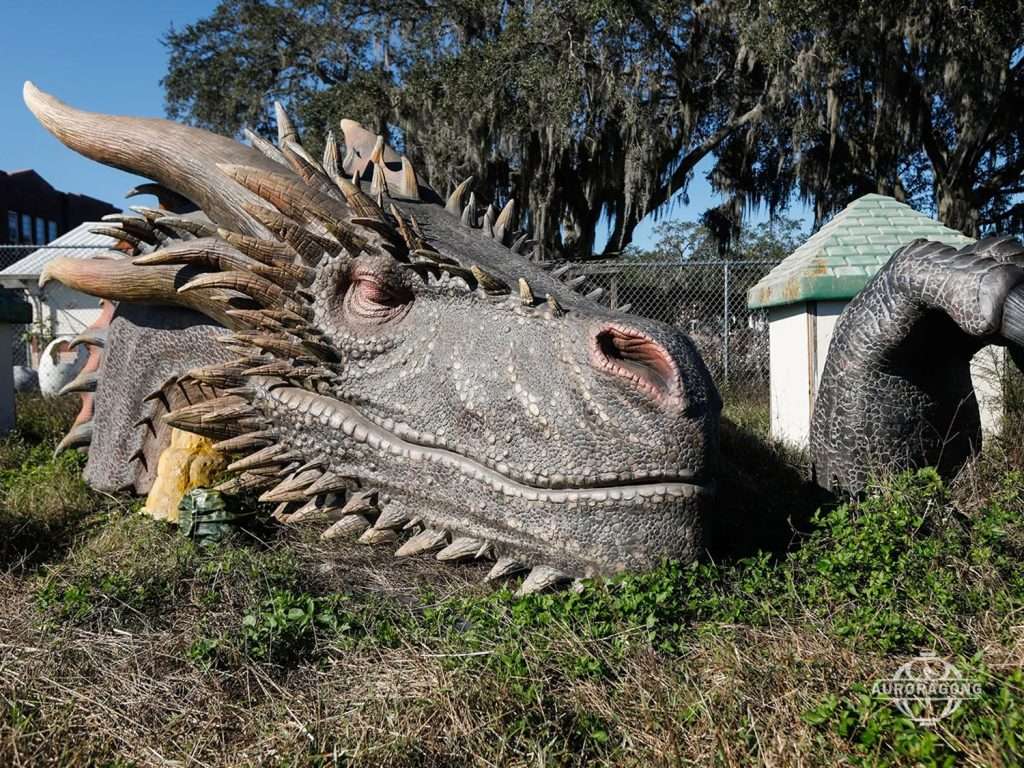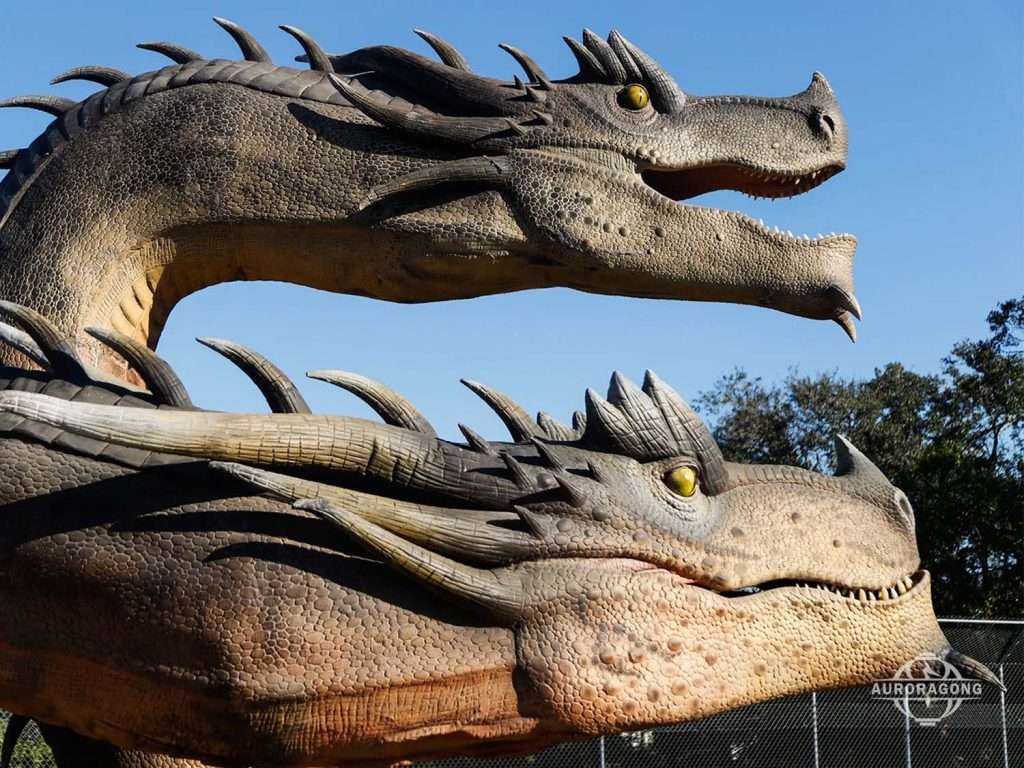
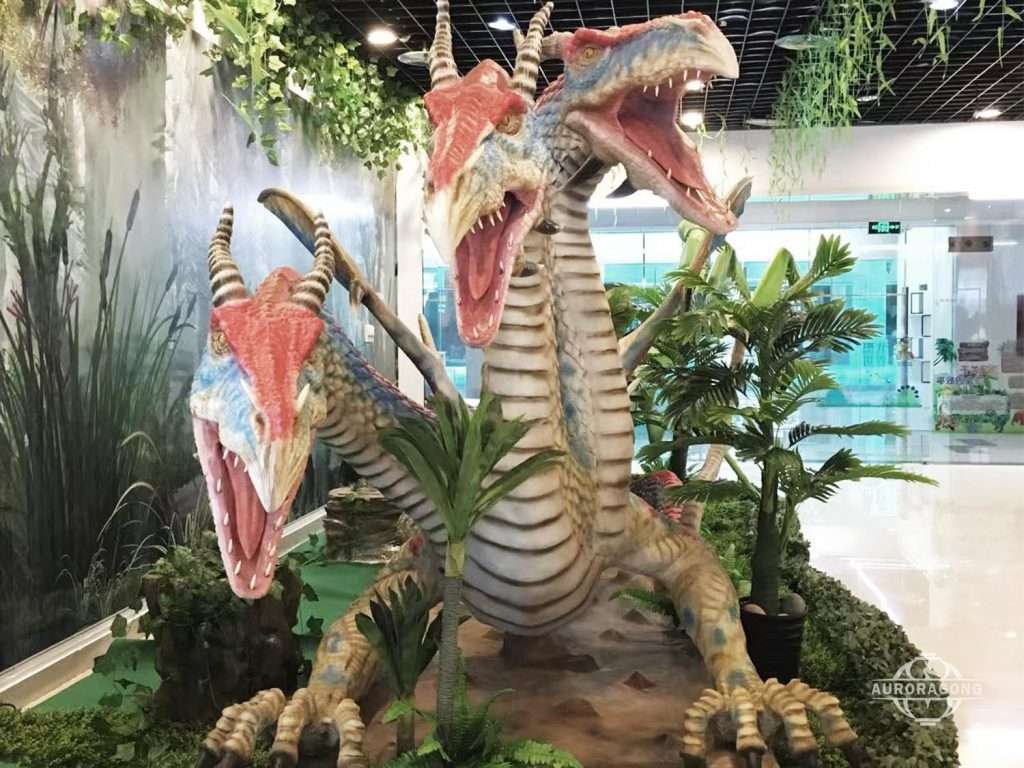

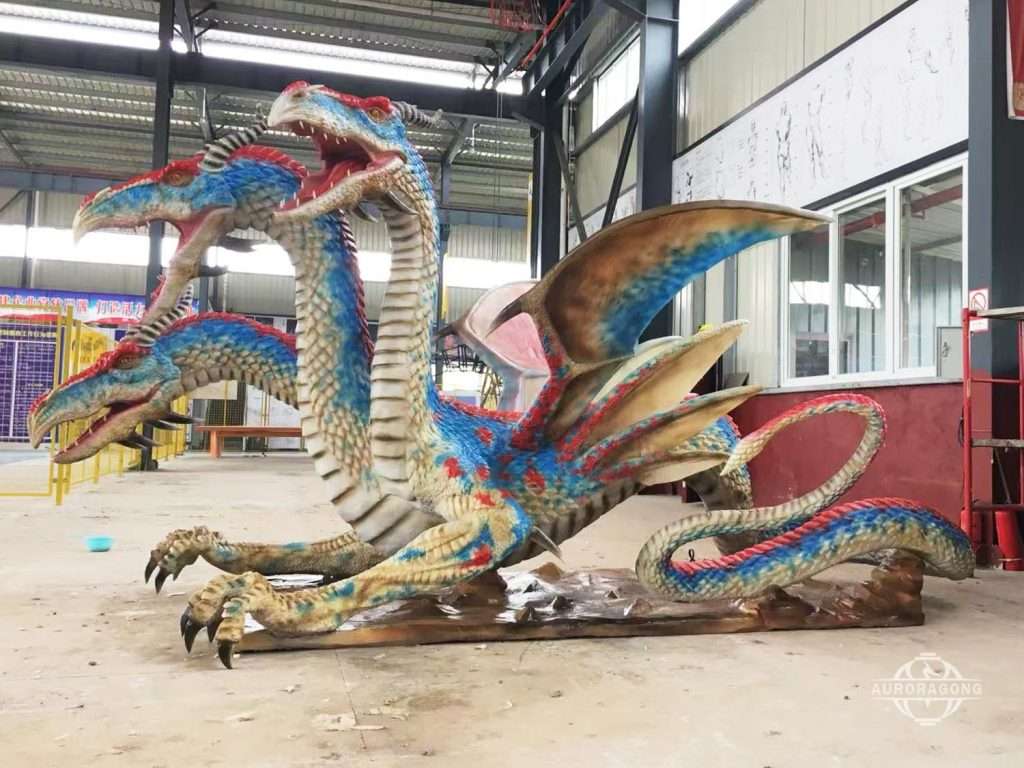
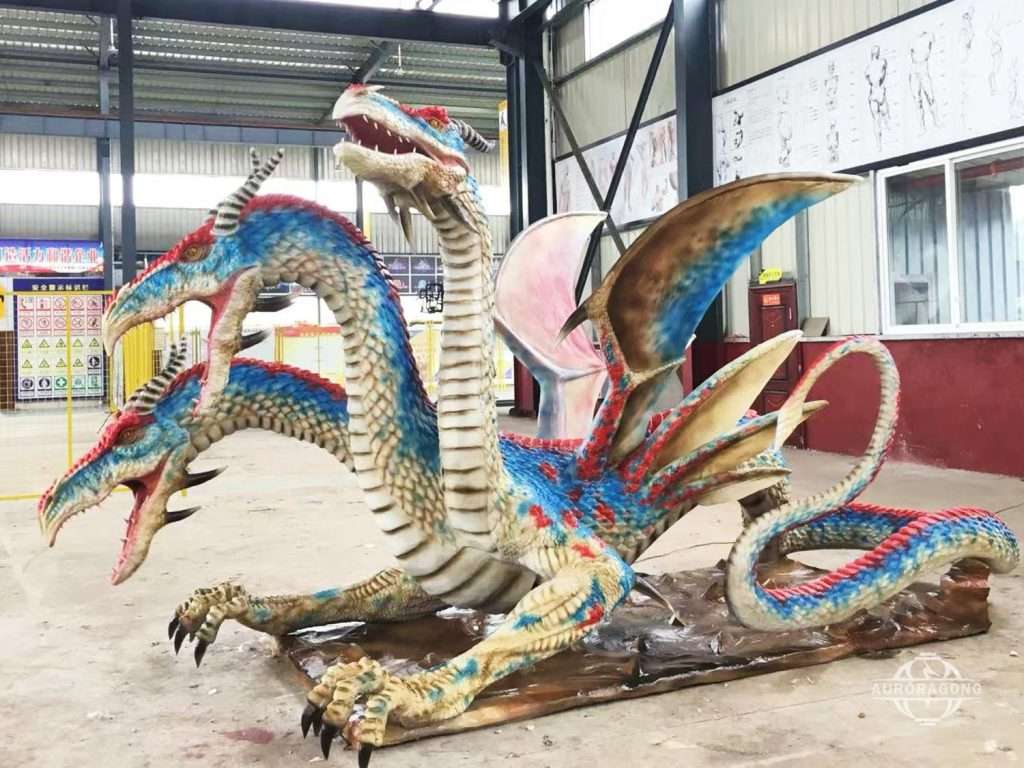
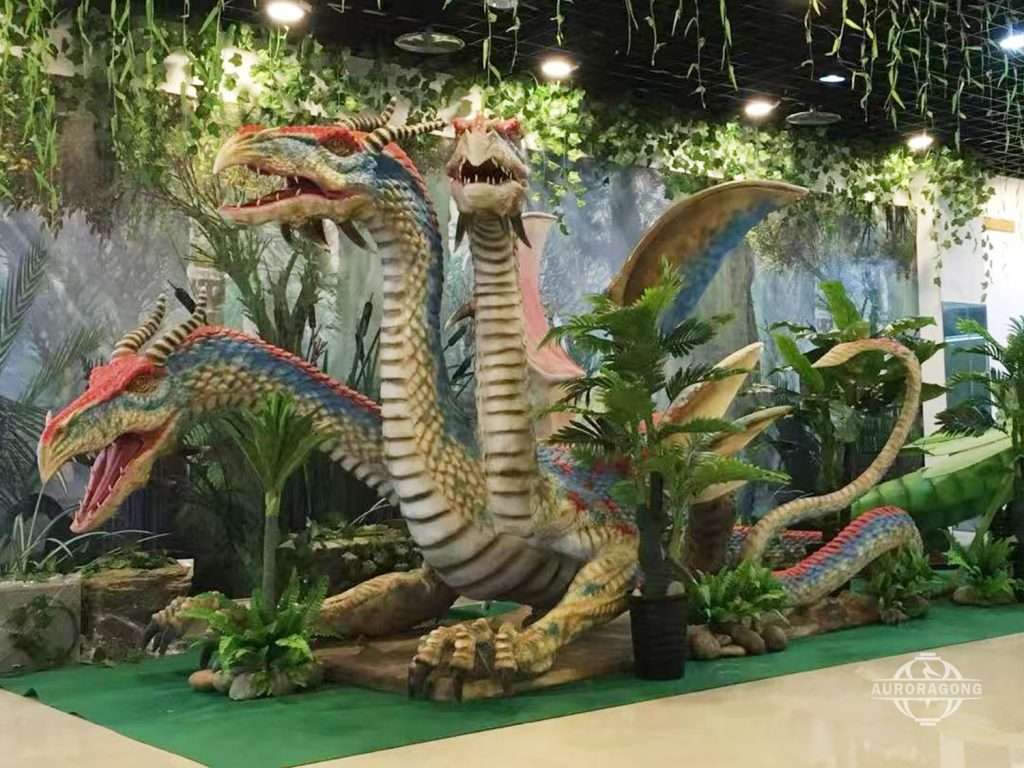
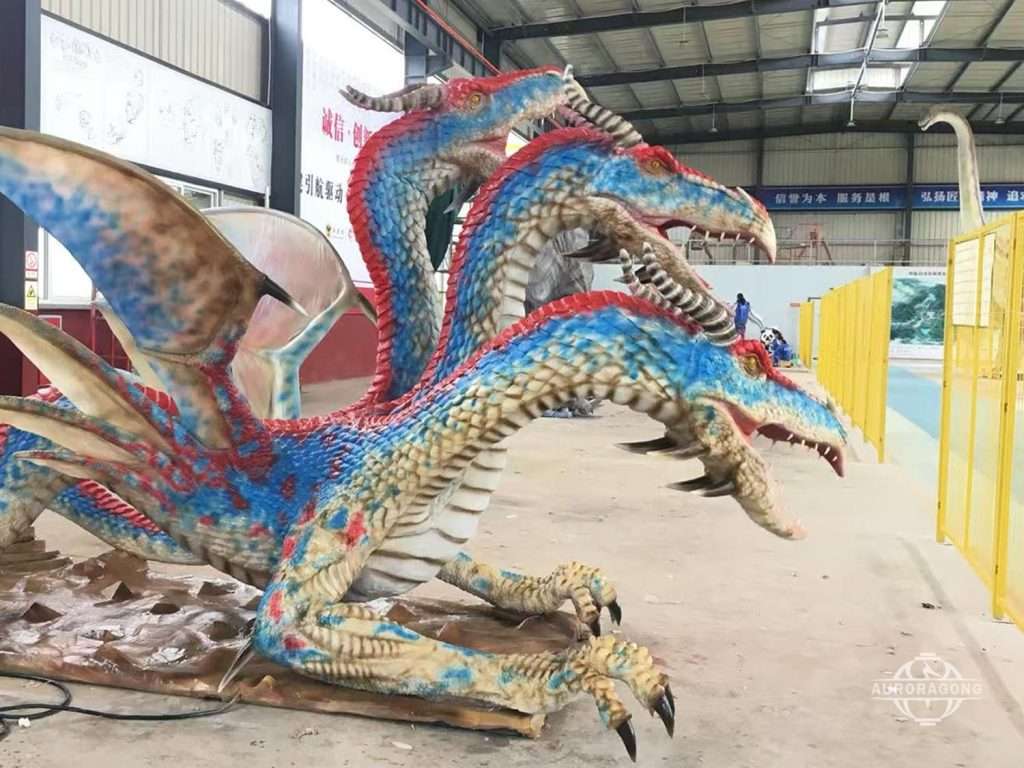
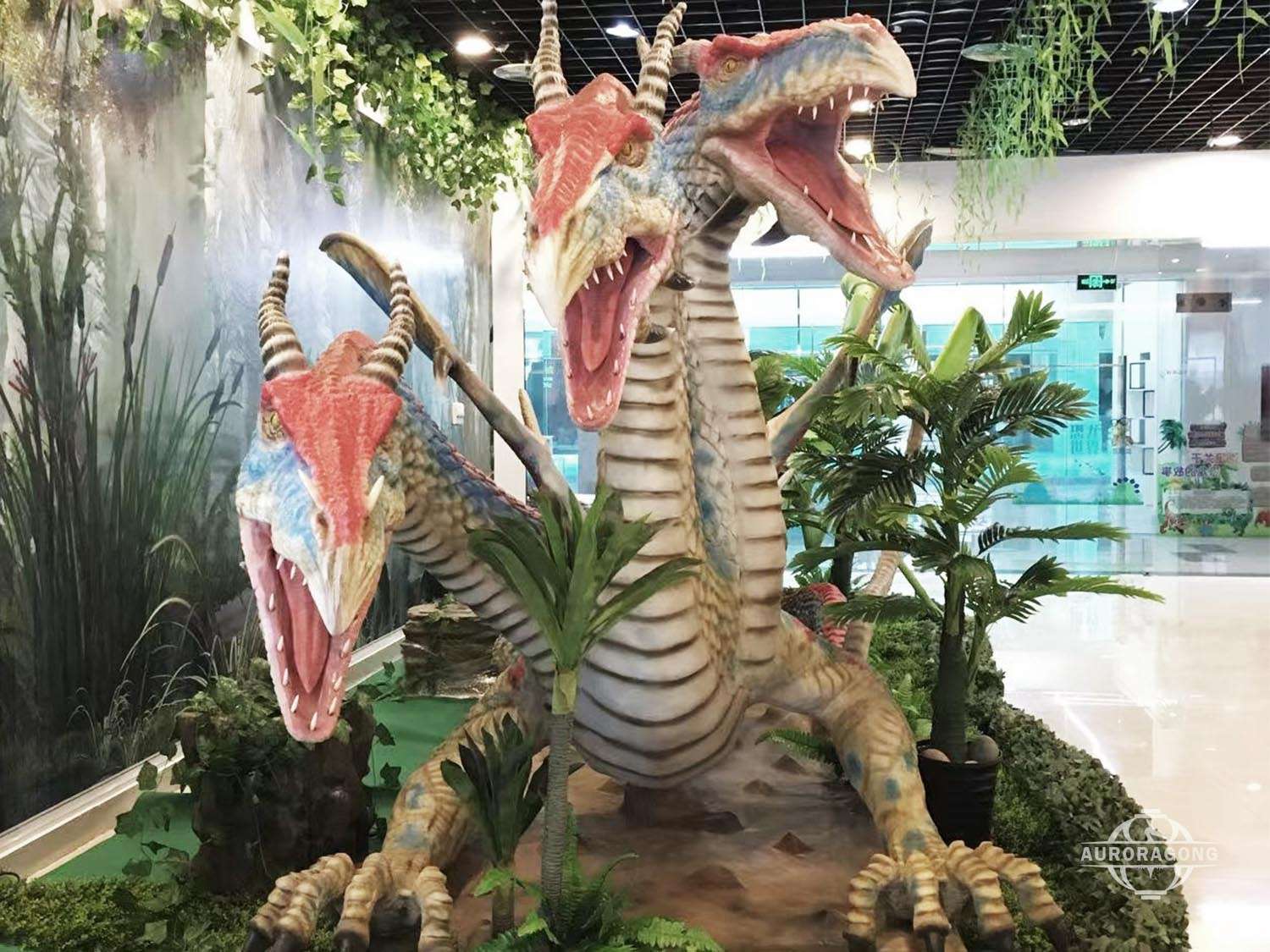
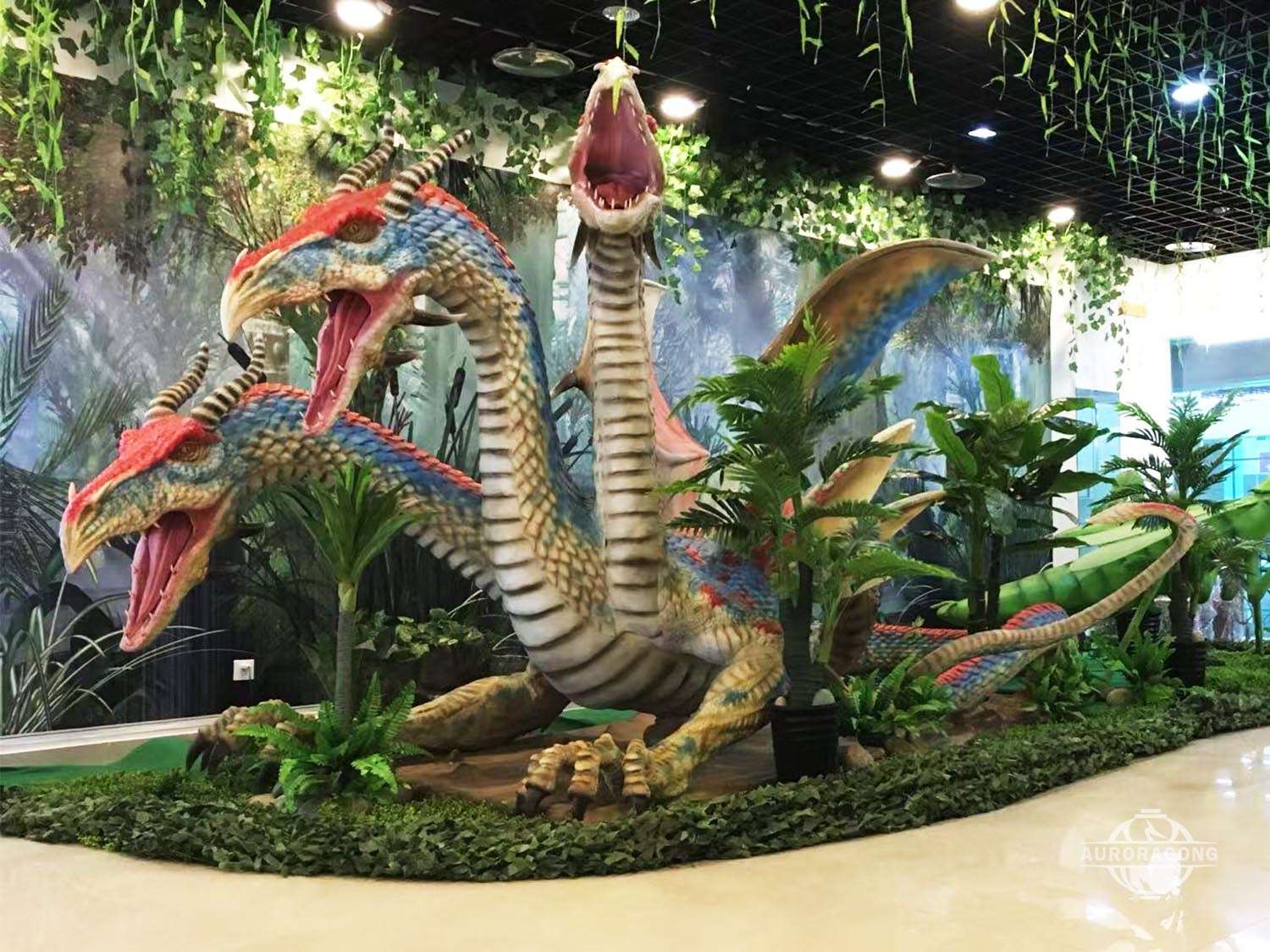
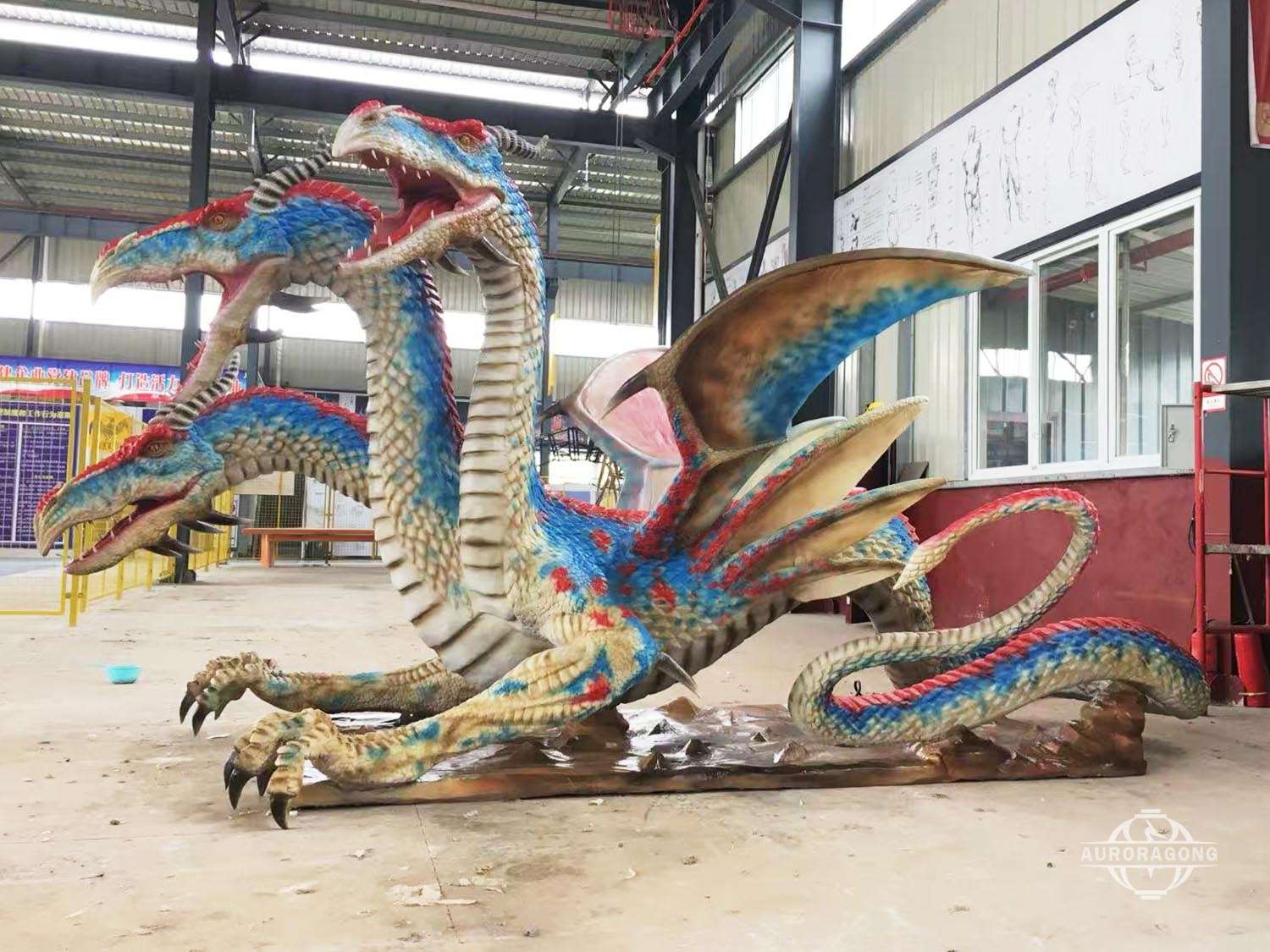
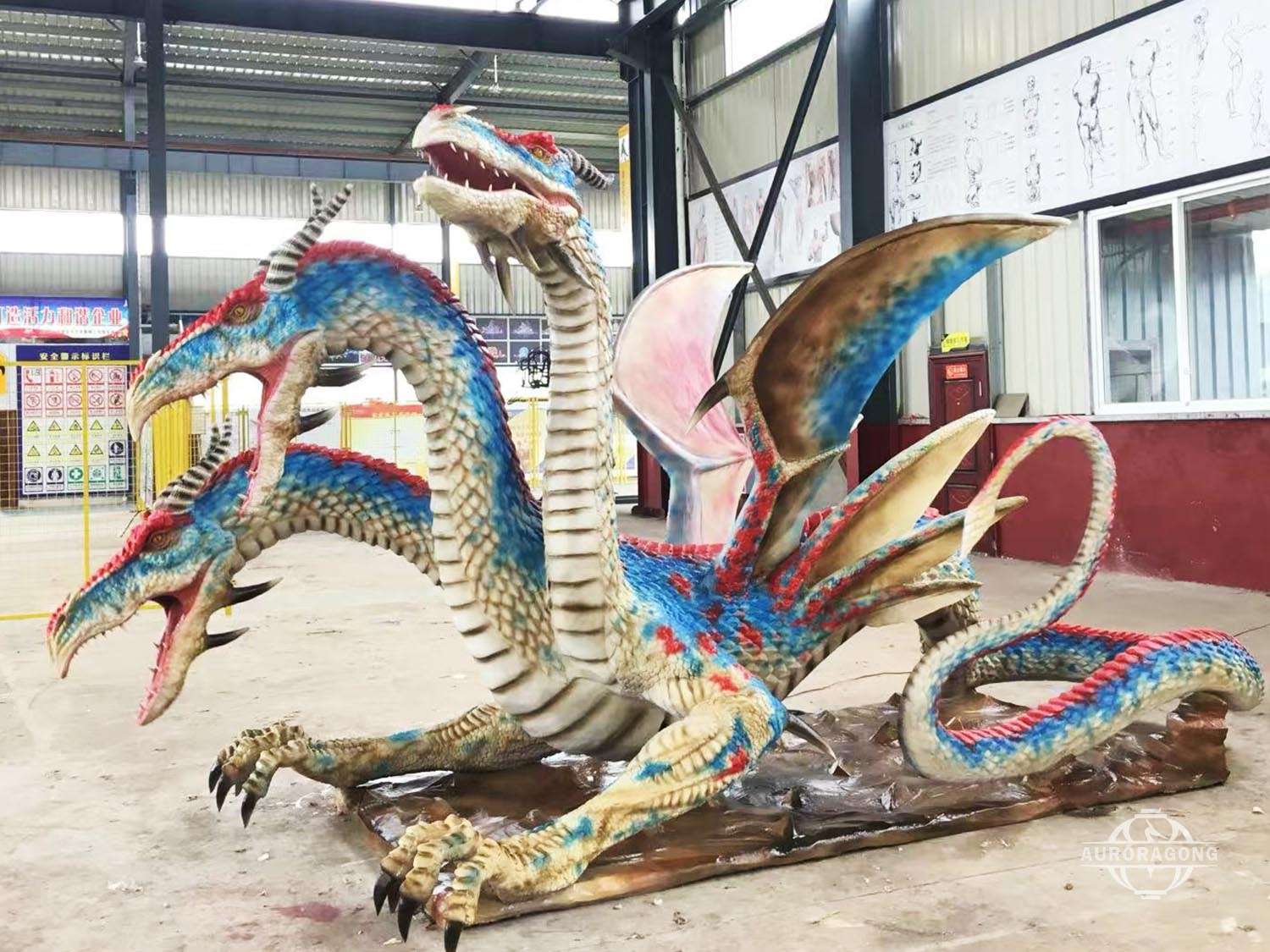
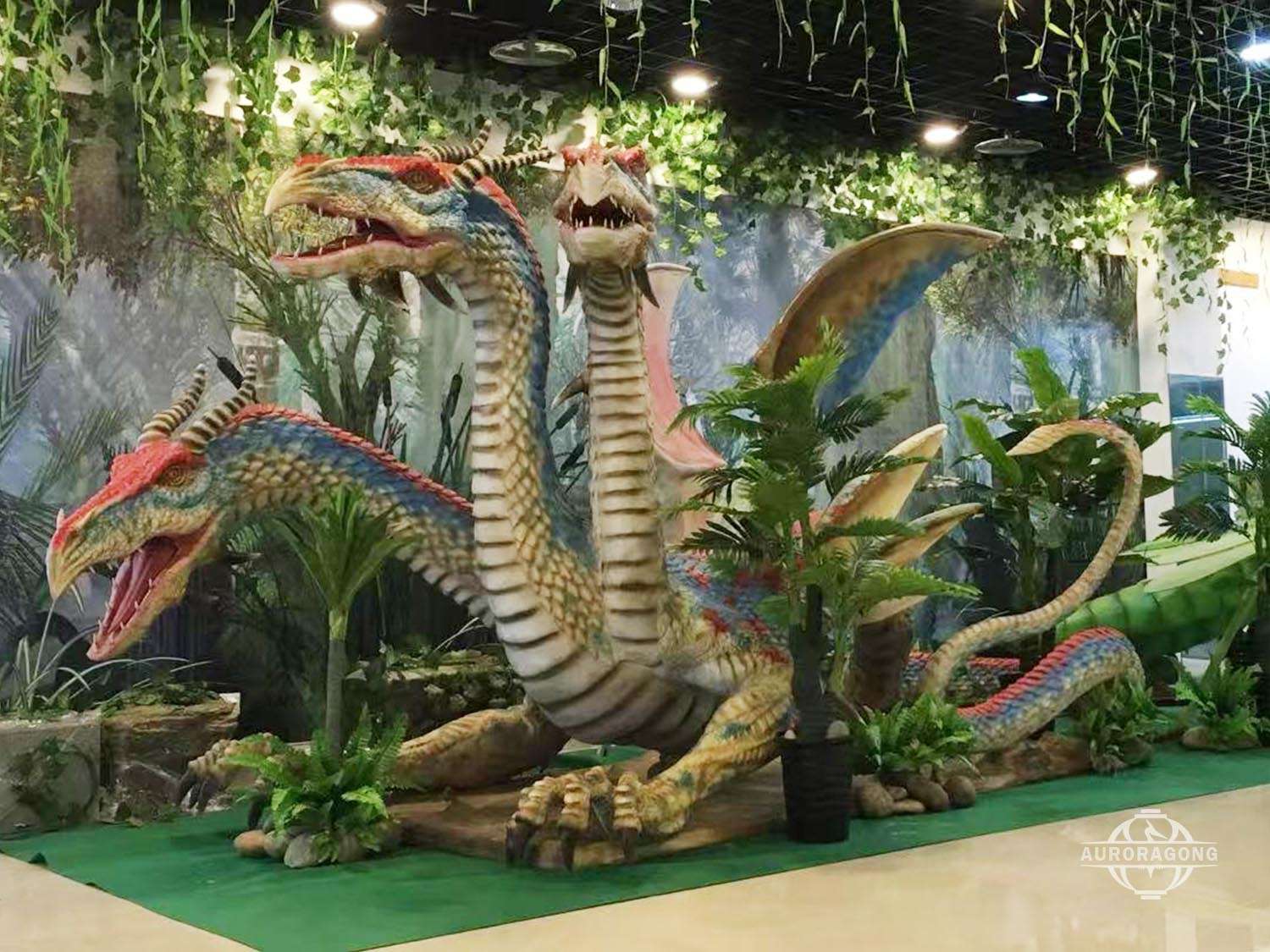
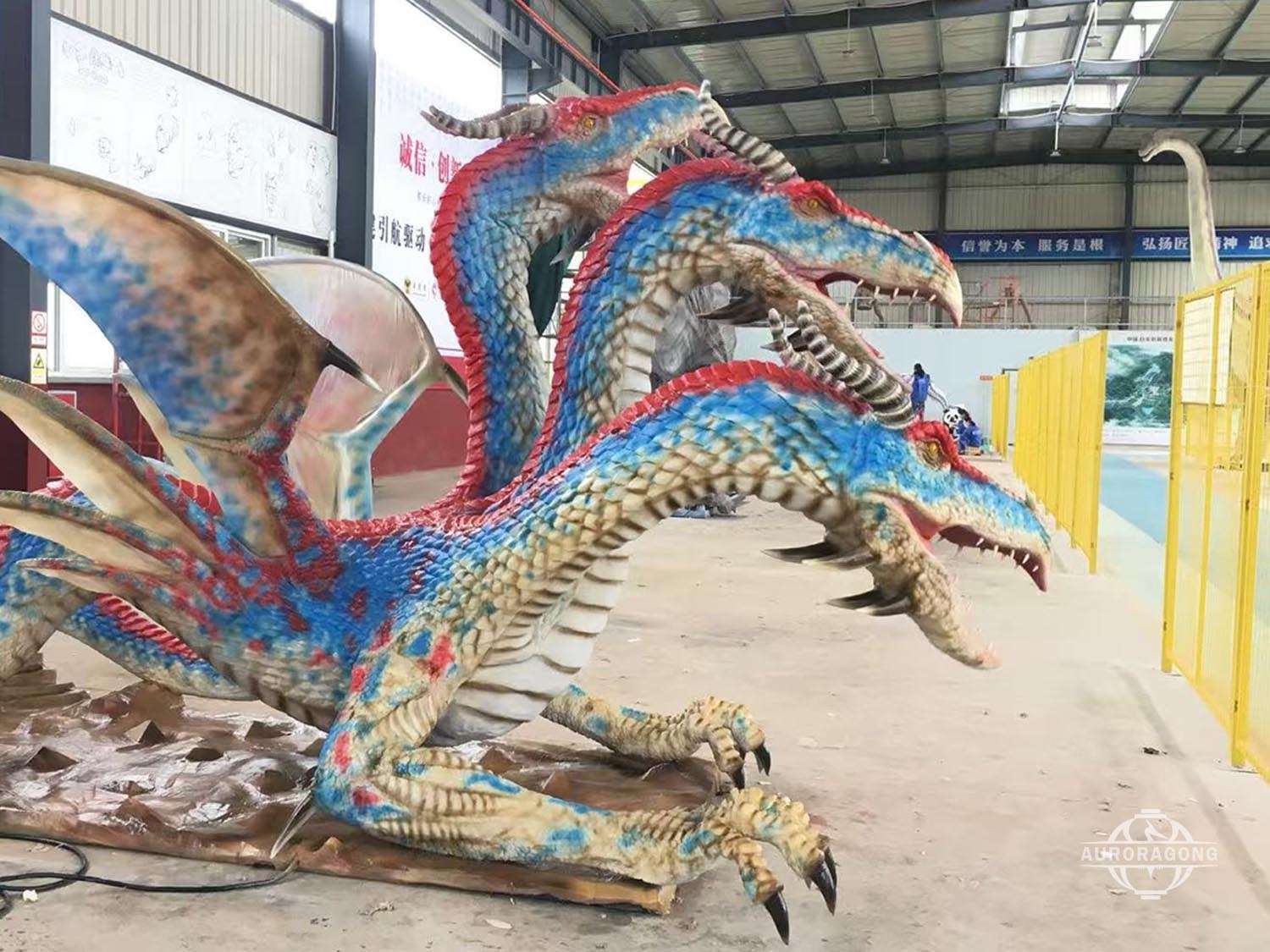
Robotic Animatronic Dragon for Exhibition and Theme Parks
| Model Number: | CL-2917 |
| Scientific Name: | Animatronics Dragon |
| Product Style: | Customization |
| Size: | 1-2 Meters long |
| Color: | Any color is available |
| After Service: | 12 Months after installation |
| Payment Term: | L/C, T/T, Western Union, Credit Card |
| Min.Order Quantity: | 1 Set |
| Lead Time: | 15-30 days |
Share:
Product Description
A dragon is the piece people photograph first, and the piece they walk towards. That behaviour sets the order of every decision that follows. The first question is not which dragon you want. It is where the animatronic dragon will stand, how far back visitors can see it from, and how long a queue it needs to hold.
Size Follows the Distance, Not the Fantasy
An animatronic dragon reads at a distance through silhouette. Wings, spine line, neck curve and tail are what a visitor registers from thirty metres. Everything below that threshold is wasted, and a small piece in a large hall is simply lost in the space.
Decide the furthest point a visitor will approach from, then set the length so the outline still reads from there. A two-metre dragon in a double-height atrium with a twenty-metre approach will be ignored. The same detail in a six-metre dragon holds the whole hall. Ceiling height and door widths are part of the same decision, because the piece has to arrive on site intact.
There is a separate practical limit. If the same animatronic dragon is also wanted as a dinosaur lantern for the outdoor part of the site, plan both at once, because the two are built to different weather standards and share a design only at the artwork stage.
Height and length are separate choices. A dragon standing tall with a low body reads as imposing. A long horizontal dragon reads as moving. Many venues end up wanting one of each: a tall dragon at the entrance that stops the queue, and a long one along an interior wall that carries the eye across the hall.
Where It Stops the Crowd
An animatronic dragon earns its footprint by stopping people, and only a few positions reliably do that.
An entrance or gate position works because every visitor passes it. The piece reads once from the approach and again from close range, and the second look is the one that turns into a photograph.
A dark indoor hall with no daylight gives the strongest effect. Controlled lighting lets the surface texture and the eye detail read; a brightly lit mall atrium flattens both. If the venue cannot be dimmed, the design should carry more shape than surface.
A plaza or outdoor route works differently. Here the piece competes with street lighting, so the silhouette has to do all the work and the detail can be simpler. An outdoor animatronic dragon also needs a base that handles the site, not just the piece.
Movement Decides the Budget and the Lifespan
Movement is where a display piece and an animatronic dragon part company. The standard set is head turn, neck bend, jaw motion, wing movement and tail sway. Each one adds something visible from a distance, and each one is a mechanism that has to keep working after the opening night.
More movement is not always better. Five movements on a piece in a bright space will be invisible, while three movements on a piece in a dark hall will be the whole show, so the count follows the room. Decide the viewing conditions first, then choose the movement set.
Sound needs the same planning. A piece that can speak or roar changes how visitors behave around it, and it also changes where it can stand, because sound carries further than people expect.
One Piece or a Set
A single animatronic dragon is a focal point. Two or three become a scene, and a scene holds people for longer than an object does.
If the site needs more than one, plan them as one composition rather than as repeated copies. Vary the size, the pose and the movement set across the group, and let the tallest piece sit at the point of arrival. Three identical dragons in a row read as inventory. Three different dragons read as a designed environment.
Many venues start with one dragon and add to the set the following season, which is far easier when the first piece was planned as part of a family from the start. A venue that is building a wider dinosaur display can read how the sizing works across life size animatronic dinosaurs before committing to a single piece.
Indoor and Outdoor Are Designed Separately
The same animatronic dragon behaves differently in the two settings, and the design should not simply be copied between them.
Indoors the piece competes with ceiling light, signage and footfall. Outdoors it competes with weather, daylight hours and street lighting, and everything about the base and the fixings changes. A dragon specified for an interior often looks under-lit outside, and one specified for outside carries unnecessary weight indoors.
Tell us which environment the animatronic dragon is for at the start. The two versions are designed as separate products, and switching later means reworking the piece.
What to Send Us Before Quoting
Six things let us quote properly and save a round of emails:
- the intended position, with a photo of the site and the room dimensions
- the furthest viewing distance and the ceiling height at that position
- indoor or outdoor, and for outdoor, whether the site is paved, grass or water
- the movement set you need, and whether there is sound
- one piece or a set, and how many if it is a set
- your opening date, so design and production can be worked backwards from it
Concept drawings, structural design, production and site installation are all ours, so there is one team to answer when something changes, and the project is handled as one of our custom lantern solutions rather than four separate contracts. A site photo taken from the angle visitors will actually use tells us more than any specification list, and it is the fastest way to get a usable first layout back.lantern solutions rather than four separate contracts. A site photo taken from the angle visitors will actually use tells us more than any specification list, and it is the fastest way to get a usable first layout back.
Robotic Animatronic Dragon parameters
| Size: 1m to 30m in length: custom sizes available. | Net Weight: Varies by size (e.g. a 10m T-Rex weighs approximately 550kg). | ||||||||
| Color: Customizable to any preference. | Accessories: Control box, speaker, fiberglass rock infrared sensor, etc. | ||||||||
| Production Time: 15-30 days after payment, depending on quantity. | Power: 110/220V. 50/6OHz, or custom configurations at no extra charge | ||||||||
| Minimum Order: 1 Set. | After-Sales Service: 24-month warranty after installation. | ||||||||
| Control Modes: Infrared sensor, remote control, token operation, button, touch sensing, automatic, and custom options. | |||||||||
| Usage: Suitable for dino parks, exhibitions, amusement parks, museums, theme parks, playgrounds, city plazas, shopping malls, and indoor/outdoor venues. | |||||||||
| Main Materials: High-density foam, national-standard steel frame, silicon rubber, and motors | |||||||||
| Shipping: Options include land, air, sea, or multimodal transport. | |||||||||
| Movements: Eye blinking, Mouth opening/closing. Head movement. Arm movement, Stomach breathing. Tail swaying, Tongue movement. Sound effects, Water spray. Smoke spray.l | |||||||||
| Note: Handmade products may have slight differences from pictures. | |||||||||
Key Features of Robotic Animatronic Dragon
Advanced Robotic Mechanics
Smooth, precise movements of head, wings, and jaws create a lifelike presence.
Multi-Sensory Experience
Integrates sound, light, and optional smoke effects for immersive interaction.
Versatile Display Options
Suitable for indoor or outdoor use, and adaptable to various stages or exhibition layouts.
Modular & Service-Friendly
Easy access for maintenance, upgrades, or effect modifications.
Heavy-Duty, Long-Lasting Materials
Robust frame and reinforced components for repeated public use.
Unique Attraction Piece
Creates memorable experiences that enhance visitor engagement and brand impression.
Main Applications of Robotic Animatronic Dragon
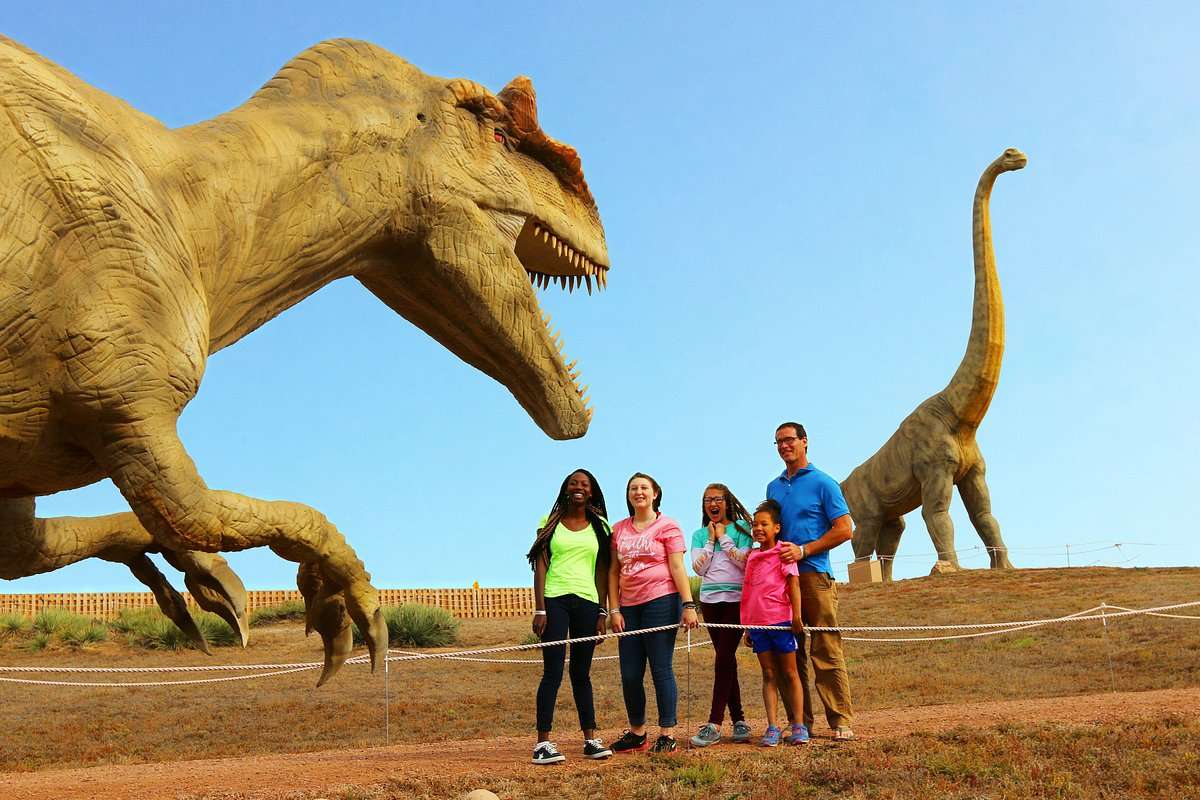
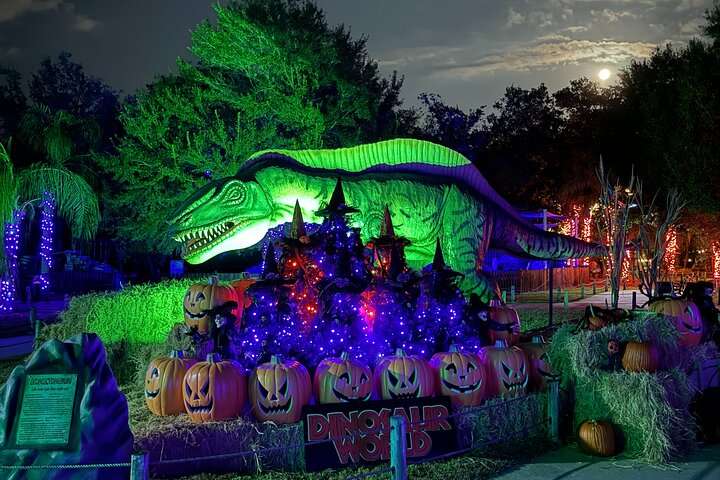
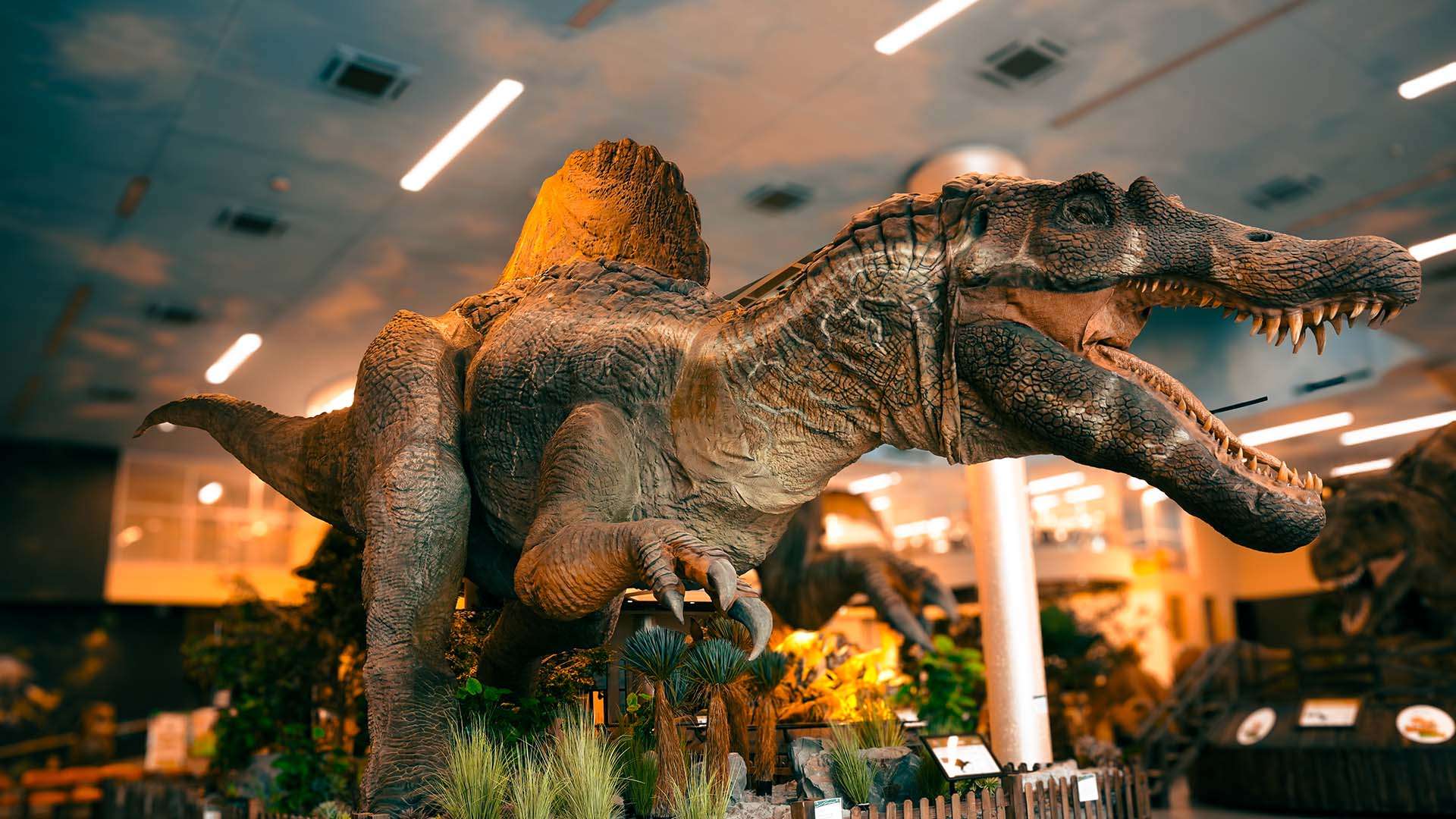
The exhibition animatronics dragon is widely used across various scenarios, from festive decorations to commercial displays, thanks to its realistic design and strong visual impact.


Robotic Animatronic Dragon production process
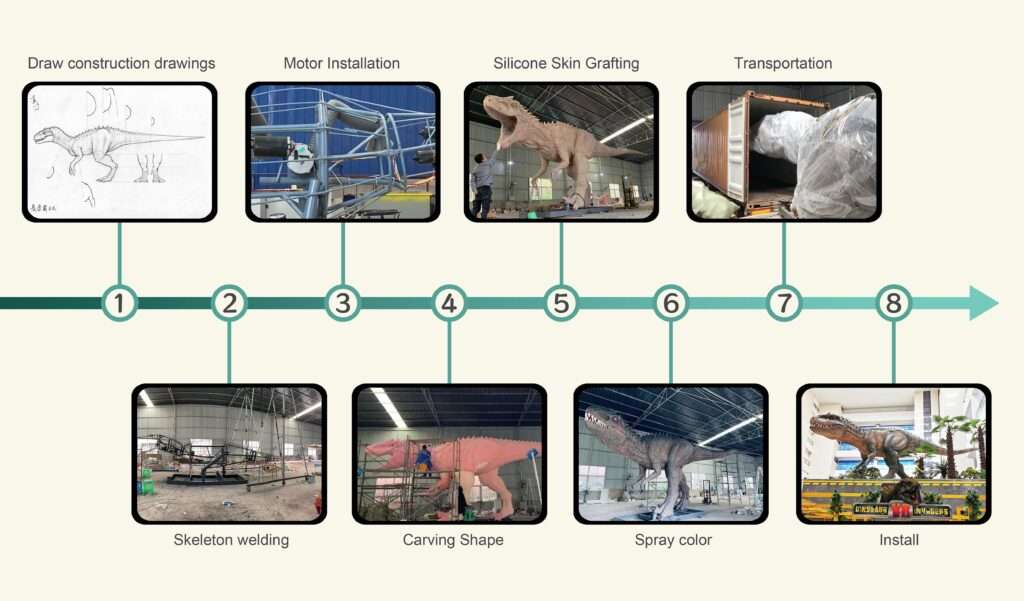
The production of AuroraGong Robotic Animatronic Dragon is mainly divided into 8 processes.
1. The designer draws the construction drawings.
2. Welding and forming of the main frame of the product.
3. Installation and commissioning of electrical equipment.
4. Carving shape and dealing with texture.
5. Surface skin making.
6. Hand-sprayed colors.
7. Packaging and transportation.
8. Installation and test on the site.
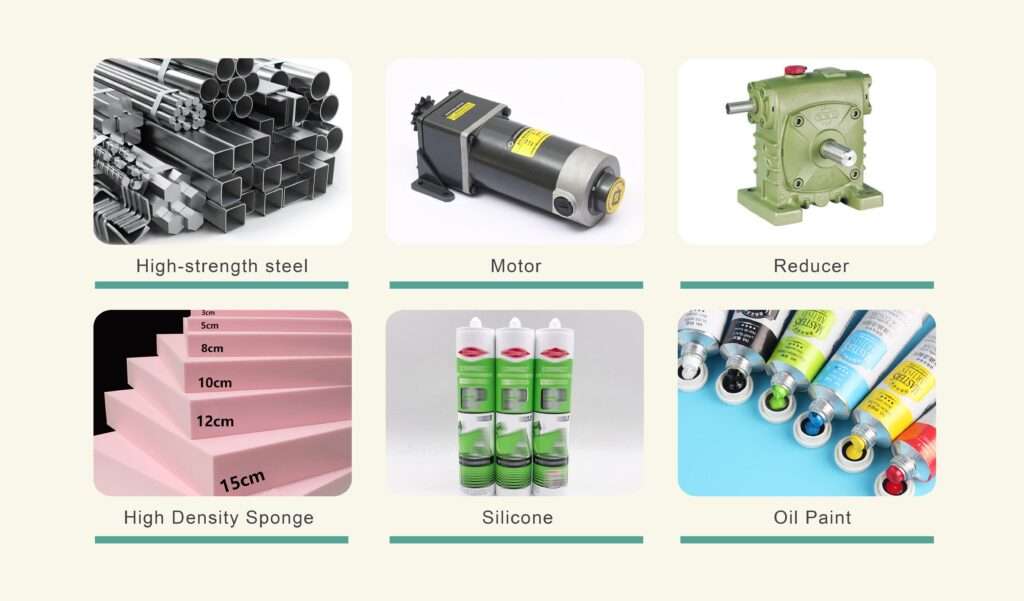
Main Materials for Robotic Animatronic Dragon
At AuroraGong, we have strict requirements on the quality of the materials used in our products.
The materials mainly include:
1. High-strength steel.
2. CE Motors with different functions.
3. Various models of reducers.
4. High-density and high-elasticity sponge.
5. Silicone.
6. Oil paint.
Why Choose Our Robotic Animatronic Dragon for Displays?

- 10+ years of experience
- 5000㎡ factory
- 50+ technicians
- Full customization service
- Global delivery & installation support
- Exported to 60+ countries
- CE certification
- One-Stop project solution